Related: How to Brush With an Electric Toothbrush Without Wrecking Your Gums
An electric toothbrush for adults does not need an app, a subscription, or a flagship price tag. It needs a two-minute timer with 30-second intervals, a brush head that reaches the gum line, and a battery that is still alive on day four. Everything past that is marketing, and I say that as someone who has spent 14 years looking in mouths for a living.
I started paying close attention to electric brushes when I realized my patients kept buying the most expensive handle on the shelf and using it wrong. They would lean on it, scrub back and forth like a manual brush, and quit after three weeks when the charge ran out. The plaque scores I see in the chair have very little to do with the motor and everything to do with whether the brush is charged, visible on the counter, and still in use at the three-month mark.
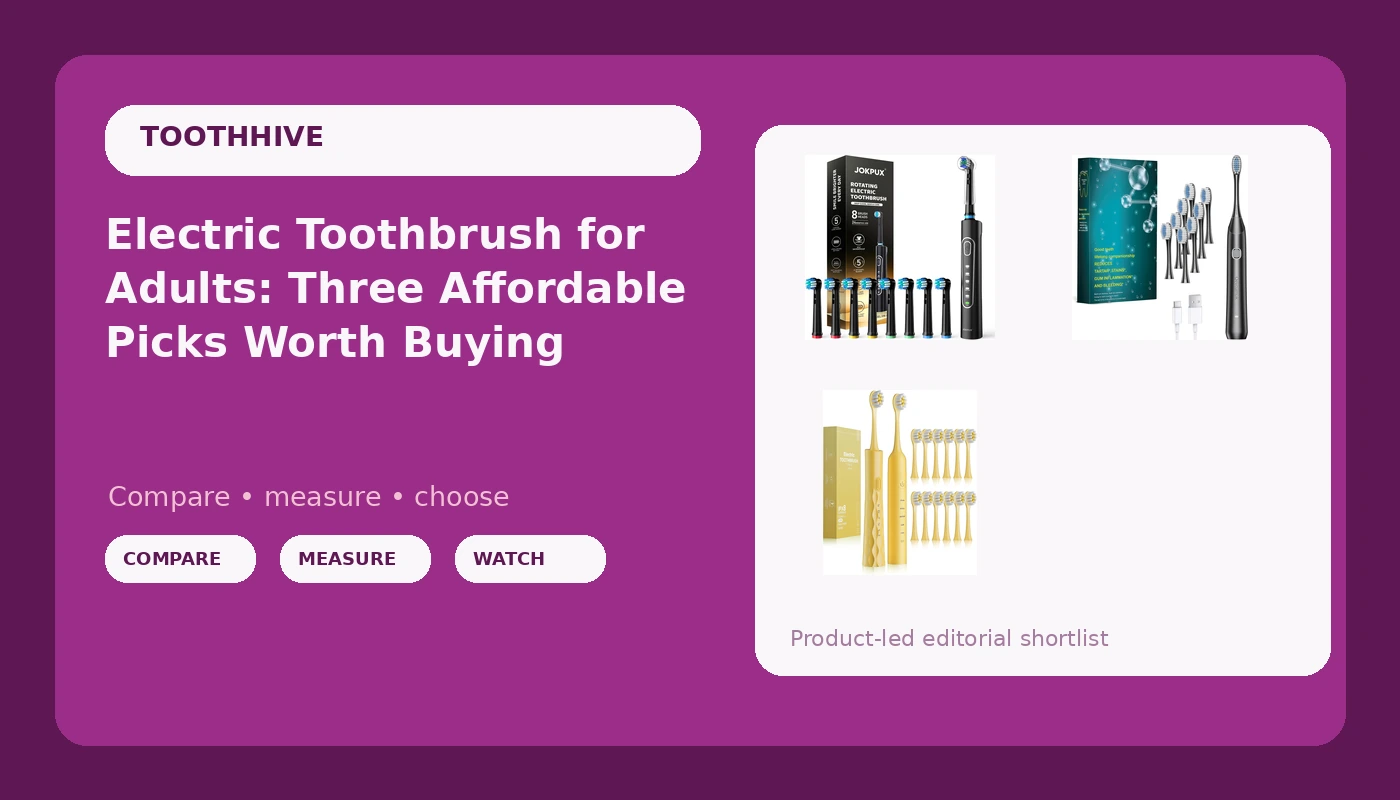
So this is not a roundup of the most advanced brushes. It is a look at the affordable end of the market, where most people actually shop, and what you genuinely get for your money. All three of the brushes below come with a quadrant timer, which is the one feature I will not compromise on. Two of them come with enough brush heads to last years. One of them is the cheapest way to get a rechargeable handle in a second bathroom. Here is how to tell them apart.
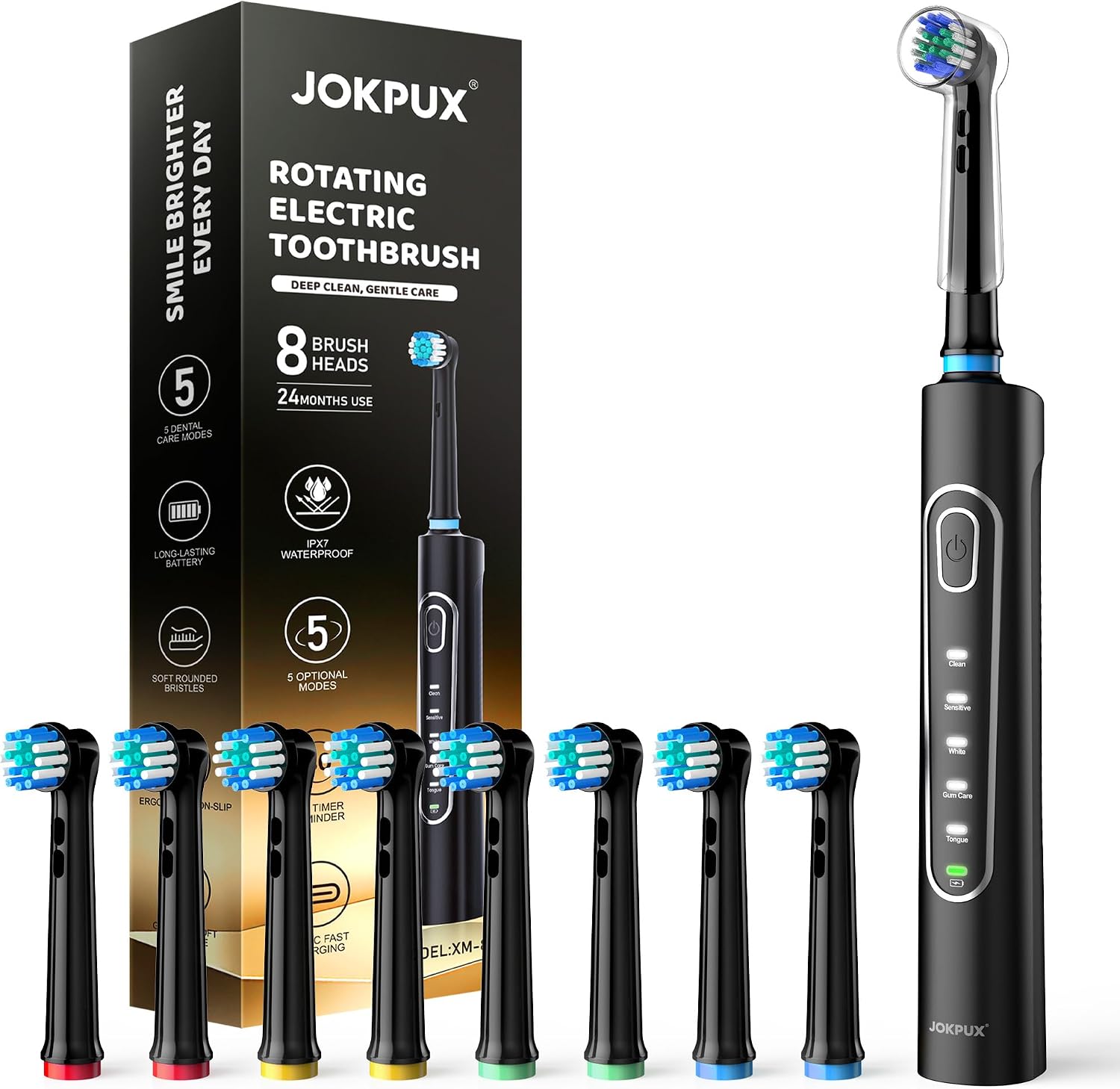
Best Overall: Rotating Electric Toothbrush for Adults, 8 Brush Heads, 75 Days Use, Black
This is the one I would hand to most adults who ask me what to buy on a budget. The head rotates, which is the oscillating-rotating family of brushes, and that motion does something specific and useful: it sweeps along the gum line in a way that a manual brush only does if your technique is already good. If your technique is not good, and statistically it is not, a rotating head covers for you.
The numbers in the name are the real story here. Eight brush heads in the box. At the three-month change interval I recommend, that is two years of heads before you buy another one. Most people never replace their head often enough, and I have pulled frayed, splayed brushes out of patients' mouths that were older than some of my colleagues. When the heads arrive with the handle, you remove that failure mode entirely.
Seventy-five days of use per charge is the other claim worth noting. That means charging roughly four times a year, not four times a month. A brush that lives on the charger is a brush you never have to think about, and brushes you never think about are brushes you keep using.
The black finish is a small thing, but it matters more than people admit. White handles show every bit of toothpaste spatter and eventually look grimy, which makes people less likely to leave them out. A dark handle stays looking clean.
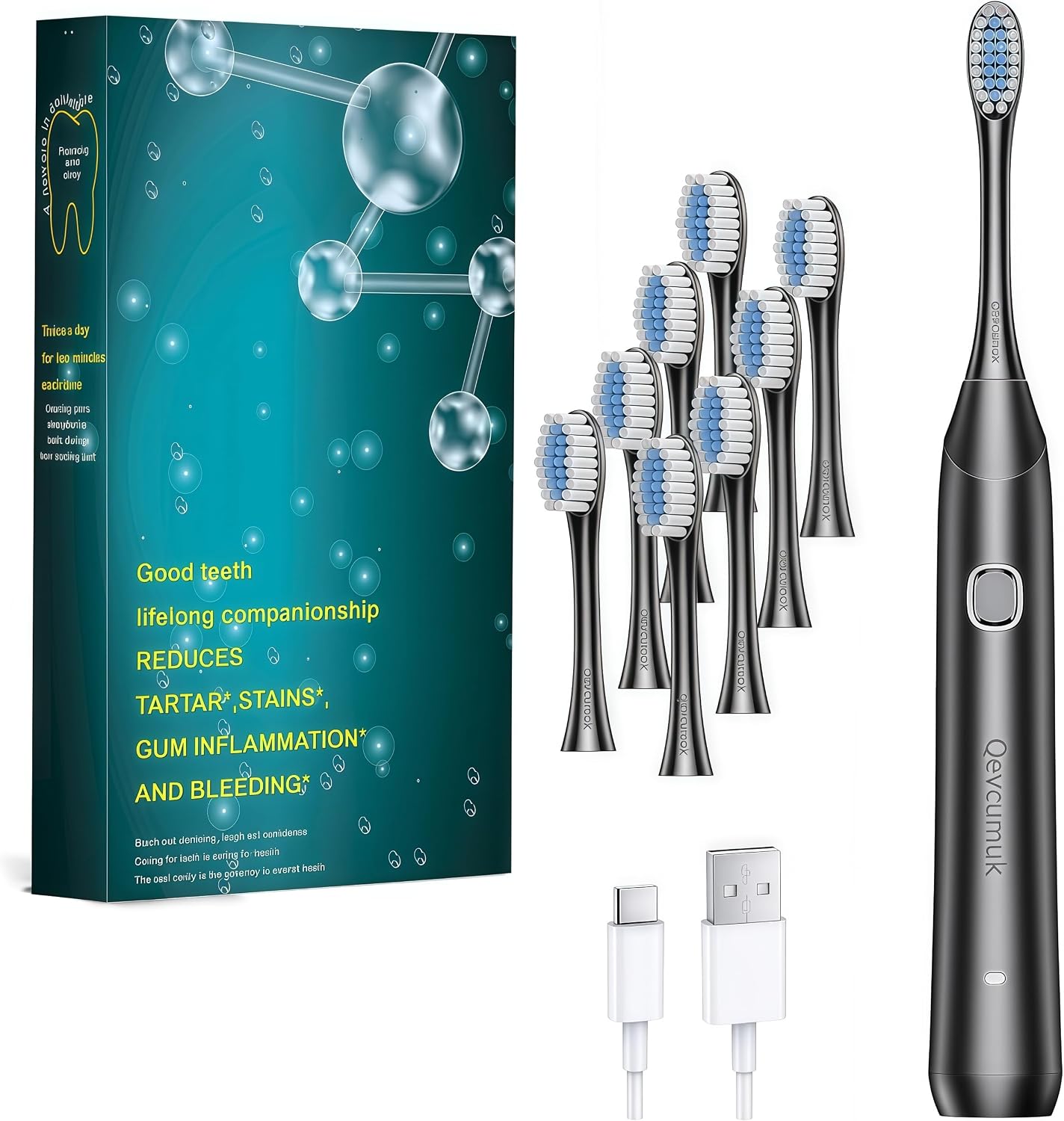
Best Value: Rechargeable Electric Toothbrush
This is the plainest brush of the three, and I mean that as a compliment. No mode menu, no app, no learning curve. It recharges, which already puts it ahead of every battery-powered brush I have ever seen a patient try to keep alive, and it does the job a powered brush is supposed to do.
Where this one earns its place is the second bathroom. The guest bath, the kids' bathroom, the suitcase, the office drawer. A brush you leave somewhere else is a brush that keeps you brushing when your routine falls apart, and routines fall apart constantly. Travel, late nights, a week at a relative's house. Having a rechargeable handle already sitting there solves a problem that a single premium brush cannot solve.
It is also the sensible first electric brush for a teenager. I would rather see a 14-year-old using a simple rechargeable handle twice a day than a complicated one twice a week. Teenagers abandon anything that feels like homework, and a brush with six modes and a phone notification is homework.
What you give up is brush heads in the box and the longer battery claim. That is the trade, and it is a fair one if this is a supporting brush rather than your main one. Check what replacement heads cost before you commit, because that is where every budget brush quietly becomes expensive.
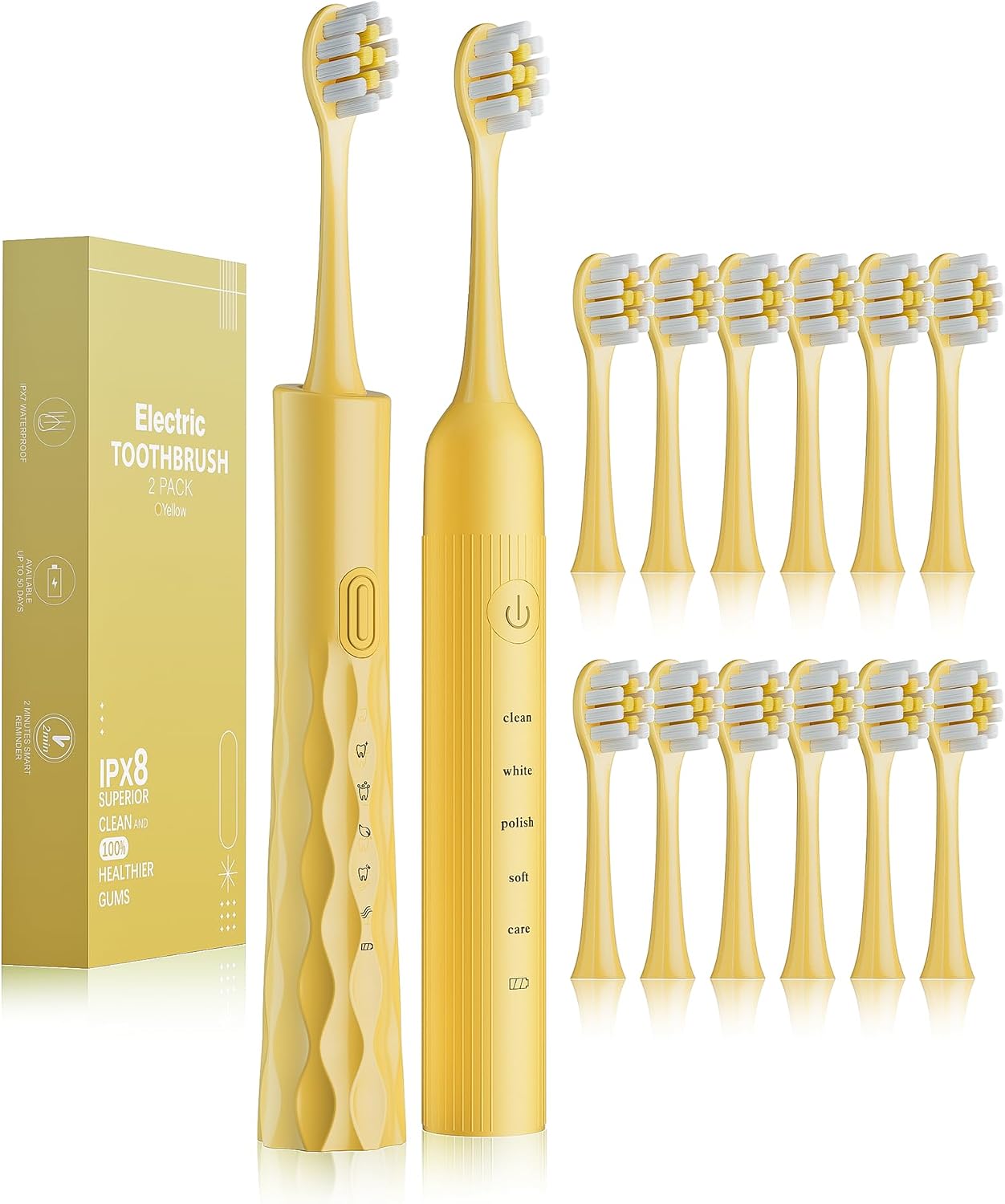
Best for Two People: Aneebart 2 Pack Electric Toothbrush for Adults, USB Rechargeable Sonic Toothbrush with 12 Brush Heads, Smart Timer, 6 Modes, 2-Hour Fast Charge Last 30 Days
Two handles, twelve brush heads, a smart timer, six modes, and a two-hour charge that is claimed to last 30 days. If you are equipping two people at once, this is the most efficient way to do it, and the head math is even better than the single-brush option: six heads per person, which is 18 months of changes each.
This is a sonic brush, meaning the head vibrates rather than rotates. Sonic and oscillating both work. The research does not crown a winner, and anyone who tells you one motor type is dramatically superior is selling something. What matters is head design, the timer, and whether you actually hold the thing against your gum line for two minutes. Sonic brushes tend to feel gentler to people with sensitive gums, and that feeling is not nothing, because people who find a brush uncomfortable stop using it.
The smart timer is the feature I care about most here. A two-minute timer with 30-second quadrant intervals is what turns a vague intention into an actual two-minute brush, and it is the single cheapest upgrade in dental health that exists.
Six modes is more than anyone needs. Clean is the mode. Whitening modes do not whiten, they just run a different vibration pattern, and sensitive modes are useful mainly if you are recovering from a gum procedure. My honest advice is to pick one mode and never touch the button again. A two-hour charge is fast enough that forgetting to charge is no longer a crisis, and the USB charging means you can top it up from a laptop or a car adapter, which is more practical than a bulky dock.
How I judge a brush before I recommend it
Four questions, in this order.
Does it have a quadrant timer? A two-minute timer with 30-second intervals, not just a two-minute timer. The intervals are what train you to give each section of your mouth equal time, and they are what stops you from spending 90 seconds on the front teeth and 30 on the molars where decay actually starts. A premium brush without this is not a premium brush, it is a nice motor in a fancy case.
Is the pressure warning real? Brushing hard is the most common cause of gum recession I see, and recession does not grow back. A brush that tells you when you are pushing too hard prevents the damage that people spend thousands trying to fix later. If a brush markets itself as gentle but has no pressure feedback, the claim is decoration.
What do replacement heads cost per year? Four heads a year, every year, for as long as you own the brush. Do that multiplication before you buy anything. A cheap handle with expensive heads is an expensive brush, and a brush that ships with eight or twelve heads buys you years of runway before that cost even starts.
Will you actually keep using it? This is the question that decides everything. A brush on the charger, in a cup, on the counter gets used. A brush in a drawer with a dead battery does not. Simplicity beats capability, and it is not close.
What separates these three brushes
All three are rechargeable, all three are aimed at adults, and none of them require an app to change modes, which is the line I draw. Past that, the differences are about packaging and household size rather than cleaning power.
The rotating brush wins on the complete package: a rotating head, eight heads included, and the longest battery claim of the three, which together mean the least ongoing maintenance and the fewest decisions. The simple rechargeable brush wins on price and on having nothing to learn, which makes it ideal for a secondary bathroom or a first brush for a teenager. The two-pack wins on household math, because two handles and twelve heads covers two people for a year and a half at the cost of a single mid-range brush.
None of them have the connected features, the magnetic drive, or the premium pressure sensor systems you find on flagship handles. I want to be clear about that, because a $60 brush is not a $300 brush. What these do is cover the features that change outcomes: a timer that runs two full minutes, a rechargeable battery, and heads that get replaced on schedule because they arrived in the box.
If you have gum disease, active recession, or you are coming out of a periodontal treatment, talk to your hygienist before buying anything online. That is a conversation, not a product page.
The comparison table
| Brush | Heads included | Timer and modes | Battery claim | Price |
|---|---|---|---|---|
 Visit on Amazon → Rotating Electric Toothbrush for Adults, 8 Brush Heads, 75 Days Use, Black |
8 heads | Quadrant timer | 75 days per charge | $21.84 |
 Visit on Amazon → Rechargeable Electric Toothbrush |
Heads sold separately | Timer | Rechargeable | Visit on Amazon → |
 Visit on Amazon → Aneebart 2 Pack Electric Toothbrush for Adults, USB Rechargeable Sonic Toothbrush with 12 Brush Heads, Smart Timer, 6 Modes, 2-Hour Fast Charge Last 30 Days |
12 heads (2 handles) | Smart timer, 6 modes | 30 days per charge, 2-hour charge | $13.99 |
Read that table the way I would read it: as a head count and a household count. The battery claims are manufacturer figures, and every brand rounds them up, so treat them as relative rather than exact. The head count is the number that shows up on your credit card again in a year, or does not.
Should you buy the Rotating Electric Toothbrush for Adults?
Yes, if you want one brush, one decision, and nothing else to think about for two years. Eight heads in the box is the most generous head count of any single-handle brush here, the rotating head covers for imperfect technique, and the 75-day battery claim means you are charging it four times a year instead of keeping it tethered to a cord. It is the one I would buy for myself and the one I would buy for a sibling who asks me at Thanksgiving.
The trade is that it does not have the connected features of a flagship, and rotating heads feel different for the first week if you are coming from a manual brush. Give it a week. Most people never want to go back.
Should you buy the Rechargeable Electric Toothbrush?
Yes, as a second brush. Guest bathroom, office, gym bag, teenager's bathroom, the place you go where your routine tends to collapse. It is the least expensive way to keep a rechargeable, timer-equipped handle somewhere other than your main bathroom, and it has no modes to fiddle with, which is exactly right for that job.
If it is going to be your only brush, I would spend a little more and get one that arrives with heads in the box. Otherwise you are buying heads within three months, and the savings evaporate.
Should you buy the Aneebart 2 Pack?
Yes, if two people share a bathroom and both need a brush. Two handles, twelve heads, a smart timer, and a two-hour charge that is claimed to last a month per handle is a lot of toothbrush for a household that is starting from nothing. Six heads per person is about a year and a half of scheduled changes, which is the kind of number that makes the whole thing feel less like a purchase and more like a supply.
The caveat is the mode menu. Six modes sounds like value and mostly is not. Pick one, stay on it, and let the timer do the work. That is the honest version of how these brushes help you, and it is the same advice I give in the chair every single day.