Most people find out their gums are receding from a photograph, not from a dentist. Someone takes a candid shot at a backyard barbecue, you zoom in, and there it is: a thin band of tooth that used to be covered, now a long pale stretch above the crown. Then you start checking the mirror every night.
Here is the part nobody tells you. Receding gums are usually not caused by brushing too little. They are caused by brushing too hard, with bristles that are too stiff, in a back-and-forth sawing motion that sands the gumline down over years. Learning how to brush receding gums is mostly about unlearning the scrub you have been doing since you were eight.
I have been a dental hygienist in Madison, Wisconsin for 14 years. I have looked inside thousands of mouths, and the patients who keep their gumline are not the ones with the most expensive brush on the counter. They are the ones who use soft bristles, use light pressure, and actually finish two minutes without getting bored and mashing the brush into their canines.
Below is the routine I walk patients through when recession first shows up on the chart, plus the two brushes I recommend for it: a budget sonic with a real two-minute timer, and a genuinely soft manual brush for people who press too hard with anything that vibrates.
Why you should trust me
Fourteen years of hygiene appointments means I have watched the same mouth change across a decade. I have seen a patient reverse course on recession with nothing but a softer brush and a lighter hand. I have also seen a patient with a very expensive electric brush make things worse because she gripped it like a hammer and let the motor do the damage.
I do not care about the app, the charging case, or the color of the ring light. I care about four things: does it have a two-minute timer, is there a pressure sensor or at least a soft enough head that you are not tearing up the gumline, what do replacement heads cost over a year, and will the person actually keep using it past week three. That is the whole test.
I also say the unpopular thing out loud: recession is not a brushing problem alone. Grinding, a shifted bite, thin gum tissue that runs in your family, and gum disease all cause it too. A brush cannot fix any of those. It can only stop making them worse.
How I picked and how I judge a brush
I have not run a laboratory bench test on the two brushes below, and I am not going to pretend a spec sheet is a clinical trial. What I can tell you is exactly what I check before I hand a brush recommendation to a patient with exposed roots.
Bristle softness. This is the whole ballgame. Once the root surface is exposed, you are no longer brushing enamel. You are brushing dentin and cementum, which are softer, more porous, and wear faster. A medium or firm bristle that felt fine on covered teeth is now an abrasive.
A timer you cannot ignore. Two minutes, twice a day, is the standard for a reason. Most people brush for 45 seconds and swear it was two minutes. A built-in timer with a pause at the 30-second marks is the single most useful feature on any brush, electric or manual.
Pressure control. Either the brush warns you, or the bristles are soft enough that you have to work to hurt yourself. There is no third option.
The cost of ownership. The brush is the cheap part. Heads are the subscription. A brush that ships with a pile of spare heads changes the math more than a discount on the handle ever will.
Would a real person keep using it. A brush that is annoying to charge, annoying to travel with, or annoying to replace heads on ends up in a drawer. The drawer brush removes zero plaque.
What receding gums actually need
Once gum tissue migrates, it does not grow back on its own. The exposed root is dentin and cementum, not enamel, so it is softer, more sensitive to cold, and more vulnerable to both decay and abrasion. That changes three things in your routine: softer bristles, lighter pressure, and a toothpaste that is not aggressively abrasive.
It also means you should get the recession evaluated before you blame your brushing. If the cause is periodontal disease, a bite problem, or clenching at night, no brush on the market will stop the progression. Your dentist or periodontist needs to see it.
The two brushes I recommend for this routine
You do not need a flagship. You need soft bristles, a timer, and a brush you will pick up twice a day.
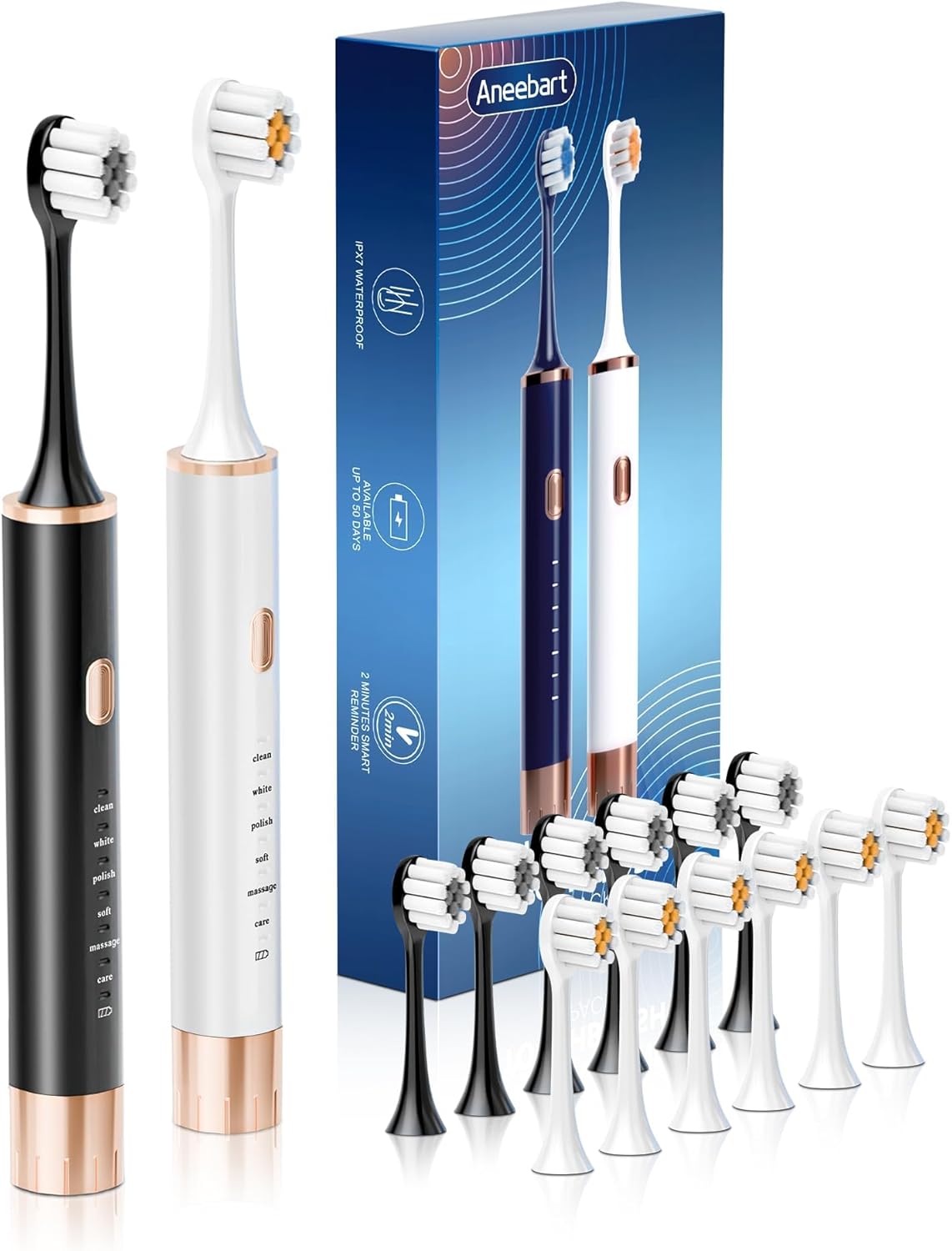
The electric pick: Aneebart Sonic 2 Pack Electric Toothbrush for Adults, Travel Toothbrush Includes 12 Replacement Toothbrush Heads, 6 Modes with 2 MIN Smart Timer (Black White)
 Visit on Amazon →
This is the budget sonic I point people toward when they want the timer and the soft head without paying flagship money. Check current Amazon price.
The feature that earns its place here is the two-minute smart timer. That is the difference between a real toothbrush and a vibrating stick. Everything else is negotiable.
The second thing is the packaging. Two handles, plus 12 replacement heads, means you are covered on heads for a long stretch and you have a spare for travel or for a partner. Replacement heads are where electric brushes quietly get expensive, so a brush that arrives with a year of them is doing you a favor that a premium handle does not.
Flaws but not dealbreakers: Six modes is more choice than any mouth needs. Pick the gentlest setting and ignore the rest. This is also a budget brush, so expect a plastic body and a motor that will not feel like a premium handle. If you are heavy handed, the timer will not stop you from pressing. You still have to think about pressure.
Anyone who wants a timer, a soft head, and a low ongoing cost of ownership should start here.
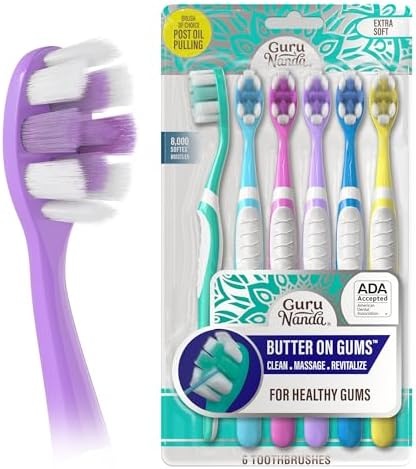
The manual pick: GuruNanda Butter On Gums Toothbrush, ADA Accepted Manual Toothbrushes with 8000+ Ultra Soft Softex Bristles for Sensitive & Receding Gums, Perfect for Whiter Teeth, Assorted Colors, 6 Ct
 Visit on Amazon →
For a patient with a receding gumline, the manual brush is not the consolation prize. It is often the better tool, because you control the pressure with your own hand instead of chasing a motor. Check current Amazon price.
Two things matter in this listing. The first is ADA Acceptance. The American Dental Association seal means the brush has been reviewed for safety and efficacy, which is more than most toothbrush packaging can claim. The second is the ultra soft bristle count in the name: the manufacturer says 8000+ Softex bristles, which is a density claim, not a softness proof, but a very soft bristle in a dense tuft is exactly what a sensitive gumline wants.
Six brushes in assorted colors covers about 18 months of replacements if you swap every three months, which is the interval I recommend whether the bristles look worn or not. Bristles splay and hold bacteria long before they look destroyed.
Flaws but not dealbreakers: There is no timer, so you have to bring your own discipline. Set a phone timer or count quadrants in your head. Also, ignore the "whiter teeth" line in the name. A toothbrush whitens by removing plaque, not by scrubbing color off the tooth, and scrubbing harder on a receding gumline is the exact mistake this article exists to prevent.
Anyone who has been told to back off the pressure, or who finds that any electric brush makes them brush too aggressively, should keep a pack of these in the cabinet.
The actual brushing workflow
Now the part that matters more than either product. This is the sequence I teach at the chair, and it works with any soft brush.
Step one: angle the bristles at 45 degrees. Point them into the groove where the tooth meets the gum, not straight at the tooth. This is the seam where plaque actually collects, and it is the seam most people never touch.
Step two: pressure is two fingers, not a fist. Hold the brush with your thumb and first two fingers, the way you would hold a pen you were not trying to stab through paper. If the bristles are bending past 45 degrees, you are pressing too hard. If they are splayed flat against the tooth, you are sanding.
Step three: small circles, no sawing. Tiny circular motions, one or two teeth at a time. The back-and-forth scrub is the motion that carves notches into the gumline, and those notches are permanent.
Step four: two minutes, and mean it. Split the mouth into four sections and give each one 30 seconds. If your brush has a timer, obey it. If it does not, set one on your phone. Most adults brush for well under a minute and are confident they did two.
Step five: go easy at the gumline, then clean the rest. Spend your best attention on the cheek side of the canines and premolars, which is where recession shows up first. Then cover the biting surfaces and the inside of the front teeth.
Step six: wait after acid. Coffee, citrus, wine, and soda soften the exposed root surface for a while. Brushing immediately after is brushing softened tooth. Wait about 30 minutes, then brush, or rinse with water in the meantime.
Step seven: keep the paste boring. A pea-sized amount of fluoride toothpaste, and skip the gritty whitening formulas while your roots are exposed. Abrasive paste plus a firm hand is the combination that wears a groove into a root.
Step eight: get between the teeth. Recession often comes with gaps at the gumline where a brush cannot reach. Floss or an interdental brush goes in before or after brushing, every day.
Step nine: replace the head on schedule. Every three months, or sooner if the bristles have fanned out. A splayed brush has lost the soft, rounded tips that make it safe for a receding gumline.
Things to stop doing
Stop buying medium bristles because they feel like they clean better. They do not. They feel like they clean better because they are stiffer, and stiff is what wore your gumline down in the first place.
Stop using the brush like a scrub brush on grout. The pressure is the problem, not the motion alone.
Stop brushing right after coffee or wine. Wait.
Stop ignoring the grinding. If you wake up with a sore jaw and flat spots on your teeth, that clenching is loading your gums every night, and no brush fixes it.
Stop skipping the dentist because you switched to a soft brush. Recession that keeps progressing after you fix your technique needs a professional look, and sometimes a graft.
Questions patients ask
Do receding gums grow back? No. Once the tissue has moved, it stays moved unless a periodontist grafts it. What you can control is whether it keeps going.
Electric or manual for a receding gumline? Either. An electric brush with a real timer takes the guesswork out of timing and does the motion for you. A very soft manual brush gives you total control over pressure. If you are heavy handed, manual is often the safer start.
How soft is soft enough? If the bristles feel scratchy on your fingertip or your gums sting after brushing, it is too firm. A soft brush should feel almost floppy.
Does a pressure sensor matter? It helps, and it is the one smart feature I actually respect. But a soft bristle plus a light grip gets you most of the way there.
What this all costs
The math here is simple and it is not about the handle. Check current Amazon price on both brushes, then divide by how long each one lasts you.
The Aneebart kit arrives with two handles and 12 replacement heads, so the ongoing head cost is largely prepaid. The GuruNanda pack arrives with six brushes, which is roughly a year and a half of three-month replacements. Both of those structures push the daily cost down toward the price of nothing, and both of them remove the excuse that replacing your brush is a hassle.
What you are actually buying with either one is a soft bristle and a reason to stop early. The timer on the electric brush enforces the two minutes. The manual brush forces you to feel your own pressure. Pick the one that fixes your specific bad habit, use it twice a day for two minutes, and let the gumline you still have stay where it is.
That is the whole job. Your gums were never asking for a better brush. They were asking for a lighter hand.