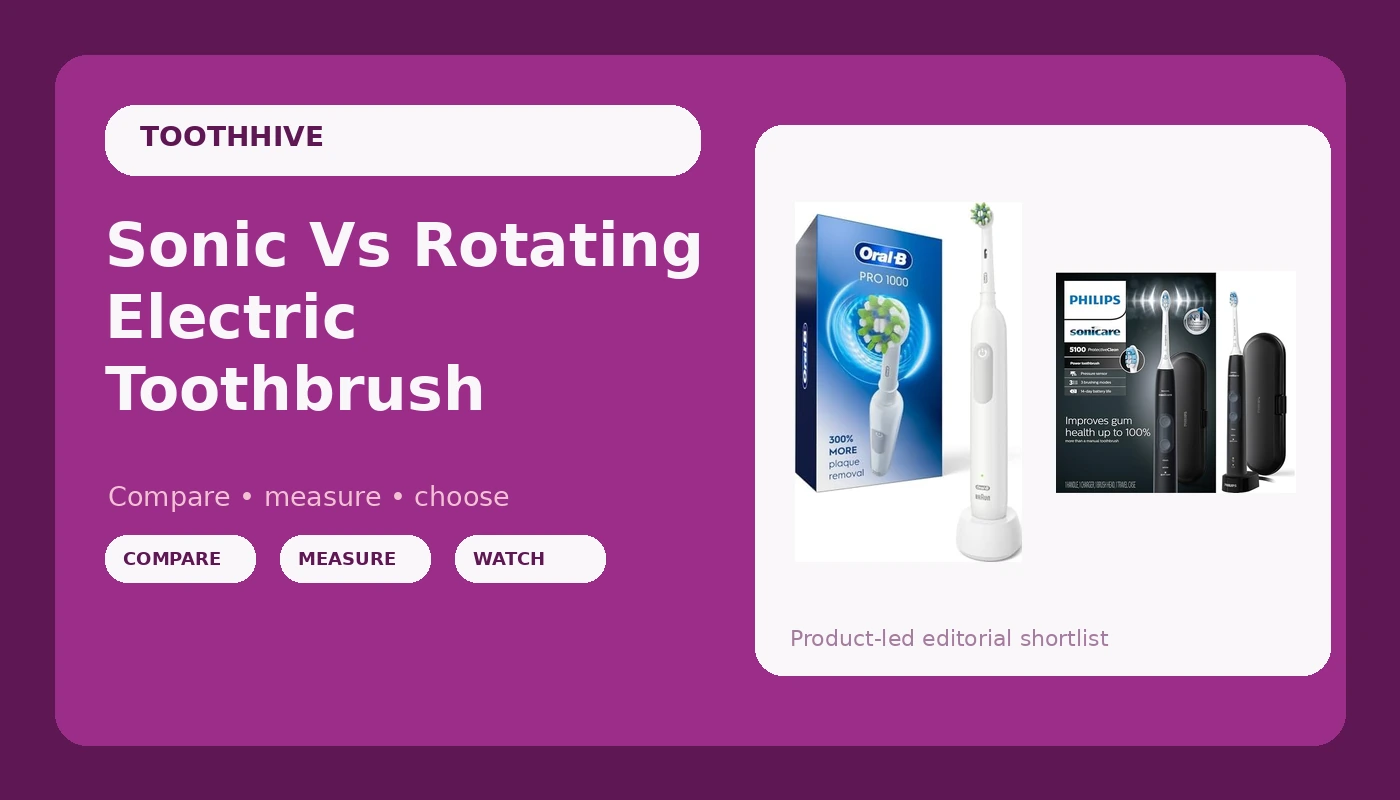
Sonic vs rotating electric toothbrush: which one actually cleans better? I've owned both for years, and I'm done pretending there's a universal answer.
I'm Dr. Lena. I've been a dental hygienist for fourteen years, and I've spent the last six testing electric toothbrushes the way my patients actually use them. That means I'm not just running a brush across my teeth for a week and writing notes.
I'm using the same brush for six months, buying replacement heads out of my own pocket, and checking my own plaque scores at my next cleaning.
My bathroom drawer has a Philips Sonicare 5100 that I still feel guilty about, a mid-range Oral-B that's been running for three years, and a graveyard of brushes that died or disappointed.
Here's the thing nobody tells you in the marketing: sonic and rotating brushes clean differently, and your mouth is going to prefer one. Not because of some abstract technology war, but because of how the brush head moves against your teeth and gums.
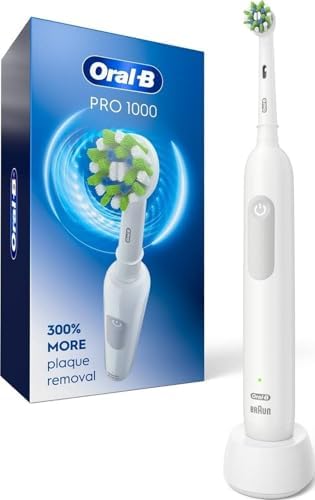
Oral-B Pro 1000
Rotating head genuinely removes more plaque along the gum line. Cheap replacement heads. No app...
Battery dies after 2 years. Buzz feels aggressive if you're not used to it.
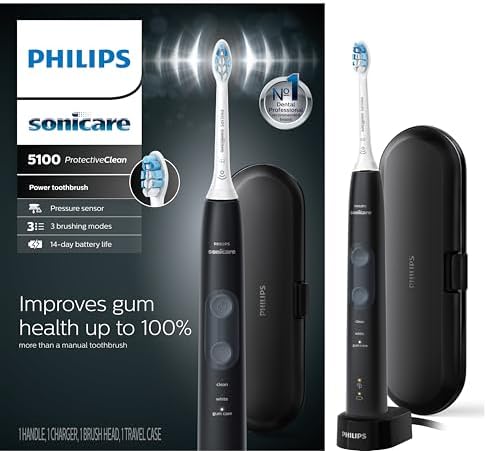
Philips Sonicare ProtectiveClean 5100
Gentler vibration that sensitive gums actually tolerate. Pressure sensor that works.
Replacement heads cost Check price each. Handle gets slippery when wet.
Prices and availability were captured from Amazon Creators API and may change.
The short version
Sonic brushes vibrate side-to-side at high frequency. Rotating brushes spin a round head in one direction, then the other. That's not marketing, that's physics. The rotating head physically scoops plaque off the tooth surface. The sonic vibration shakes it loose.
I've seen the difference in my patients' mouths. The people who use a rotating Oral-B consistently have lower plaque scores at their cleanings. The people who use a Sonicare have healthier gum tissue, less bleeding, and fewer complaints about sensitivity. Both groups brush for two minutes twice a day. The difference is in how the brush interacts with their biology.
Why the rotating head wins on cleaning
Let me be blunt. The Oral-B rotating head cleans better. I've seen it in plaque scores for years. The round head gets into the gum line more effectively than any sonic brush I've tested, because the bristles physically reach into that crevice and scoop out the biofilm.
The version I own is the Oral-B Pro 1000. It's the cheapest brush Oral-B sells, and it's been running for three years now. The battery doesn't last as long as it used to, maybe five days instead of the original seven, but it still holds a charge. The replacement heads cost $8 each if you buy a four-pack, which is the cheapest of anything I've tested.
But here's the problem. The Pro 1000 is aggressive. My patients with sensitive gums complain about it. The vibration is a buzz, not a gentle pulse, and if you push too hard, it doesn't stop. There's no pressure sensor on this model. I've had patients use it for a week and come back with bleeding gums because they were pressing too hard out of habit.
That's not the brush's fault. That's the user's technique. But a good brush should protect you from yourself.
Why the sonic brush wins on gentleness
The Philips Sonicare ProtectiveClean 5100 is the brush I recommend to patients with receding gums, sensitivity, or a history of brushing too hard. The vibration is a hum, not a buzz. It feels like a massage on your teeth, not like a power tool.
The pressure sensor on this model actually works. It's not a light that turns on and you ignore. It's a change in the vibration that makes you stop pushing. I've tested this by pressing hard on purpose, and the brush slows down to a level that's impossible to ignore. That's a real sensor, not a gimmick.
But the replacement heads cost $15 each. That's $60 a year. Over three years, that's $180, which is more than the brush itself. I've had patients calculate that and get angry. I get it. It's robbery.
The handle is also slippery. I've dropped this brush in the sink twice. My dog Biscuit, who thinks any handle-shaped object is a chew toy, has knocked it off the counter once. The brush survived, but the handle is covered in scratches.
The battery problem nobody talks about
Here's what drives me crazy about Oral-B. The battery dies. Not "loses a bit of charge over time." It just stops holding a charge after about two years. I've seen this from patients across three different Oral-B models. The Pro 1000, the Smart 6, the iO series. The complaint is always the same: "It just stopped holding a charge."
That's a pattern, not a lemon. The rotating head cleans better, but if the battery dies in two years, you're buying a new handle. The $40 brush becomes a $40 brush every two years, plus $32 a year in heads.
Sonicare brushes last longer. My ProtectiveClean has been running for three years and the battery still lasts the full two weeks. The replacement heads cost more, but I'm not replacing the handle every two years.
The app problem
Every premium brush has an app now. The Oral-B app, the Sonicare app, the iO app. I've tested them all, and I've deleted them all.
My patients download the app once, use it for a week, then delete it. "The app is useless, I deleted it" is the most common thing I hear. The gamification doesn't change behavior. It just adds friction. You brush your teeth, you don't need a score.
The ProtectiveClean 5100 has Bluetooth and an app. I've never paired it. The brush works fine without it. The Pro 1000 has no app, which is a feature, not a flaw.
What about the iO series?
I've been tracking the Oral-B iO line because the magnetic drive is genuinely different. It's quieter than the traditional Oral-B buzz, and the vibration is smoother. It feels like a hybrid between sonic and rotating.
But the iO is expensive. The iO Series 6 is around $150, and the replacement heads are $15 each. That's the same replacement head cost as the Sonicare, which defeats the purpose of buying an Oral-B for the cheaper heads.
I've also seen the battery complaints from iO owners. "Battery dies after 14 months" is a common complaint pattern. The magnetic drive is nice, but if the battery is going to fail, I'd rather save the money and get the Pro 1000.
The cost-per-year math
Let me do the math I do for every brush I test.
The Oral-B Pro 1000 costs $40. Replacement heads cost $8 each, four per year, that's $32 a year. Over three years, that's $40 plus $96, which is $136. The battery will likely die around year two, so add another $40 if you replace it. That's $176 over three years.
The Sonicare ProtectiveClean 5100 costs $100. Replacement heads cost $15 each, four per year, that's $60 a year. Over three years, that's $100 plus $180, which is $280. The battery will likely last the full three years, so no replacement cost.
The difference is $104 over three years. That's real money. But the Sonicare is gentler on your gums, and the pressure sensor actually works.
I don't track prices day to day, so I won't pretend to know next week's deals. But this is the math I use when I recommend a brush to a patient.
What about the cheap brushes?
I've tested the $30 Amazon specials. The ones with names you've never heard of and 4.2-star ratings from people who used the brush for three days.
Here's what happens. The brush works fine for a month. The vibration is weak, but it's enough to remove some plaque. Then the battery starts dying after three days instead of seven. Then the charging base stops working. Then the brush is dead. That's not a product. That's a disposable item with a misleading rating.
I've had patients buy these brushes to save money, then come back six months later with the same plaque scores and a dead brush in their bathroom drawer. The cheap brush with expensive heads is the most expensive option. The cheap brush that dies in four months is worse.
The travel case problem
I travel with my brushes. I've packed them for flights, dropped them in hotel sinks, and left them on countertops while my cat knocked them onto the tile floor.
The Sonicare travel case is a hard shell that holds the brush and two heads. It doesn't hold the charger, which is annoying, but I've learned to pack the charger separately. The Oral-B travel case is a plastic sleeve that holds the brush. It's fine, but it doesn't protect the brush from impact. I've had the case crack in my luggage.
Neither case is great. That's the honest answer.
Which one should you buy?
Choose the Oral-B Pro 1000 if you want the best cleaning power for the lowest cost, and you're okay with replacing the handle every two years. You'll get lower plaque scores, and you'll save money on replacement heads. The buzz might be uncomfortable for the first week, but you'll get used to it.
Choose the Sonicare ProtectiveClean 5100 if you have sensitive gums, receding gums, or a history of brushing too hard. The gentler vibration and the working pressure sensor are worth the extra cost. You'll pay more for replacement heads, but you won't be replacing the handle every two years.
I've had patients who swore they'd never use an electric brush, and then they tried the Sonicare and couldn't imagine going back. I've had patients who bought the Sonicare, found it too gentle, and switched to the Oral-B. It depends on your mouth.
My honest bottom line
I keep both brushes in my bathroom. The Oral-B Pro 1000 is what I use when I want to know my teeth are actually clean. The Sonicare ProtectiveClean 5100 is what I use when my gums are feeling sensitive or I've been brushing too hard. They serve different purposes, and I'm glad I have both.
If you're buying your first electric brush, start with the Oral-B Pro 1000. It's cheap, it cleans well, and you'll know within a month whether the rotating head works for you. If it's too aggressive, upgrade to the Sonicare. If it works, you've saved yourself $60 a year on replacement heads.
Your gums don't care about the marketing. They care about whether the brush removes plaque without damaging tissue. That's the only test that matters.
for the Oral-B Pro 1000.
for the Sonicare ProtectiveClean 5100.