Related: How to Stop Brushing Too Hard Without Giving Up Clean Teeth
An electric toothbrush comparison is where most people lose the plot. They stand in the aisle, see a wall of handles, and buy whichever box is biggest. After 14 years of hygiene work I can tell you the plaque on your teeth does not care what the handle cost.
What I check is boring and repeatable. Two-minute timer with 30-second quadrant intervals. A real pressure sensor. Replacement head cost over a year. And the only question that actually predicts your next cleaning: will this person still be using it in March?
Technique beats technology, every time. But good technology makes good technique easier to keep. These four brushes cover the honest spread, two Oral-B handles that share the same cleaning action, a sonic brush built around a long battery, and a battery-powered brush for the places a charging dock will never live.
Best Overall: Oral-B Pro 1000 Rechargeable Electric Toothbrush, Pink
The Pro 1000 is the brush I recommend when a patient tells me they want one decision and no homework. It is a round oscillating head on a plain handle, with a two-minute timer that pulses every 30 seconds so you actually move to the next quadrant, and a pressure sensor that tells you when you are leaning on your gums.
That is the whole feature list that matters, and this brush has all of it.
The round head is the part people underestimate. It cups a tooth in a way a manual brush cannot, and it gets under the gumline where most plaque hides. I have watched patients go from bleeding at every cleaning to a boring, quiet hygiene appointment with nothing changed except the handle and a two-minute habit.
What it does not have: an app, a travel case, a charging stand that doubles as a nightlight, or six modes you will use once and forget. Good. Every one of those is a way to charge you more for the same clean. It has been the clinical standard in my chair for a decade, and it still is.
Best Step Up: Oral-B Smart 1500 Electric Toothbrush
The Smart 1500 is the Pro 1000 with more brushing modes and a slightly more substantial handle. The cleaning action is the same family of round oscillating head, and the two features I care about, the quadrant timer and the pressure sensor, are both here.
If your gums are sensitive, the extra modes give you something to switch to when a hygienist tells you to back off the pressure. That is a real benefit, not a gimmick. What I would not do is pay a big premium for it. The jump from the Pro 1000 to the Smart 1500 buys flexibility, not a different class of clean. If the gap between them is small, take this one. If it is wide, put the difference toward a year of replacement heads.
Best for Travel and Long Gaps: 7AM2M Sonic Electric Toothbrush for Adults & Kids, One Charge for 120 Days
Sonic brushes vibrate rather than spin, and the honest answer on oscillation versus sonic is that both remove plaque when you use them properly. Head design and habits matter more than the motor. What earns this brush a spot is the battery. One charge for 120 days is the claim right in the product name, and for a traveler, a kid at college, or anyone who has ever found a dead brush at 11 p.m., that changes the math.
It is built for adults and kids, which makes it a sensible second brush for a household that does not want to buy two of the same thing. It is also the brush I would hand to someone who has never used an electric toothbrush before and is nervous about the vibration.
What to check before you commit is the head. Sonic heads need replacing on the same schedule as any other, roughly every three months. A cheap handle with expensive heads is not a bargain, it is a subscription you did not read.
Best Battery Backup: Spinbrush PRO CLEAN Battery Powered Toothbrush, Soft Bristles
This is a battery-powered brush with soft bristles. No dock, no charger, no cord, no outlet required. I keep one in the guest bathroom and one in the camping bin. It is the right answer for a cabin, a suitcase, or a bathroom where every outlet is already taken.
Here is my honest caveat, and it is the same one I give in the chair. A battery brush is a convenience tool, not a habit tool. If it does not have a quadrant timer, the two minutes are entirely on you, and most people are terrible at that. Buy it as a backup or a second brush, not as the brush you plan to rebuild your gum health around.
How I evaluate an electric toothbrush
Four questions, in order.
- Does it have a two-minute timer with 30-second intervals? If not, it is not a serious toothbrush. You can still buy it, but you are buying a motor, not a habit.
- Is there a real pressure sensor? Brushing hard does more damage than skipping a session. Receded gums do not grow back, and I have never met a patient who could feel themselves brushing too hard.
- What do replacement heads cost over a year? Four heads a year is the baseline. If the heads cost more than the handle did, the handle is a loss leader and you are the product.
- Will this person still be using it in three months? A brush in a drawer has a plaque score of zero improvement. Compliance is a clinical outcome, not a soft metric.
That is the whole test. Motor type, brand, and app are all secondary. The head design and the timer do the heavy lifting, and the pressure sensor is what saves your gums while you are learning.
The electric toothbrush comparison chart
This is the chart I keep for patients at the front desk. Prices move, so check the listing. The checklist underneath does not move.
| Toothbrush | Type | Best for | Price |
|---|---|---|---|
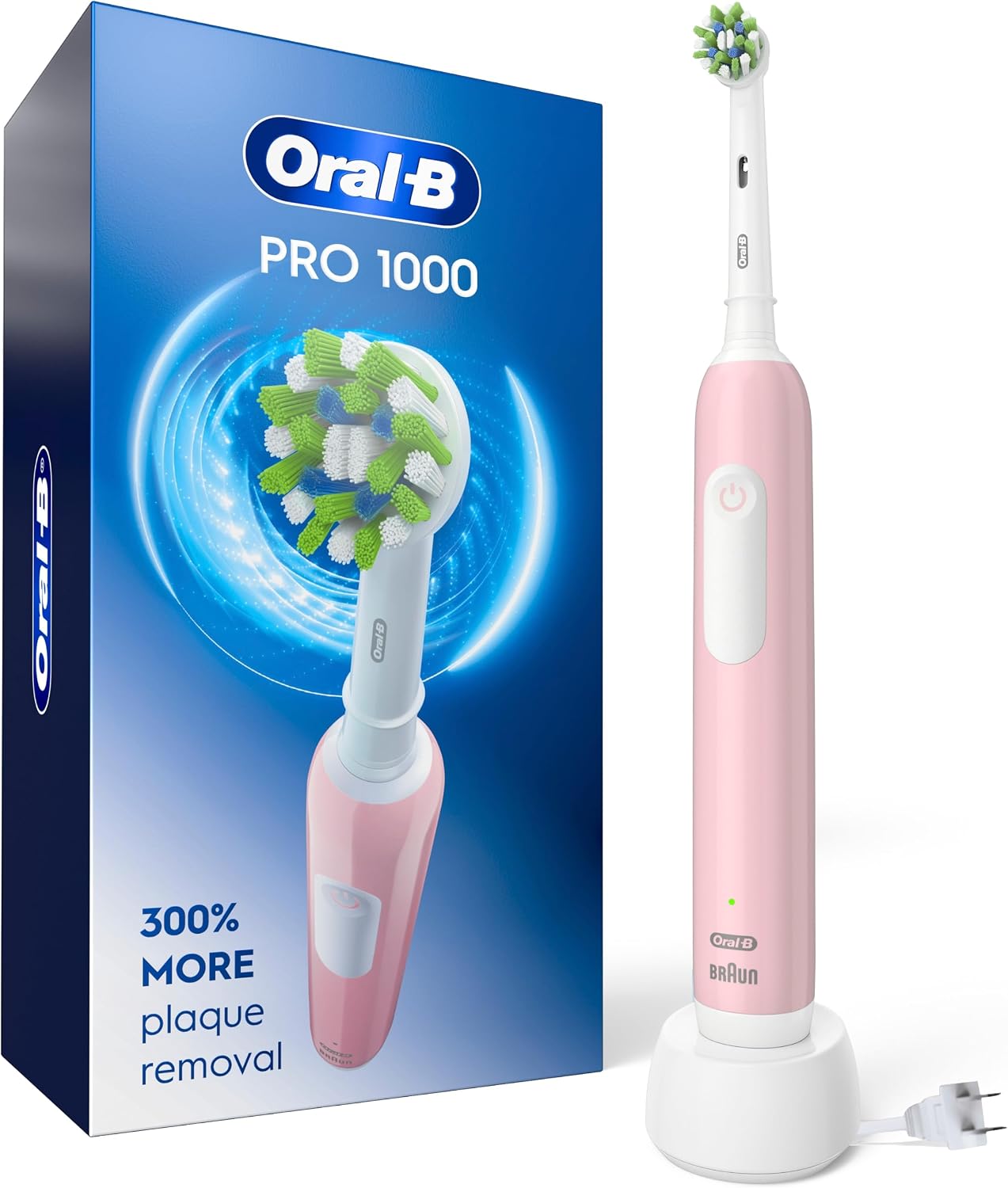 Visit on Amazon → Visit on Amazon →Oral-B Pro 1000 |
Oscillating-rotating, rechargeable | First electric brush, daily driver, most clean per dollar | $49.94 |
 Visit on Amazon → Visit on Amazon →Oral-B Smart 1500 |
Oscillating-rotating, rechargeable | Sensitive gums, people who want extra modes | Check current Amazon price |
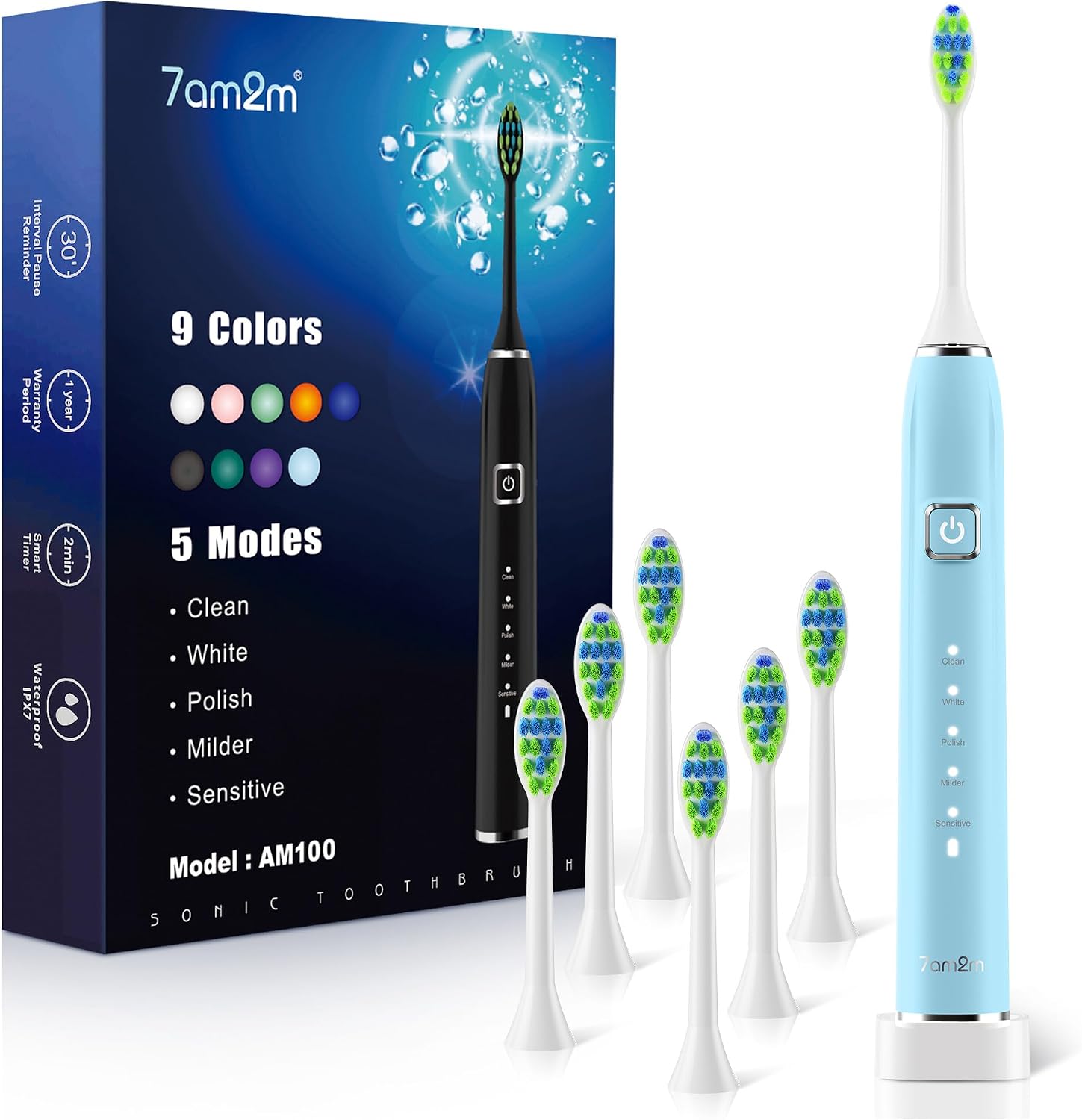 Visit on Amazon → Visit on Amazon →7AM2M Sonic |
Sonic, rechargeable | Travelers, students, shared family brush | $35.99 |
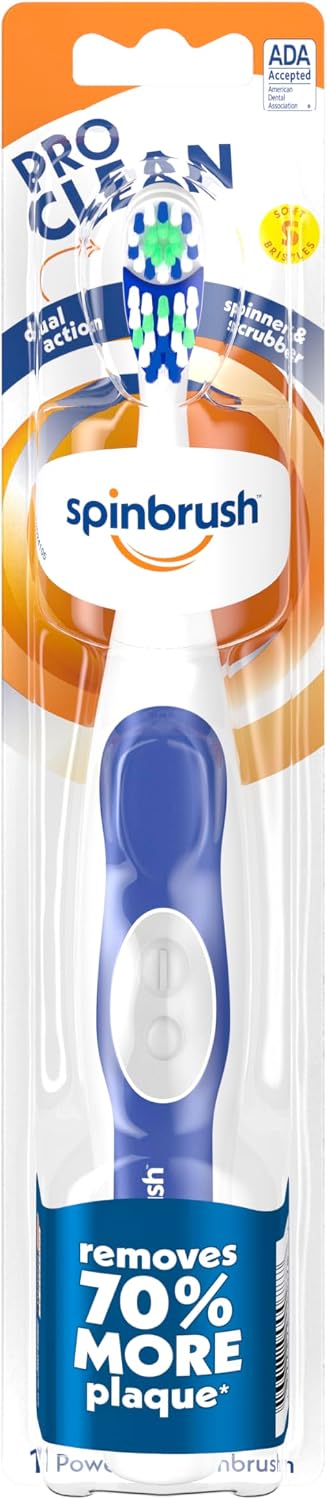 Visit on Amazon → Visit on Amazon →Spinbrush PRO CLEAN |
Battery powered, soft bristles | Guest bathroom, cabin, camping bin, no outlet | $34.49 |
Four brushes, two cleaning actions, one checklist. If a brush on the shelf does not answer the four questions above, the chart does not care how much it costs.
Analysis: what actually moves your plaque score
A plaque score is the clinical measure of visible plaque left after brushing. It is the only honest way to compare brushes, and it is why I do not trust a feel test. A brush can feel aggressive and leave plaque behind the lower front teeth. A brush can feel gentle and take everything off. The score is the truth.
The variable that shows up over and over is time. Two minutes, twice a day, with 30-second moves between quadrants. That is what the timer buys you, and it is why I will not recommend a brush without one to an adult with gum disease. You can be disciplined without it. Most people are not, and the timer does the disciplining for free.
Pressure is the second variable, and the one patients argue with me about. Hard brushing does more damage than skipping. It drives the gum down the root, exposes the neck of the tooth, and creates sensitivity you then try to fix with a toothpaste that does not fix it. A pressure sensor is the cheapest gum protection you will ever buy, and it is the feature I will not compromise on.
Head cost is the third. Four heads a year is the baseline for one person. If the heads cost more than the handle, you bought a printer and the ink is the business. Price a year of heads before you decide, not after.
Compliance is the fourth, and it is the one that decides everything else. I have watched a patient use a premium handle wrong for two years. I have also watched a patient with a basic round-head brush and a timer get the best cleaning of her life at 60. The brush you keep using is the brush that works.
Should you buy the Oral-B Pro 1000?
Yes, if you want the most clean per dollar and you are finally ready to stop scrubbing with a manual brush. It has the quadrant timer, it has the pressure sensor, and it has a round head that reaches the gumline. It has no app and no case, and you will not miss either one. Check current Amazon price, then price the heads for a year, because that is the real cost of ownership.
Should you buy the Oral-B Smart 1500?
Buy it if the gap over the Pro 1000 is small and you want extra modes for sensitive gums. The cleaning action is the same family of round oscillating head and it keeps the timer and the pressure sensor. It is a step up in flexibility, not a different class of clean, so do not stretch your budget for it.
What about the 7AM2M and the Spinbrush?
The 7AM2M is the brush for a suitcase, a dorm room, or a household sharing one handle, and the long battery claim in its own name is the whole reason it is here. The Spinbrush PRO CLEAN is the guest-bathroom and cabin brush, soft bristles, battery powered, no outlet needed. Neither one replaces a timed, pressure-sensing daily brush. Both of them earn their place as the second brush.
Whatever you pick, the plan does not change. Two minutes, twice a day, 30 seconds per quadrant, light pressure, new head every three months. Your gums will not care which handle you bought. They will care that you showed up.