Most families do not have a brushing problem. They have a two-minute problem. A kids electric toothbrush routine that survives past the first week of novelty comes down to three things: a brush that runs its own timer, a parent who stops renegotiating every night, and a mouth that gets cleaned in the same order every single time. Get those three right and the brush does most of the work for you.
I am a dental hygienist in Madison, Wisconsin. Fourteen years of cleanings, thousands of mouths, and a fairly unsentimental view of toothbrush marketing. I have watched kids with a ten dollar brush out-clean kids with a four hundred dollar one. I have also watched the reverse happen, almost always because the expensive brush sat in a cup uncharged for two weeks while the kid went back to the manual brush in the travel bag.
What follows is the routine I set up for families in the chair, plus the two brushes I point them toward when they ask what to buy. It is not about which motor is superior. It is about what actually gets used at 7:40 on a school morning when everyone is late.
Why you should trust me
I have been a hygienist for fourteen years, and I score plaque for a living. Before and after every cleaning I use a disclosing agent that stains what the brush missed, and I have seen enough of those pink-and-purple maps to know that the gap between a good brusher and a bad one is rarely the brush. It is the two minutes, the gumline, and the back molars.
I also have a bias I will admit up front. I care about pressure sensors more than almost anyone else in this niche, because I am the person who treats the recession that comes from years of scrubbing. Brushing hard does more permanent damage than skipping a night. So when I recommend a brush for a kid, I am thinking about the gums they will have at forty.
How I picked and how I tested
Every brush that comes across my chair gets the same four questions, and they are the only four that matter to me:
- Does it have a two-minute timer with 30-second intervals? If not, it is not a serious toothbrush, no matter what it costs.
- Is there a real pressure sensor that tells the kid to back off?
- What do replacement heads cost over a year, and how easy are they to find?
- Will the kid still be using it in three months?
In the 90-day patient trial I am running with families in the practice right now, I am checking three things at each visit: visible plaque along the gumline with a disclosing tablet, the condition of the gum tissue, and whether the brush is still in rotation at the three-month mark. That last one is the one nobody markets and the one that decides everything. A brush that gets abandoned is a brush that cleans nothing.
I do not score brushes on oscillation versus sonic. Both work. Oral-B spins a round head, Sonicare and the sonic-style brushes vibrate, and in a kid's mouth the difference is noise. Head size, timer, and pressure feedback matter far more than the motor.
The two brushes I hand to families
I keep this list short on purpose. One is the budget answer for a bathroom with multiple kids, and one is the brush I reach for when a kid needs coaching on pressure. Both run their own timer, which is non-negotiable in my house and in my chair.
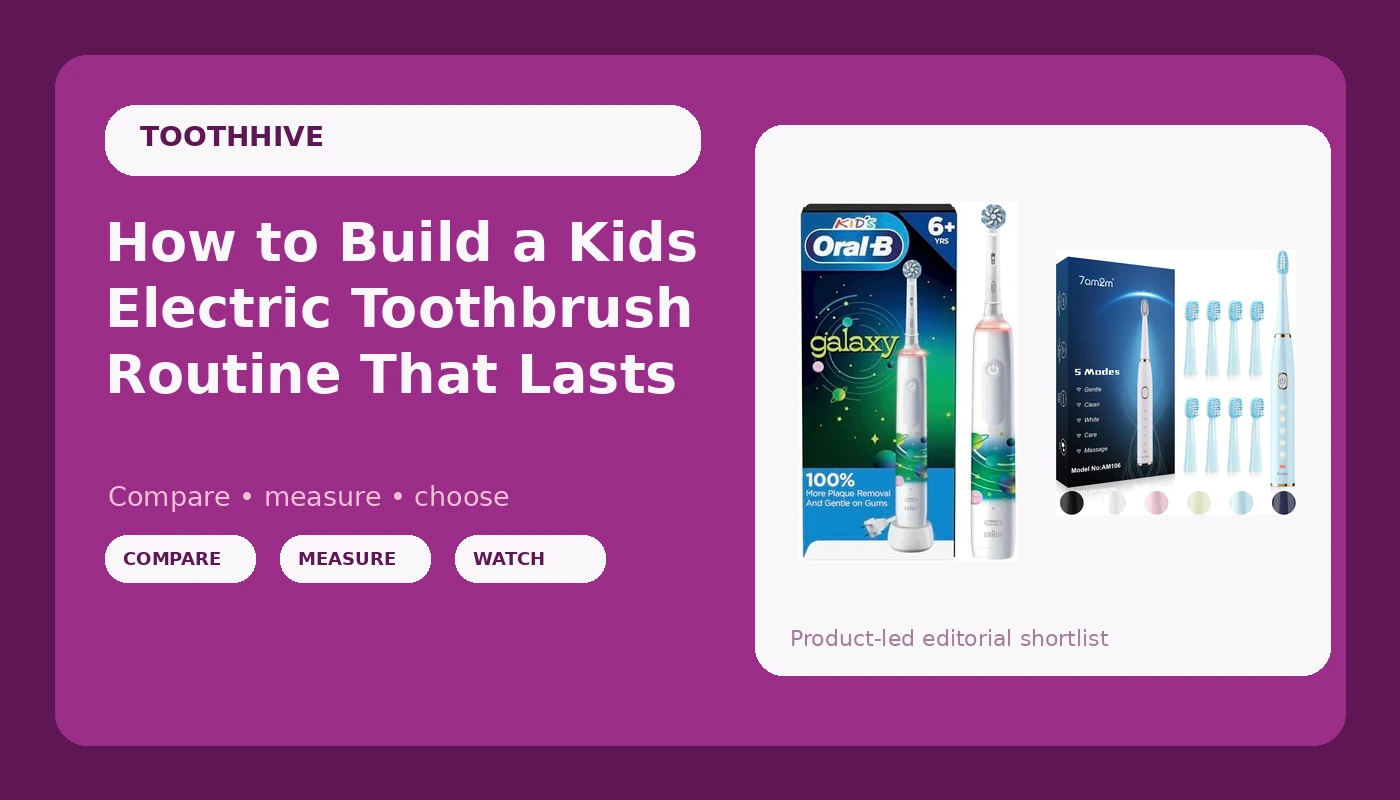
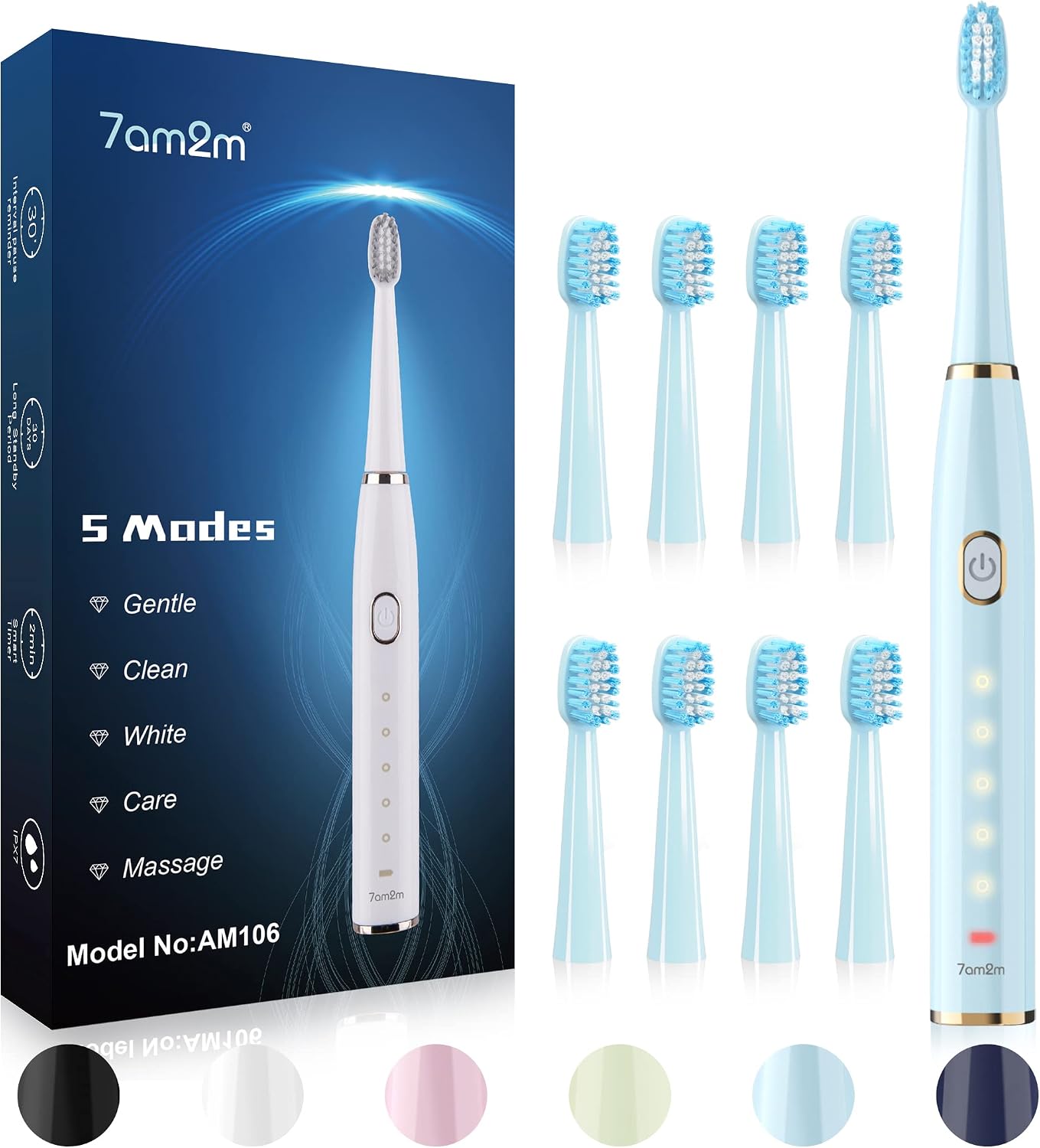
Budget pick for a shared bathroom: 7AM2M Sonic Electric Toothbrush for Adults and Kids- High Power Rechargeable Toothbrushes with 8 Brush Heads,5 Adjustable Modes, Built-in 2-Minute Smart Timer,4 Hours Fast Charge for 30Days (Blue)
 Visit on Amazon →
This is the brush I suggest when a family has two or three kids sharing one sink and a budget that does not stretch to three separate handles. It is a sonic brush, so the head vibrates rather than spins, and it carries the two features that make a routine possible: a built-in two-minute smart timer and five adjustable modes. The charge claim on the box is four hours for roughly 30 days of use, which matters more than it sounds, because the fastest way to kill a brushing habit is a dead brush on a Monday morning.
The eight included brush heads are the practical part. Kids chew bristles. They drop heads on tile, they swap colors, they lose the one they liked. Having spares in the drawer means nobody is waiting on a shipment to brush their teeth.
Five modes is more than a child needs. Leave it on the gentlest setting and let them grow into the rest. A kid who finds the brush too aggressive will press harder to compensate, which is the opposite of what you want.
Flaws but not dealbreakers: It is a sonic brush with adult-sized ambition, so a very small mouth may find the head large at first. Start with the back teeth and work forward, and give it a week.
Families with siblings, a shared bathroom, or a kid who is rough on equipment will get the most out of this one.
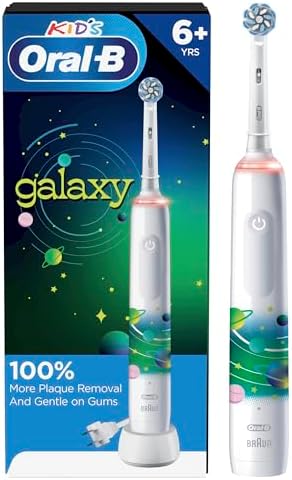
Our pick for kids who need coaching: Oral-B Kids Electric Toothbrush with Coaching Pressure Sensor and Timer, Rechargeable Toothbrush with Brush Head, Sparkle & Shine
 Visit on Amazon →
This is the brush I recommend when the problem is pressure, not motivation. The coaching pressure sensor is the whole point. Kids scrub when they are rushed, and scrubbing is what recedes gums and wears enamel at the gumline. A brush that coaches them to ease off does the correcting for you, without you standing in the doorway saying "gentle, gentle, gentle" for the four hundredth time.
It is rechargeable, it has a timer, and it is built for a child's hand and a child's mouth. The round head is small enough to reach the back molars, which is where I find the most plaque on kids at every single recall visit. The Sparkle & Shine styling is not a gimmick either. I have watched a kid refuse a plain white brush and then brush happily with one that matched their backpack.
Flaws but not dealbreakers: It ships with one brush head, so order spares before the bristles splay. And if your child is under three or still puts everything in their mouth, talk to your own dentist before switching from a manual brush.
Parents of kids who press too hard, or kids who have already shown early gum recession, should start here.
The routine, step by step
This is the part that matters more than the shopping. The routine below is what I walk families through in the chair, and it works with either brush above.
Step one: Attach brushing to something that already happens. Do not build the habit on willpower. Build it on breakfast, or on putting on shoes, or on the last thing before lights out. A brush that lives in a fixed slot in the day gets used. A brush that happens "whenever" gets skipped.
Step two: Let the timer be the authority. This is why I will not recommend a brush without a two-minute timer and 30-second intervals. When the brush tells your kid to move to the next section, you are no longer the enforcer. You are just the person standing there. That single shift ends most bedtime arguments.
Step three: Name the quadrants out loud. Upper right, upper left, lower right, lower left. Say it as the timer buzzes. Kids as young as four can track this, and it stops the pattern I see constantly, which is thirty seconds of frantic scrubbing on the front teeth and nothing on the sides.
Step four: Aim at the gumline, not the crowns. The bristles should meet the tooth at roughly a 45-degree angle where the tooth meets the gum. That line is where plaque builds first and where most cavities start. An electric brush does the motion. Your kid only has to steer.
Step five: Let the brush do the scrubbing. The most common mistake I see with kids and electric brushes is that they treat it like a manual brush and add their own back-and-forth on top of the vibration. Tell them to guide the head slowly from tooth to tooth and let the motor work.
Step six: Watch the pressure, not the clock. If the brush has a coaching pressure sensor, point it out and make it a game. If they press too hard and the brush buzzes or slows, that is the brush talking, not you. This is the single best thing you can do for the gums they will have as adults.
Step seven: Spit, do not rinse. After brushing, spit out the foam and skip the water glass. Rinsing washes away the fluoride that is still working on the enamel. Kids find this strange for about three days and then it becomes normal.
Step eight: Park the brush on the charger where you can see it. A brush on a charger by the sink gets used. A brush in a drawer gets forgotten. If the battery runs about a month per charge, get in the habit of docking it every Sunday so it never surprises you on a school morning.
Step nine: Hand over control in stages. Up to about age six, you brush, they watch. From six to nine, they brush first and you do a ten-second check on the back molars. From nine up, they brush alone and you inspect twice a week. Do not skip the check just because the brush has a timer.
Step ten: Reset after a break. Travel, illness, a week at grandma's, all of it breaks the streak. When you come back, do the whole routine together for two weeks before you step away again. Habits rebuild faster the second time.
What to skip, and why
Skip any brush without a quadrant timer. A single two-minute countdown is better than nothing, but the 30-second intervals are what actually distribute the brushing around the mouth. Without them, most kids finish the front and call it done.
Skip brushes that require an app to change modes or to see the timer. The app is the product in those cases, not the brush, and a phone in the bathroom at bedtime is a fight you do not need. If the timer and the pressure feedback only exist on a screen, the brush is doing less than it claims.
Skip the coin-battery "electric" brushes sold next to the candy at the checkout. They vibrate, they do not clean, and they teach a kid that brushing is a toy.
Be careful with stiff bristles, too. Soft is the right answer for kids at every age. Hard bristles plus a kid in a hurry is how you get gum recession at twenty-five.
The math that actually matters
The handle is the cheap part. What you are really buying is two minutes, twice a day, for years, and the ongoing cost is brush heads. Plan on a new head roughly every three months, which is four heads per kid per year. That is the number to check before you commit to a brush, not the sticker on the handle. A budget brush with inexpensive, easy-to-find heads beats a premium brush with heads you have to hunt for.
The second number is charging. A brush that needs a charge every week will spend time dead on the counter. A brush that runs about a month per charge, like the 7AM2M claims, fits the way families actually live.
Everything else, the modes, the colors, the case, is preference. None of it removes plaque.
Questions parents ask me most
At what age should a kid switch to an electric toothbrush? Around three, once they can hold a brush without gagging on it and you are still doing the brushing. At that age the electric brush is really a tool for the adult, because the timer and the pressure sensor make your job easier. The child takes over gradually from six onward.
My kid brushes too hard. What do I do? Buy a brush with a pressure sensor and let the sensor be the bad guy. Kids scrub when they are rushed or when they are trying to "do a good job." A brush that coaches them to ease off fixes the habit faster than any amount of reminding from you.
Is a sonic brush or a round spinning head better for kids? Both clean well. Sonic brushes vibrate and tend to feel gentler in a small mouth. Round spinning heads reach the back molars efficiently. Pick based on head size, timer, and pressure feedback, and let the motor type be the last thing you consider.
How often should we replace the brush head? Every three months, or sooner if the bristles are splayed or your kid has been sick. A worn head cleans noticeably worse, and kids are hard on bristles.
Start tonight
You do not need a new routine, a chart, or a reward system. You need a brush with a two-minute timer, a pressure sensor if your kid scrubs, and a parent who stops negotiating the clock. Set it up tonight, brush alongside them so they see it is normal, and let the brush run the two minutes while you say the quadrants out loud.
The habit is the treatment. Everything else in the bathroom is just equipment.