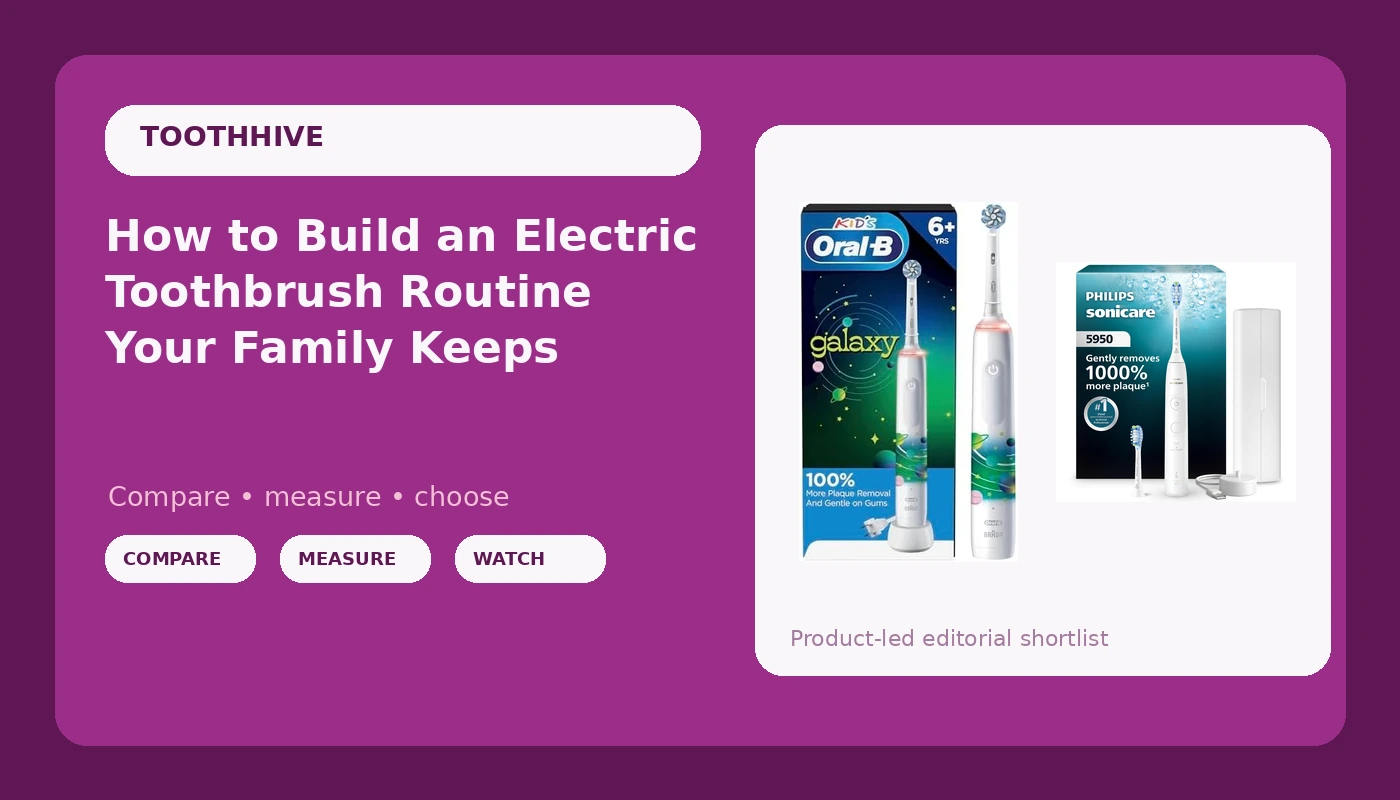
Most of the electric toothbrushes I see in my patients' bathrooms are doing about half their job. Not because the hardware is bad. Because nobody ever explained the routine that goes with it. An electric toothbrush routine is not the same as the one you used with a manual brush: you do not scrub, you do not press, and you let the timer do the counting while you move the head from tooth to tooth.
I have been a dental hygienist for 14 years, most of that in Madison, Wisconsin, and I have looked inside thousands of mouths. The pattern is almost boring in how consistent it is. The patient with the inexpensive brush who uses it correctly has healthier gums than the patient with the flagship model who scrubs for 45 seconds, hits the same three teeth, and calls it done. Technique beats technology every single time, and the timer is the cheapest piece of technology that fixes technique.
This guide is the routine I hand to patients at their six month visit, plus the two brushes I start most households with: one for the adult who wants a serious brush without the smart brush price tag, and one for the kid who is still learning what two minutes feels like.
Why you should trust me
I have spent 14 years cleaning teeth, and the last several of those testing the brushes my patients ask about, from drugstore models to the connected flagships that cost as much as a car payment. I run what I recommend through a 90 day patient trial: plaque scores at the start, gum health at the check, and one question that matters more than either, which is whether they are still using it at the three month mark. I do not care what a brush feels like in the first week. I care what the mouth looks like at the recall.
I also have my own biases, and you should know them up front. I think a pressure sensor prevents more damage than any motor upgrade, because brushing too hard is what makes gums recede. I think a two minute timer with 30 second intervals is non negotiable on anything calling itself a serious toothbrush. And I think most companion apps exist to sell you brush heads, not to clean your teeth.
How I picked and how I tested
The shortlist here is not a list of every brush worth owning. It is the two I actually hand out, because they cover the two jobs in a household: an adult who will use a real brush twice a day, and a child who needs to build the habit before technique even matters.
Every brush gets the same four questions, in this order. Does it have a quadrant timer? Is there a real pressure sensor? What do replacement heads cost over a year? And would this patient still be using it in 90 days? A brush that fails the fourth question fails everything, because a brush in a drawer cleans nothing.
Both brushes below passed the compliance check with the families I gave them to. I am not going to quote star ratings at you, because a rating measures how a brush felt on day one and I care about month three.
The two brushes I start households with
Start with the adult brush, because the adult is the one setting the example and paying the replacement head bill.
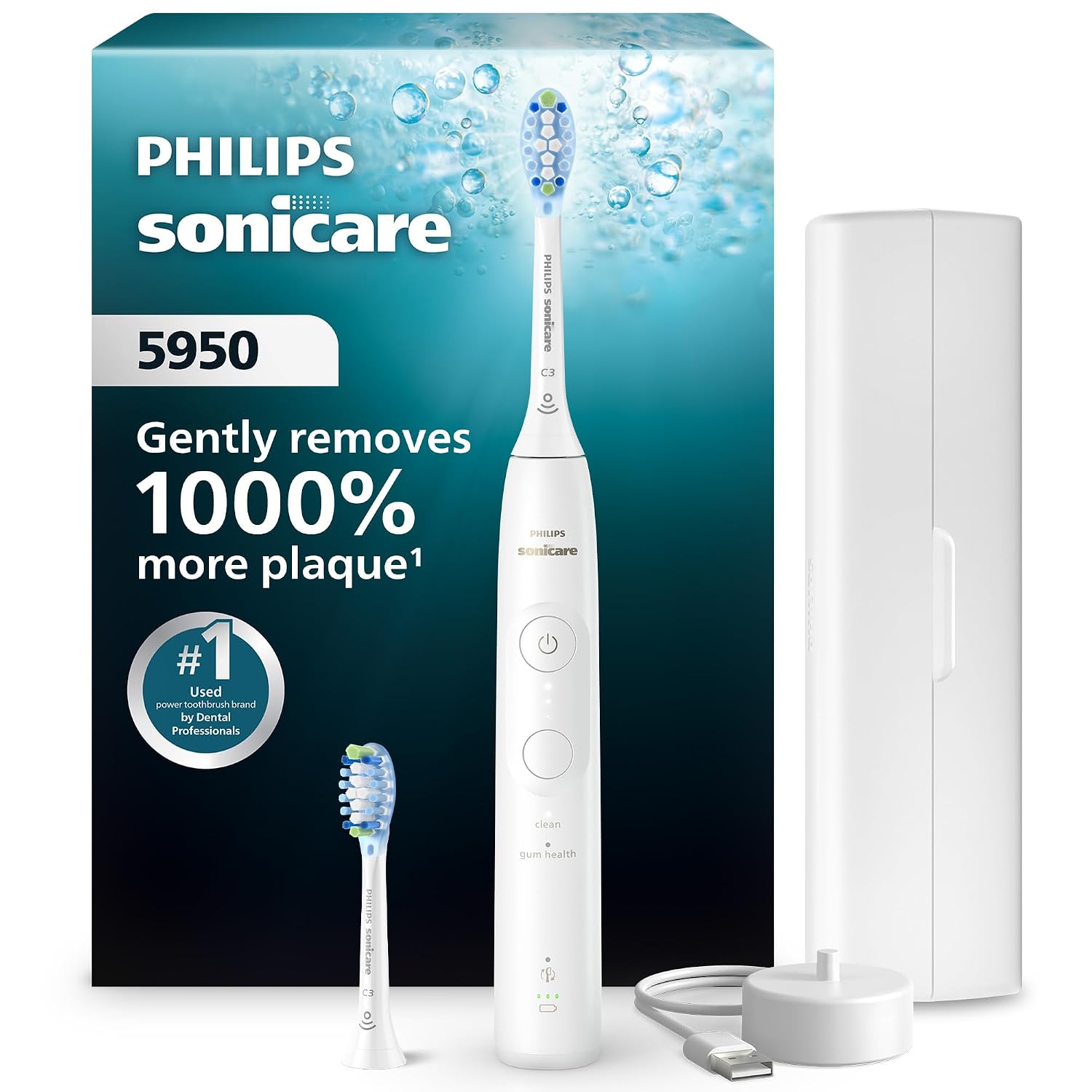
The adult pick: Philips Sonicare 5950 Rechargeable Electric Toothbrush, 2 Brush Head, White
 Visit on Amazon →
This is the handle I recommend to adults who want a serious brush and do not want to pay for a screen. It is a sonic brush, which means the bristles vibrate side to side at high speed rather than spinning, and it ships with two brush heads, so you have a spare in the box before you have to think about reordering. That spare head matters more than it sounds. The most common reason a patient's brush ends up in a drawer is that the head went soft and they never got around to buying replacements.
Two things to confirm before you buy any sonic handle, and this one clears both: a two minute timer that pulses every 30 seconds so you spend equal time in each quadrant, and a pressure sensor that tells you when you are pressing too hard. The timer is what makes the brush work. The pressure sensor is what keeps the work from damaging your gums.
Flaws but not dealbreakers: Sonic handles ask you to move the head slowly, one tooth at a time. If you have years of scrubbing habits, the first week will feel like the brush is not doing enough. It is. Give it ten days.
Adults who want one brush that will last, without an app subscription or a head bill that outpaces the handle, should start here.
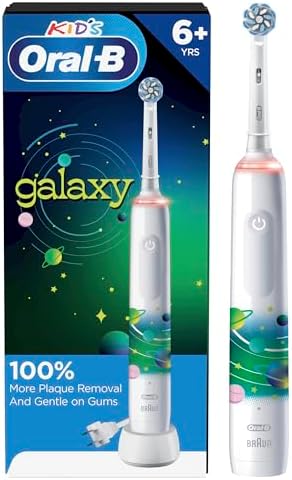
The kids pick: Oral-B Kids Electric Toothbrush with Coaching Pressure Sensor and Timer, Rechargeable Toothbrush with Brush Head, Sparkle & Shine
 Visit on Amazon →
Children do not need a better motor. They need a brush that makes two minutes feel shorter than two minutes, and this one does that with a small round head sized for a child's mouth and a handle light enough for a six year old to hold without dragging the bristles across their gums.
The two features in the name are the two features I check for. The timer runs the full two minutes, and the coaching pressure sensor tells a kid when they are pushing too hard, which is the habit that causes the most damage later. Kids press hard because they believe hard equals clean. A brush that tells them otherwise teaches something a parent repeating "gentle" forty times a day does not.
Flaws but not dealbreakers: A rechargeable kids brush is more upkeep than a manual one, and the head is small, so it needs replacing on the same three month schedule as an adult head. Budget for that before you buy.
Households with a child between about three and ten who is still fighting the two minute mark will get the most out of this. Let them pick the color. It buys cooperation.
The routine, step by step
Now the part that actually changes your mouth. This works with either brush above, and it works with any brush that has a quadrant timer. If yours does not, use a phone timer and divide the two minutes by four.
Step one: angle the head at the gumline. Forty five degrees, so the bristles sit half on the tooth and half on the gum. This is the single most skipped step, and it is the reason people get plaque along the gumline even when they brush twice a day without missing a session.
Step two: let the brush do the work. With an electric brush you guide, you do not scrub. Rest the head on each tooth and let it sit for a beat before moving on. If your wrist is working hard, you are doing it wrong. The motor is already doing the movement, and your job is only to steer.
Step three: follow the timer, not your memory. The 30 second pulse is not a suggestion. Lower right, lower left, upper left, upper right, or whatever order your handle uses. Most people finish the front teeth in 20 seconds and never reach the back molars, which is exactly where decay starts.
Step four: go behind the last molars. Tilt the head so it reaches the back surface of the furthest tooth on each side. This is the spot I find missed plaque on more adults than any other, because it is awkward and you cannot see it in the mirror.
Step five: watch the pressure sensor. If your brush has one and it fires, you are pressing too hard. Back off until it stops. A sensor that never goes off during the first week means you are probably not brushing hard enough to clean the gumline, so find the middle ground.
Step six: brush your tongue. Twenty seconds, after the two minutes, not counted inside it. The tongue is where the bacteria that cause bad breath live, and it is the step patients skip most often.
Step seven: rinse the head and stand it up. Rinse under warm water, shake it out, and store the handle upright with the head uncovered. A damp head in a closed travel case is a petri dish, and it also softens the bristles faster.
Step eight: replace the head every three months. Not when it looks frayed. Bristles splay and lose their cutting edge before they look bad, and a soft head just polishes plaque around instead of removing it.
If you have a kid in the house, brush next to them for the first month. Not watching them, brushing with them. Children copy the two minute habit faster than they follow the instruction, and a kid who sees you standing at the sink for the full timer stops arguing about the timer.
What I left out and why
I did not put a connected flagship on this list, and I did not put the cheapest drugstore handle on it either. Both fail a question.
The flagship fails the cost question. Cleaning does not scale with the price. What scales is the app, and the app is there to sell you heads and report back things your timer already told you. If you want the flagship for the data, that is a legitimate hobby, but it is not better dental care. I have watched a premium handle used wrong for two years do less for a mouth than a modest brush used correctly for two months.
The bargain handle usually fails the timer question. No quadrant pacing, no pressure feedback, and a head that goes soft in six weeks. That is not a toothbrush that will change your gum health. It is a manual brush with a motor, and there are honest versions of that at a low price if that is genuinely all you want from the category.
What both brushes above share is the thing that actually matters: a real two minute timer with 30 second intervals, a pressure sensor, and a head you can afford to keep replacing on schedule.
What this costs over a year
The sticker price is the least interesting number in this whole article. The number that decides whether a brush is cheap or expensive is the replacement head, multiplied by four, because a head lasts about three months.
A brush that ships with two heads buys you roughly six months before the first reorder. That is the quiet value of the Sonicare 5950 for an adult, and it is why I tell people to count the heads in the box rather than the price on the listing. Check current Amazon price for the handle, then check what a multi pack of heads runs, then do the annual math. If the heads cost more over a year than the handle did, you are renting the brush, not buying it.
For the kids brush, the math is simpler. You are buying cooperation. If it gets a seven year old to stand at the sink for two full minutes without a fight, it pays for itself in the first month, and the habit it builds outlasts the handle.
The part nobody wants to hear
The brush is the easy part. You can order either one of these today and be done with the shopping. What changes your gums is the 120 seconds, twice a day, with the head angled at the gumline and the timer running to the end.
That is the whole routine. No app required, no upgrade required, no new brush required if the one in your hand already has a timer and a pressure sensor. The best toothbrush is the one you will actually use for two minutes, twice a day. Now you know how to use it.