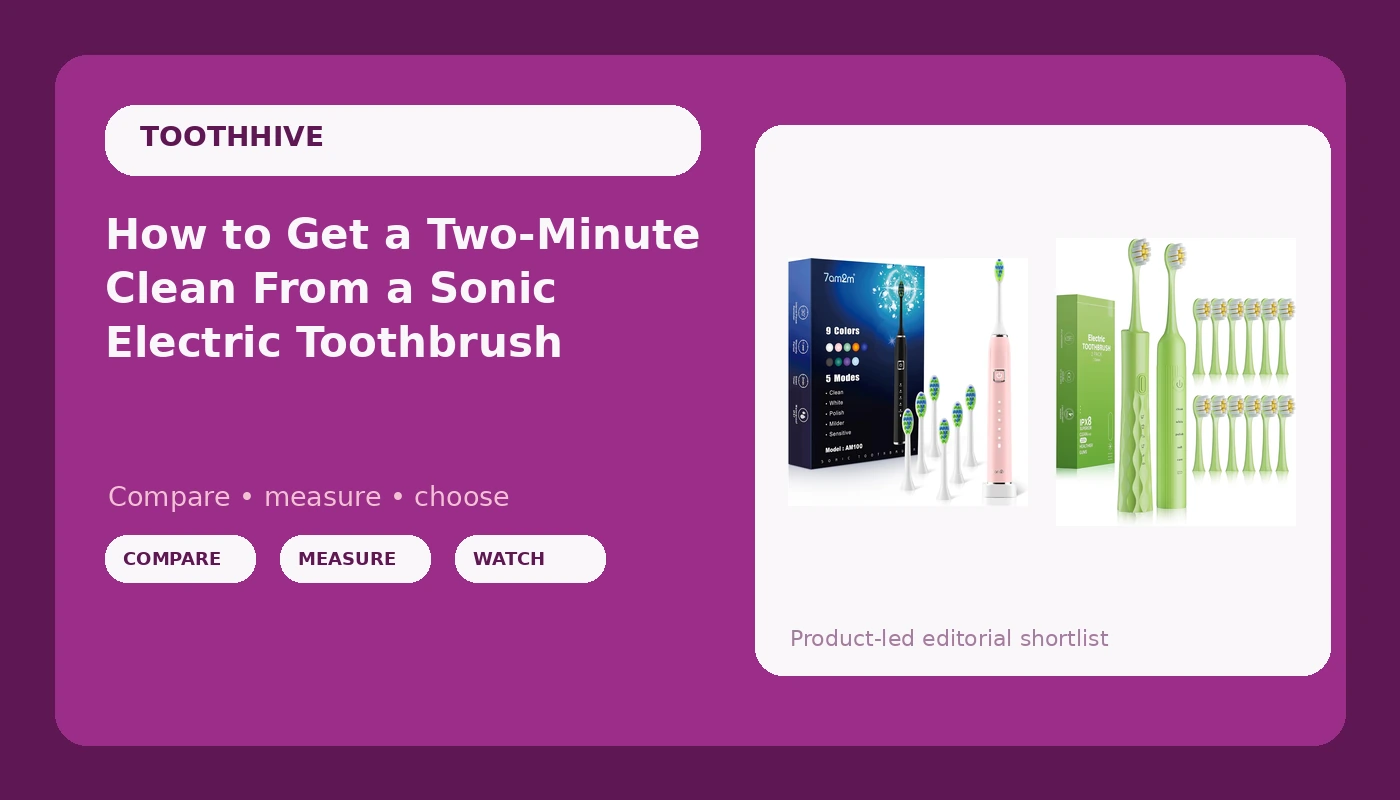
Most people who buy an electric toothbrush do not end up with cleaner teeth. They end up with a faster version of the same 45-second scrub they were doing with a manual brush, and then they wonder why the hygienist still finds plaque along the gumline. The problem is almost never the motor. It is the electric toothbrush timer, the head you are using, and whether you actually stand there for two full minutes.
I have been a dental hygienist for 14 years in Madison, Wisconsin, which means I have looked inside a lot of mouths. The patients with the cleanest checkups are not the ones holding the most expensive handles. They are the ones with a modest brush that counts two minutes for them, and the discipline to let the count finish.
This is the conversation I have at the end of a cleaning, written down. Two brushes I would hand a patient tomorrow, the routine that makes either one work, and an honest line between what is worth paying for and what is just packaging.
Why you should trust me
I am Lena, a registered dental hygienist, and I have spent my career on the unglamorous end of dentistry: the scaling, the probing, the disclosing tablets that turn every missed spot purple. A plaque score does not care how much you paid for your brush. It cares whether the bristles touched the gumline, for how long, and how hard you pressed while they were there.
I have watched the current crop of brushes move through my chair during a 90-day patient trial, checking the same three things every time: plaque scores at the start and the end, the state of the gum tissue, and whether the person was still using the brush at the three-month mark. That last one is the number nobody markets, and it is the one that predicts your next cleaning.
I also do not get excited about apps. My own brush is a mid-tier model with a timer and nothing else, and it has kept my mouth in better shape than any flagship I have tried. Show me the timer and the head cost. Your gums do not care about the app.
How I picked what is in this guide
Everything here has to clear four questions before it earns a spot:
- Does it have a real timer that counts two minutes?
- Does the head design let the bristles reach the gumline without you mashing the handle?
- What do replacement heads cost over a year of use?
- Will a normal, tired person still be using it in three months?
Notice what is not on that list: motor type, Bluetooth, and how many modes the box advertises. Sonic and oscillating both remove plaque when the bristles meet the margin for the right amount of time. The brush that wins is the one that makes the right amount of time the easy choice.
The two brushes I would hand a patient first
Both of these are budget-tier, and both have the one feature I refuse to compromise on.
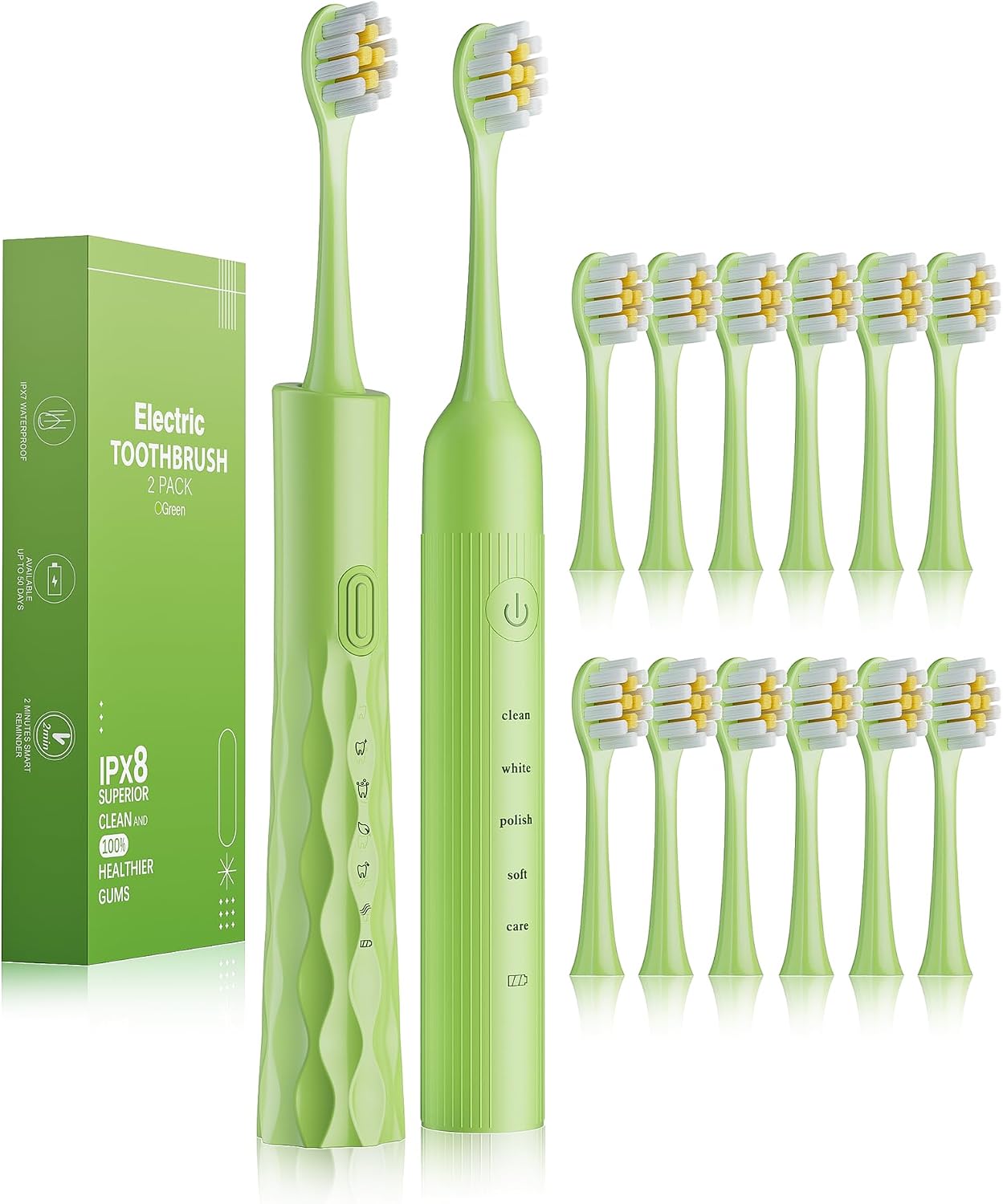
Best for two people sharing one sink: Aneebart 2 Pack Electric Toothbrush for Adults, USB Rechargeable Sonic Toothbrush with 12 Brush Heads, Smart Timer, 6 Modes, 2-Hour Fast Charge Last 30 Days
 Visit on Amazon →
Two handles and twelve heads in one box is why this is the pick I give couples and parents of teenagers. Twelve heads across two handles is six each, and at the three-month replacement interval I ask for, that is a long runway before anyone has to think about buying heads again. That matters more than people expect, because replacement heads are where electric brushes quietly get expensive, and a brush whose heads are annoying to rebuy becomes a brush that sits in a drawer.
The smart timer is the feature I actually care about. Two minutes, twice a day, is the entire game, and a brush that counts for you removes the guesswork. The listing also rates the charge at two hours for roughly 30 days of use, which is plenty for a brush that lives on the counter. You plug it in once a month and stop thinking about it.
Six modes is more than anyone needs. Pick one, probably the plain clean setting, and leave it there. Cycling through modes mid-brush is a hobby, not hygiene, and most of what the extra modes change is how the handle feels, not how the bristles clean.
Flaws but not dealbreakers: Nothing here claims a pressure sensor, and that is the one feature genuinely worth paying extra for if you know you are a hard brusher. Nothing on this handle will tell you that you are pressing too hard. The workaround is free: hold the handle with two fingers and let the vibration do the work, and if the bristles are splayed flat within a month, that is your pressure sensor telling you the truth.
Anyone setting up a shared bathroom or buying for a teen who is finally ready to stop scrubbing with a manual brush will be well served here.
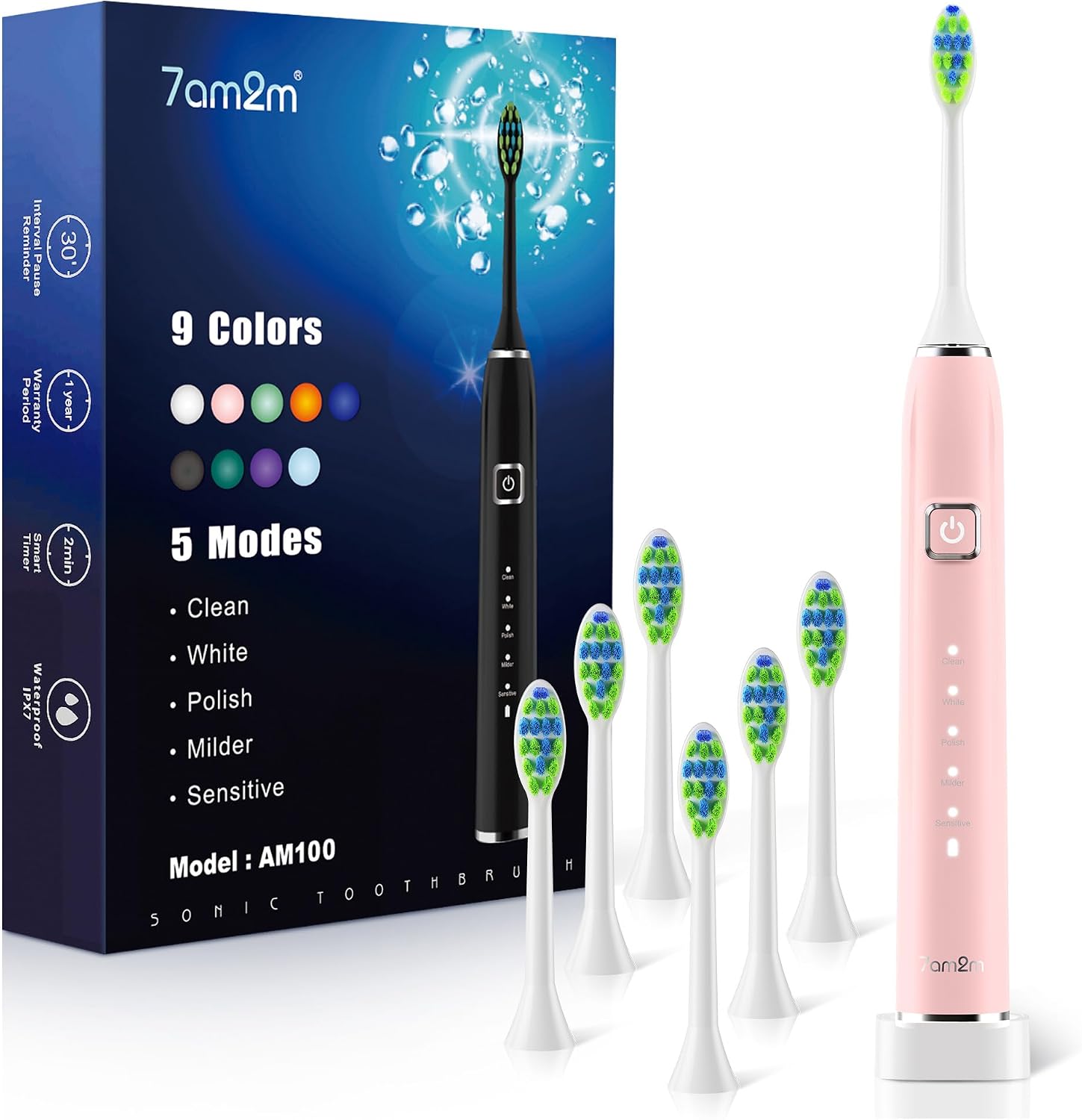
Best for travel and forgotten chargers: 7AM2M Sonic Electric Toothbrush for Adults & Kids, One Charge for 120 Days
 Visit on Amazon →
One charge for 120 days is the headline, and it is the reason this one earns a place in a travel bag or a gym locker. A brush that holds its charge for months is a brush you are never too rushed to use, and "the battery was dead" is a more common excuse than you would think. USB charging means you can top it up from a laptop or a car adapter, which is exactly what you want on a trip where you forgot the wall plug.
It is sold for adults and kids, which makes it a reasonable second brush for a household that already has one on the counter, or a starter sonic for a child old enough to be trusted with a vibrating head. If a family shares the handle, give everyone their own head. Sharing a head is how you trade gum bacteria back and forth, and it wears the bristles out twice as fast.
Flaws but not dealbreakers: Battery ratings are measured with a fresh brush under light use, so expect fewer than 120 days if you run it on the strongest setting every morning. That is still a long time between charges. The bigger caveat is the same as above: no pressure sensor is claimed here either. A kid on a sonic brush needs an adult watching the pressure, because children press harder than they think and their gum tissue is more forgiving right up until it is not.
Anyone who travels a lot, or who wants a brush that will still be charged when they come back from a two-week trip, should start here.
What actually matters more than the handle
The timer. If your brush does not count two minutes and nudge you at each 30-second mark, you are guessing, and guessing is how people spend 20 seconds on the front teeth they can see and skip the molars entirely. This is the single feature I would trade everything else for.
Your hand, not the motor. Oscillating and sonic heads both remove plaque when the bristles touch the gumline. What destroys gums is pressure, and recession is not caused by skipping a brushing, it is caused by years of bearing down on the same spot. Let the brush do the work. If you can hear the bristles grinding, you are pressing too hard.
Head cost. The handle is a one-time purchase. The heads are a subscription you did not know you signed up for, and a four-pack for a lot of brushes costs more than the brush itself did. Do that math before you buy, not after.
Compliance. The best brush is the one that is still charged and sitting on the counter in three months. A brush that needs a phone to change modes is a brush that will end up in a drawer next to a dead fitness tracker.
The routine that makes either brush work
Step one: charge it fully before the first use. Both of these charge over USB, so plug in overnight and start with a full battery. A weak battery means a weak motor, and a weak motor means you compensate by pressing harder.
Step two: pick one mode and stay there. Whatever the standard clean setting is called, that is your setting. You are not going to rotate through six modes, and switching mid-brush just means you stop paying attention to where the bristles are.
Step three: a pea-sized amount of fluoride toothpaste, and go easy on the water. You do not need to wet the head into a lather before it touches your teeth. A dry-ish brush with a pea of paste is fine.
Step four: angle the bristles at 45 degrees toward the gumline. This is the step almost everyone skips. The bristle tips should be sitting right at the margin where the tooth meets the gum, slightly under it, not flat on the crown of the tooth. Plaque lives at the margin. If your brush is aimed at the chewing surfaces, you are polishing the part that was never the problem.
Step five: let the timer walk you around the mouth. Upper right, upper left, lower left, lower right. When the timer nudges, move. Do not go back to the spot you already did, and do not rush to the front teeth because they feel cleaner already.
Step six: two fingers of pressure. Hold the handle the way you would hold a pen you are not trying to snap. The vibration is doing the work. Your job is only to place the bristles and move slowly.
Step seven: spit, do not rinse. Rinsing with water after brushing washes the fluoride off your teeth before it has done anything. Spit out the excess and walk away. If you need a rinse, use a fluoride mouthwash, not the tap.
Step eight: a fresh head every three months, or sooner if the bristles splay. Bristles that fan out do not reach the gumline. They also hold more bacteria and clean less. Change the head, and store the brush upright and uncovered so it can dry between uses.
Mistakes I see in the chair every week
- Brushing hard because the brush feels gentle. Sonic brushes feel like nothing is happening. That feeling is not a signal to press down.
- Ignoring the gumline. The most common pattern I see is a clean crown and a purple disclosing line right at the margin.
- Buying a new handle when the problem is the head. A two-year-old brush with a fresh head cleans better than a new brush with a worn one.
- Rinsing with water right after brushing. You just paid for fluoride and poured it down the drain.
- Sharing a head between family members. Give everyone their own. It is the cheapest upgrade in oral care.
- Charging nightly out of habit. With a brush that runs 30 or 120 days per charge, this is unnecessary, and constantly topping up a battery is not doing it any favors.
What this all costs
Both of these are budget-tier brushes, so check current Amazon price on each listing before you decide, because that number moves around. The handle is not the real expense either way. The real expense is the heads, and the Aneebart two-pack solves that problem up front by putting twelve of them in the box. With the 7AM2M, factor in what a multi-pack of replacement heads costs before you commit, the same way you would check the price of printer ink before buying the printer.
Over three years, the math that matters is not the handle. It is heads, plus whether you actually used the brush. A cheap brush used twice a day for two minutes beats a flagship used wrong for two years, every single time, and I have the plaque scores to prove it.
The bottom line
Two minutes, twice a day, timer running, light pressure, fresh head every three months. That combination does more for your gums than any feature on any box. If you want the short version: the Aneebart two-pack covers a shared bathroom and comes with enough heads to keep it running a long while, and the 7AM2M covers the travel bag and the backup brush that is always charged when you need it. Neither one asks you to think about anything except the timer, which is exactly the point.