Related: Best Electric Toothbrush for Receding Gums: What Actually Protects the Gum Line
I have looked inside thousands of mouths in 14 years of hygiene work in Madison, and the difference between a patient with healthy gums and one booked for a deep cleaning is almost never the toothbrush. It is whether they stand at the sink for two minutes, twice a day, and whether they let the bristles do the work instead of their elbow. That is the standard I hold every sonic electric toothbrush pick below to, and it is why the simplest brush on this list is not automatically the compromise.
None of these four products is a flagship brush that needs an app to change modes. Two are handles, one is built for kids, and one is a pack of replacement heads that quietly matters more than any motor. My checklist is the same one I run on patients: a two-minute timer with 30-second intervals, a head soft enough for the gum line, replacement heads that do not cost more than the brush, and a design simple enough that you will still be using it in month three.
Best Overall for Adults: PERLÉ Sonic Electric Toothbrush
What the listing tells me: 36,000 sonic vibrations, four brushing modes, a 60-day battery, IPX7 waterproofing, and soft DuPont bristles in a cocoa colorway. For an adult who wants one handle on the counter and no subscription, that combination covers the things I actually care about.
Four modes means there is a gentler setting for the days your gums are angry. A 60-day battery is the spec that keeps the charger out of your way, and that matters more than people admit, because a brush that lives on a charger in a drawer is a brush that gets skipped. IPX7 means you can rinse the handle under the tap without babying it.
Soft DuPont bristles are the right call for most adults. Medium and hard bristles are how gum recession starts, and I have watched a lot of recession start that way. There is no pressure sensor in the listed specs, so the discipline is yours: let the vibrations do the work, keep the head at a 45-degree angle toward the gum line, and stop pressing when the bristles splay.
Sonic is not better than oscillating. Both work. Head design and habits matter more than the motor, which is why this one earns the adult slot on the strength of its modes, its battery, and its bristles rather than its vibration count.
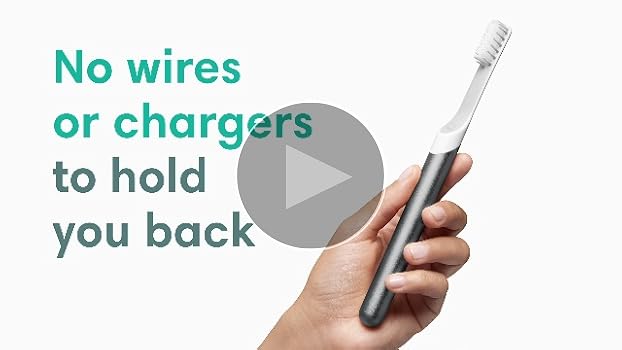
Best for Kids: Quip Sonic Electric Toothbrush for Kids with Timer
Compliance at age six is the whole battle. This brush has a timer built in, which means you are not standing in the doorway counting for them, and the glow in the dark green handle gives a kid a reason to want it in their hand at bedtime. A brush a child is proud of gets used. A brush that feels like a chore gets chewed on and abandoned.
The timer is the feature here, full stop. If a kids brush has no timer, you are the timer, and you will lose that argument at 8:45 on a school night. Pair it with a fluoride toothpaste, keep the head soft, and supervise until they can tie their own shoes, because most kids under eight do not have the dexterity to reach the back molars on their own. This is a brush for the years when the habit is still forming, and that is exactly when it is worth spending a little more than a drugstore manual.
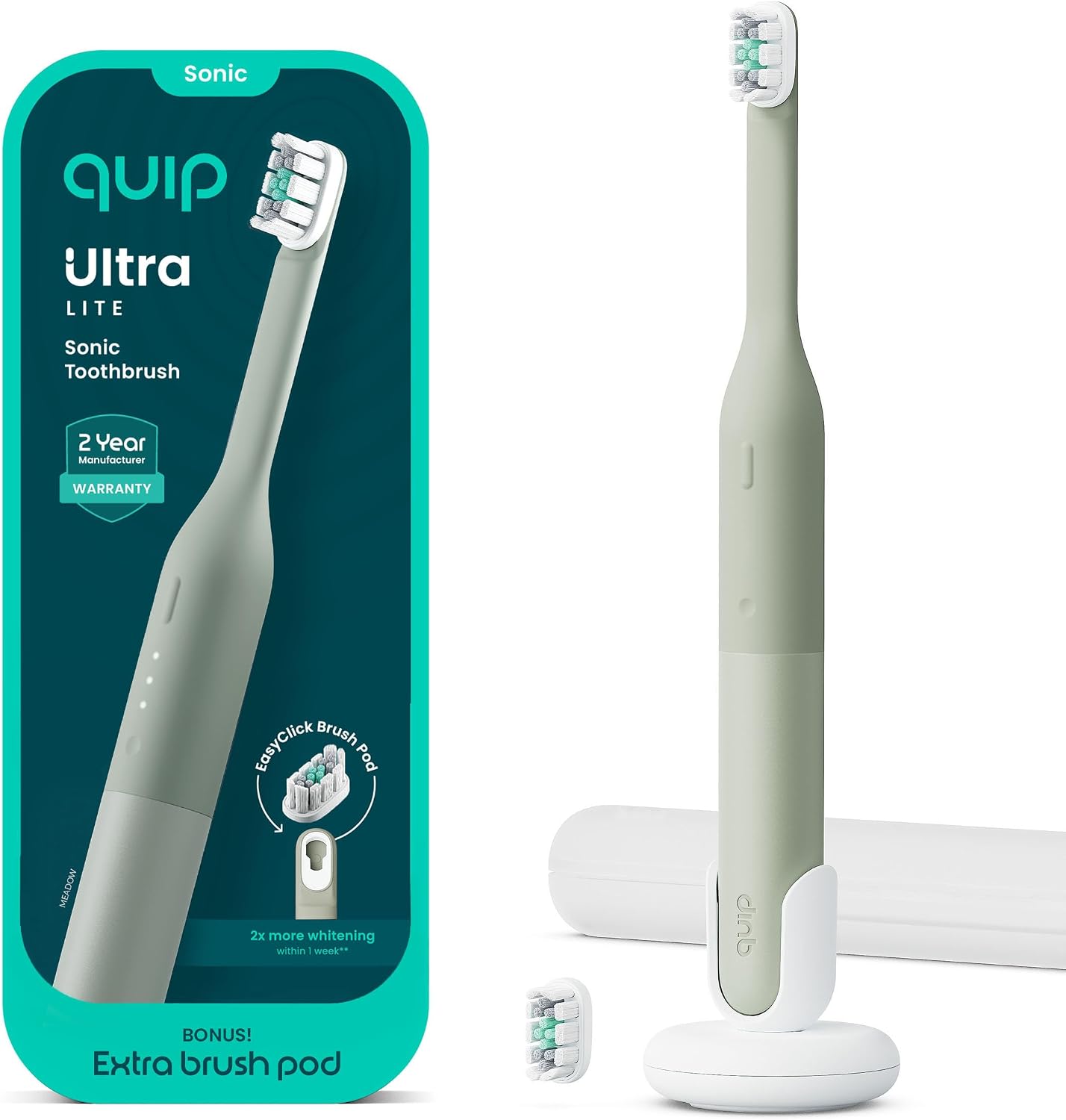
Best for Travel and Small Counters: Quip Ultra Lite Sonic Electric Toothbrush
Three modes and a mirror mount. The mirror mount is the detail that earns this one a place in a carry-on or a tiny apartment bathroom: it sticks to the mirror instead of taking the last square inch of counter, and it is not sitting in a puddle of water when you pick it up.
For an adult who travels, or someone sharing one bathroom with three other people, a brush that mounts out of the way is a brush that does not get knocked into the sink at 11 pm. Three modes cover the sensitive to normal range for most people. Treat this as a second brush or as a primary brush for a light-handed brusher, and understand that a lite handle is not a substitute for a pressure sensor you do not have. If your hygienist has already said the word "recession," pair it with sensitive heads and a light grip, or step up to a handle with a sensor.
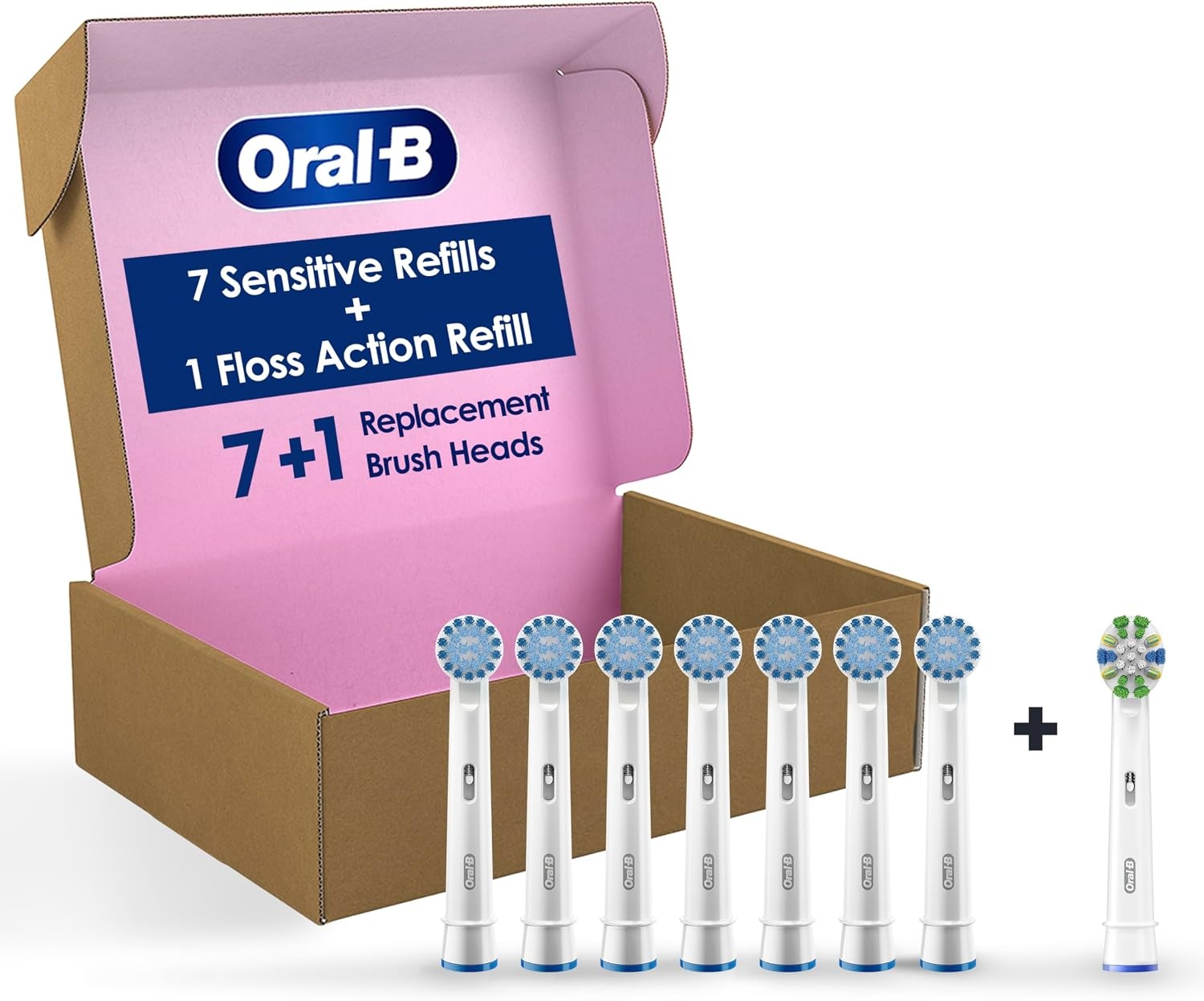
The Head That Does the Work: Oral-B Sensitive Gum Care Replacement Brush Heads
This is the section most buying guides skip, and it is the one I care about most. The head is the part that touches the plaque. An 8 count pack of Oral-B Sensitive Gum Care heads is roughly two years of changes at one head every three months for a single brusher, or about two heads per person per year in a household of four.
Sensitive gum care bristles are the right choice for anyone whose hygienist has mentioned recession, bleeding at the gum line, or "you are brushing too hard." Worn bristles splay outward and stop reaching the sulcus, the shallow groove between the tooth and the gum where plaque does its damage, no matter how many vibrations the handle puts out. A fresh soft head beats a tired stiff one every single time.
Do the math before you commit to a handle: if a year of heads costs more than the handle, that is a subscription with a motor attached. An 8 count is the pack size that makes the per-head cost sane, and it is the reason this is on the list as a product in its own right rather than a footnote.
How I Evaluate a Sonic Toothbrush
Four questions, in order.
Does it have a two-minute timer with 30-second quadrant intervals? If not, it is not a serious toothbrush, no matter what it costs. The quadrant timer is the feature that turns a 40-second scrub into a real two minutes, and it is the single biggest behavior change I see in patients who switch.
Is there a real pressure sensor, or at least a gentle mode and soft bristles? Brushing too hard is why gums recede, and recession does not grow back. A sensor warns you in the moment. A gentle mode plus soft DuPont bristles is the next best thing, and it is the honest reason the adult handle above gets a recommendation.
What do replacement heads cost over a year? This is the number nobody puts on the box and everybody pays. Four heads a year is the baseline. Check that math against the handle price before you buy anything.
Will the person actually keep using it past month three? The best toothbrush is the one you will use for two minutes, twice a day. A brush that needs an app to change modes, or a charger that has to travel with you, is a brush that ends up in a drawer by spring.
The only honest way to compare brushes is the plaque score, the visible plaque left behind after brushing, and no unboxing video substitutes for it. Feel tests tell you whether a brush is pleasant. They do not tell you whether it removed anything.
The Sonic Electric Toothbrush Reference Table
This is the table I keep in my head when a patient asks what to buy. Every row is a different job in the same bathroom.
| Product | Best for | What matters | Notes |
|---|---|---|---|
 Visit on Amazon → Visit on Amazon →PERLÉ Sonic Electric Toothbrush for Adults |
The main adult brush | 36,000 vibrations, 4 modes, soft DuPont bristles | $79.99 |
 Visit on Amazon → Visit on Amazon →Quip Sonic Electric Toothbrush for Kids with Timer |
Kids who need a reason to brush | Timer plus a glow in the dark green handle | $27.99 |
 Visit on Amazon → Visit on Amazon →Quip Ultra Lite Sonic Electric Toothbrush |
Travel and crowded counters | 3 modes and a mirror mount | $84.99 |
 Visit on Amazon → Visit on Amazon →Oral-B Sensitive Gum Care Replacement Brush Heads, 8 Count |
Tender gums and Oral-B handles | 8 count, sensitive gum care bristles | $47.93 |
What the Specs Actually Tell You
Vibration counts are mostly marketing once you pass a certain point. Every handle here moves bristles fast enough to break up plaque. What separates them is what happens around that number.
Modes are the useful part. A sensitive setting is the difference between a brush you can use on a bad gum day and a brush you avoid until the inflammation settles. Battery life is a compliance feature disguised as a spec: 60 days means the charger is not part of your routine. IPX7 is a hygiene feature, because a handle you can rinse under the tap is a handle that does not grow a film. The mirror mount is a counter-space feature, and in a small bathroom counter space is the reason a brush gets used or gets buried.
Then there is the head, and the head is where the money goes. Sensitive gum care bristles with a fresh head every three months will out-clean a fancy handle running a splayed head from last year. If you take one thing from this guide, take that.
And no, you do not need the app. If a brush will not let you change modes without a phone, the app is the product. Your gums do not care about the app.
Should you buy the PERLÉ Sonic Electric Toothbrush?
If you want one adult handle on the counter with a real sensitive mode, a battery that lasts long enough to forget the charger, and soft bristles that are gentle at the gum line, yes. It covers the fundamentals without a subscription and without an app. Just know that the pressure discipline is on you, and pair it with a fresh soft head every three months.
Should you buy the Quip Sonic Electric Toothbrush for Kids?
Yes, for a kid who needs the habit built rather than the plaque score measured. The timer does the nagging for you and the glow in the dark handle does the recruiting. Supervise the brushing itself until they have the dexterity for the back teeth, and replace the head on schedule.
Should you buy the Quip Ultra Lite Sonic Electric Toothbrush?
Buy it as a travel brush or a small-bathroom brush. The mirror mount is genuinely the reason to pick this one, and three modes covers most people. If your gums are already receding, use it with sensitive heads and a light grip, or choose a handle with a pressure sensor instead.
Should you buy the Oral-B Sensitive Gum Care Replacement Brush Heads?
Yes, and this is the purchase I would make first if you already own an Oral-B handle. An 8 count keeps you in fresh heads for a long stretch, sensitive bristles protect a gum line that has already taken some damage, and the per-head cost beats buying four packs a year at retail. Fresh soft bristles are the cheapest upgrade in oral care, and they are the one that shows up in the plaque score.