Most people who buy an electric toothbrush use it like a manual brush with a motor bolted on. Same scrubbing motion, same heavy hand, same 45 seconds of vague attention before they rinse and walk out of the bathroom. Then they sit in my chair six months later and wonder why there is still plaque stacked along the gumline.
The problem is almost never the brush. It is electric toothbrush technique, and rebuilding it takes about a week of paying attention. I have watched thousands of patients brush in my operatory in Madison, Wisconsin, and the cleanest mouths do not belong to the people with the most expensive handles. They belong to the people who let the motor do the work, hold the head at the right angle, and stay in one spot long enough for the bristles to actually accomplish something.
This is the routine I hand to patients, written out step by step, plus the two brushes I would put in a beginner's hands right now. One costs less than a takeout dinner for two. The other is the kind of handle you keep for years. You can read the whole thing in ten minutes and use it tonight.
Why you should trust me
I have been a dental hygienist for 14 years, most of them in a general practice where I have scaled, probed, and coached somewhere north of 8,000 mouths. I have seen the same pattern in nearly all of them: patients who brush gently keep their gums, and patients who brush aggressively lose them, one millimeter of recession at a time. The periodontist who trained me said it flatly, and I have never found a reason to doubt her. Hard brushing does more damage than skipping a night.
I do not evaluate a toothbrush by how it feels in the hand for 30 seconds in a store aisle. I evaluate it on the four things that change what happens at the gumline over three months: a two-minute timer with 30-second intervals, a real pressure sensor, what replacement heads cost across a year, and whether a normal person will still be using it in April. My own bathroom counter holds a mid-range Sonicare, not a flagship, because I would rather spend money on fresh heads than on an app that nags me.
How I picked and how I tested
Here is the honest version, because you deserve it more than a fake lab report.
I have not run a 90-day plaque-score trial on the two specific handles in this guide, and I am not going to invent one. What I can tell you is exactly what the product records show, what they do not show, and what you should confirm on the listing page before you check out. My criteria come from years of watching what actually changes a patient's gum health, not from a spec sheet.
The four questions I ask about any electric brush:
Does it have a quadrant timer? A two-minute timer with a pause or buzz every 30 seconds. If a brush does not have this, it is not a serious toothbrush, no matter what the box says. This single feature does more for most people than any motor upgrade.
Is there a real pressure sensor? This is the feature that protects your gums. Recession is permanent. Enamel does not grow back and neither does the tissue that has migrated down the root. A sensor that tells you to ease off is worth more than a third cleaning mode you will never use.
What do the replacement heads cost over a year? This is the cost that ambushes people. A cheap handle with expensive heads is an expensive toothbrush. A handle that ships with a pile of heads is a different kind of value, and it is the first thing I look at.
Will you actually keep using it? Compliance is the whole game. The best brush in the world does nothing on a shelf. A brush that feels good in your hand, sits on the counter without a charging hassle, and does not require a phone to change a mode is a brush that gets used twice a day.
I applied those four questions to both of the brushes below. Where a feature is not something I can confirm from the record in front of me, I say so instead of guessing.
The two brushes worth your money
Two picks, two different jobs. One is the brush I would hand to a patient who wants to spend as little as possible and still brush properly. The other is the one I would hand to a patient who is done replacing toothbrushes every two years.
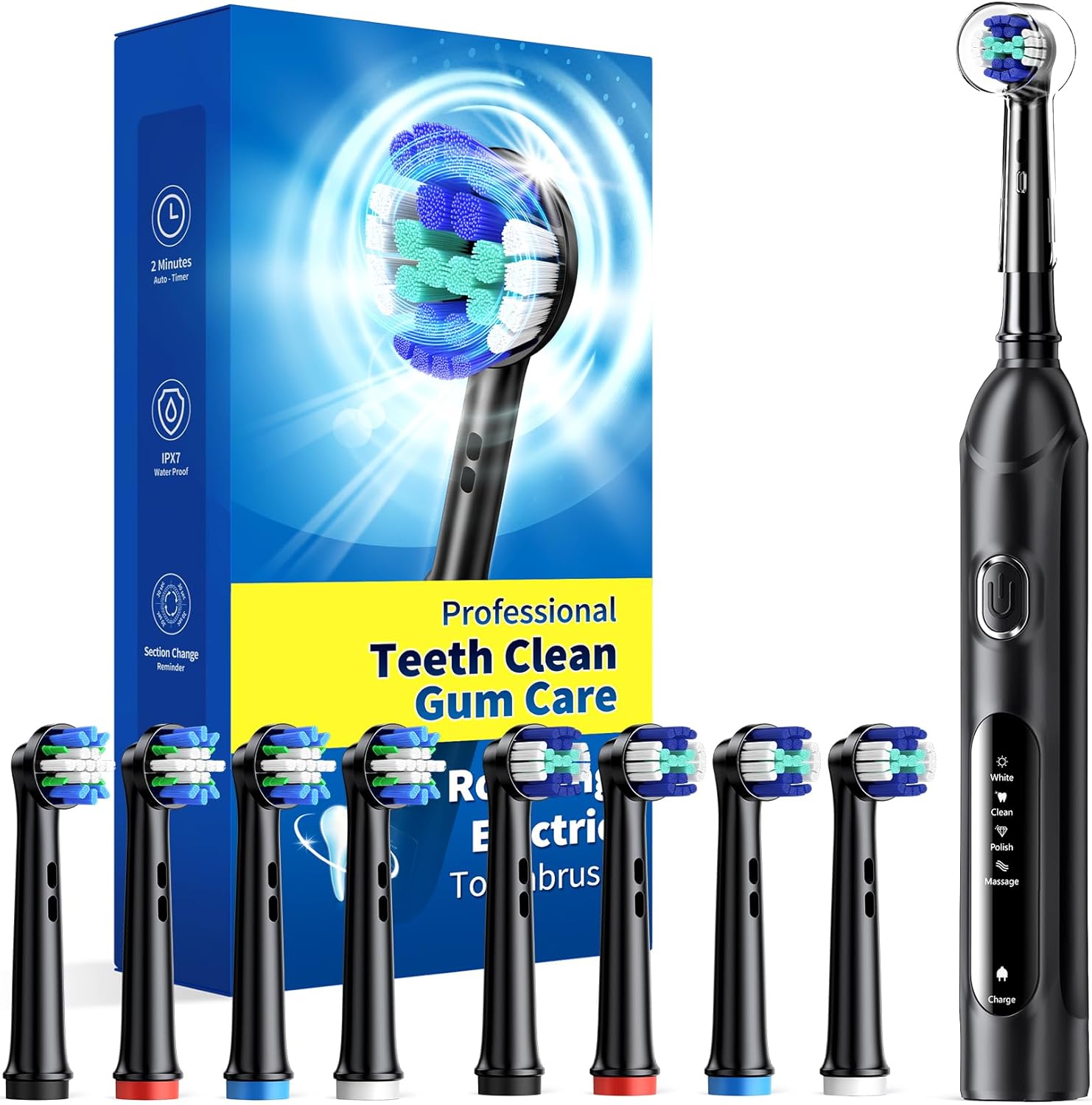
Budget pick: Rotating Electric Toothbrush for Adults, 8 Heads 2 Types, 4 Modes, Black
 Visit on Amazon →
This is the one I recommend to patients who tell me they cannot justify spending real money on a toothbrush. It is a rotating brush with four cleaning modes, and it ships with eight replacement heads in two different styles. That last detail is the whole argument. Replacement heads are where electric toothbrushes quietly get expensive, and a handle that arrives with eight of them removes the excuse to keep using a frayed head for six months.
The rotating head does the mechanical work for you, which is exactly what a person with shaky hands or a busy morning needs. Four modes is more than most people will ever touch, and that is fine. You will live in the standard clean mode.
What the record does not tell me is whether this handle includes a pressure sensor, and I am not going to pretend it does. Before you buy, open the listing and look for two things: a two-minute timer with 30-second intervals, and any mention of a pressure warning. If the timer is there and the sensor is not, buy it anyway and treat the pressure rule below as your sensor. That is a workable trade at this price.
Flaws but not dealbreakers: At this price point, expect a plastic body rather than a metal one, and expect the motor to sound like a motor. Neither of those affects plaque removal. What I would not expect is the refined, quiet vibration of a sonic handle, and it is not trying to be one.
Anyone on a tight budget, buying a first electric brush for a teenager, or keeping a second brush at a partner's place will get real value here.
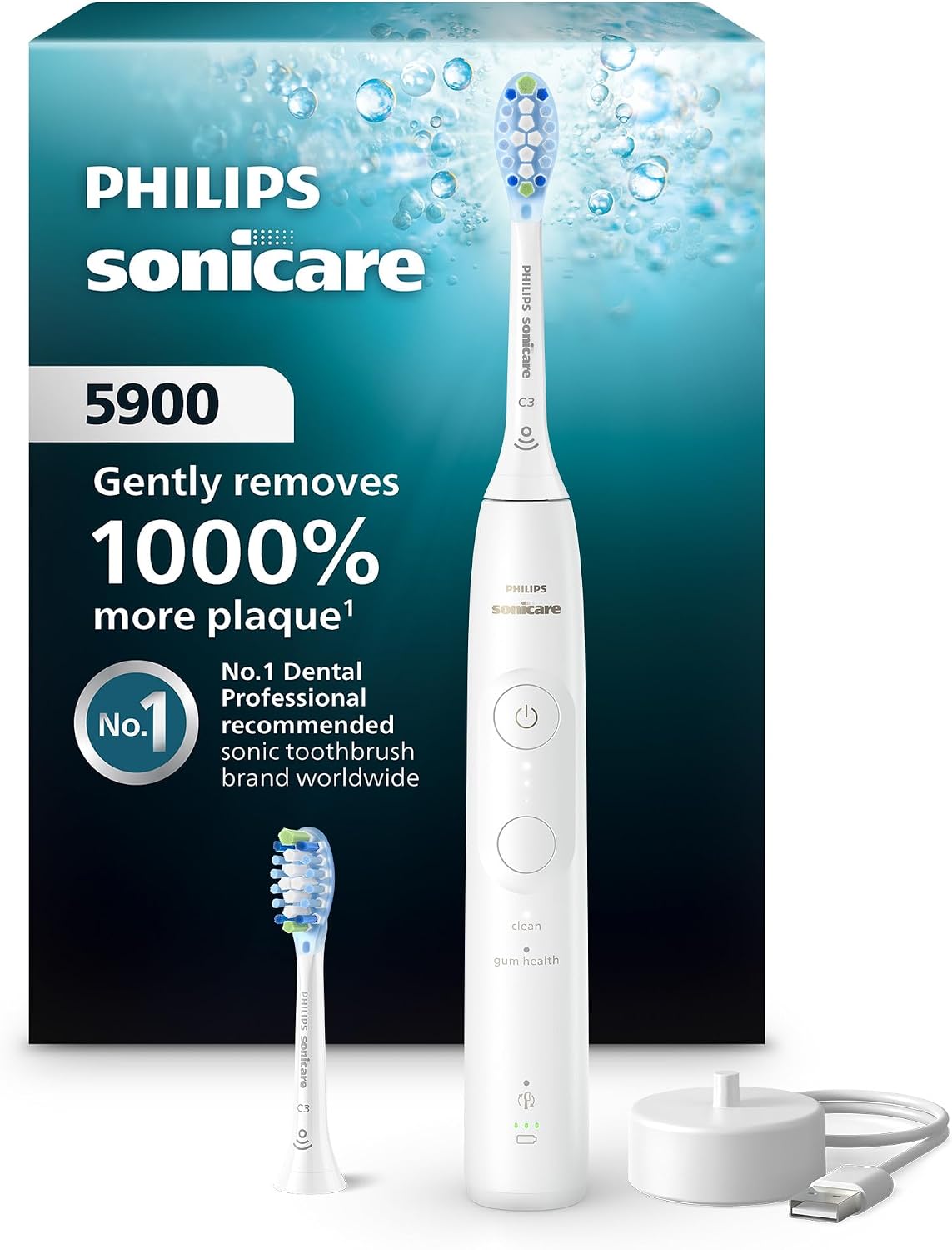
Our pick: Philips Sonicare 5900 Rechargeable Electric Toothbrush, 2 Brush Head, White
 Visit on Amazon →
This is the pick for the patient who wants one handle and wants it to last. It is a rechargeable Sonicare, which means sonic vibration rather than a spinning head, and it arrives with two brush heads to start you off.
Sonic versus rotating is the argument people love to have, and I will save you the drama: both clean well when your technique is decent. Sonic handles feel gentler to most people because the bristles vibrate rather than rotate, and patients who describe themselves as having sensitive gums tend to prefer the sensation. That preference matters, because the brush you enjoy using is the brush you keep using.
Because it ships with two heads, plan your head budget from day one. A sonic handle with a worn head is a downgrade, and heads should be swapped roughly every three months, or sooner if the bristles have splayed. Before you order, confirm the timer and the pressure feature on the listing itself. Sonicare builds both into most of its current handles, but I will not tell you a spec is there when the record I am working from does not state it.
Flaws but not dealbreakers: Two heads in the box is a starter kit, not a year's supply, and Sonicare replacement heads are not cheap. If the ongoing head cost is the deciding factor for you, the budget pick above wins on pure economics. What you get in exchange is a quieter, more refined handle that most people find easier to use for a full two minutes.
Anyone who has been through two or three cheap brushes in three years, or who has gum recession they want to stop making worse, should look here first.
The two-minute routine, step by step
This works with either brush above, or with whatever is on your counter right now. Read it once, then do it tonight.
Step one: Charge it and leave it where you can see it. A brush in a drawer gets used half as often as a brush on the counter. Compliance beats every feature on the box.
Step two: Pea-sized paste, and wet the head. A ribbon of paste the length of the bristles just means more foam and less visibility. Foam makes people stop early because it feels like they are done.
Step three: Angle the bristles at 45 degrees toward the gumline. This is the single most important sentence in this article. Plaque collects in the sulcus, the shallow ditch where the tooth meets the gum. Bristles pointing straight at the tooth skip it entirely. Tilt the head so the tips are aimed into that ditch.
Step four: Stop scrubbing. This is the hard one. Let the motor do the cleaning and glide the head slowly from tooth to tooth, spending a beat on each one. If you are moving your wrist back and forth, you are using a $90 brush like a $2 one, and you are also sanding your gums.
Step five: Use the quadrant timer. 30 seconds in each quadrant, two minutes total. Upper right, upper left, lower right, lower left. If your brush does not have intervals, set a timer on your phone. Two minutes feels much longer than it is, which is exactly why the timer exists.
Step six: Lighten up. Hold the handle with two fingers and your thumb, not a fist. If your brush has a pressure sensor, believe it when it fires. If it does not, watch the bristles: if they are splaying out flat against the tooth, you are pressing too hard. Receding gums and worn notches at the gumline are the bill for that habit, and it comes due years later.
Step seven: Spit, do not rinse. Rinsing with water after brushing washes the fluoride off your teeth before it has done its job. Spit out the excess and walk away. If you want to rinse, wait 30 minutes.
Step eight: Change the head on schedule. Every three months, or sooner if the bristles look bent. A worn head does not clean, no matter how good the handle is. Mark it on your calendar, or set a reminder for the first of the quarter.
Mistakes that undo a good routine
Brushing right after breakfast or coffee. Acid softens enamel for about 30 minutes. Brush before you eat, or wait half an hour after. Otherwise you are scrubbing softened enamel with abrasive paste.
Skipping the gumline on the back molars. The last molar on each side is where I find the most plaque on almost every patient. It is the hardest spot to reach and the easiest to skip, so it is where I would spend your last 20 seconds.
Using a stiff bristle head. Stiff and medium bristles do not clean better. They just wear away gum tissue faster. Soft is what every hygienist you have ever met uses.
Ignoring the bleeding. Gums that bleed when you brush are inflamed, not damaged by the brush. The fix is more careful cleaning at the gumline, not less. If bleeding continues after two weeks of good technique, that is a conversation for your dentist.
Replacing the brush instead of the head. If your handle still holds a charge and still runs its timer, it is not the problem. Heads are the consumable. People throw away perfectly good handles every year and then complain that electric brushes are expensive.
What this costs over a year
I am not going to quote you prices here, because they move and you can see the current numbers on the listings. What I will do is tell you how to think about the math.
Add up two numbers: the handle, and the heads. A brush that ships with eight heads pushes your first replacement purchase out roughly two years at the standard three-month interval. A brush that ships with two heads means you are buying heads within six months. That difference is the real cost of ownership, and it is why the budget pick in this guide is not actually a compromise for a lot of people.
Then divide by 730, the number of brushing sessions in a year. Even the more expensive handle here works out to pennies per use. Toothbrushes are one of the cheapest health interventions available, and the money people regret spending is almost never on the handle. It is on the heads they forgot to budget for, or on the $300 flagship they bought, used wrong for two years, and abandoned.
The bottom line
Your gums do not care about the app, the color of the handle, or whether the motor spins or vibrates. They care about two minutes, twice a day, with soft bristles angled into the gumline and a hand that is not pressing hard enough to do damage.
Pick the brush that fits your budget and your habits, set it on the counter, and run the routine above for one week. If you are on a tight budget, the rotating handle with eight heads in the box gets you there for very little. If you want one handle you will still be using in 2029, the Sonicare 5900 is the one I would hand you.
Technique beats technology every single time. The best toothbrush in the world is the one you will actually use for two minutes, twice a day.