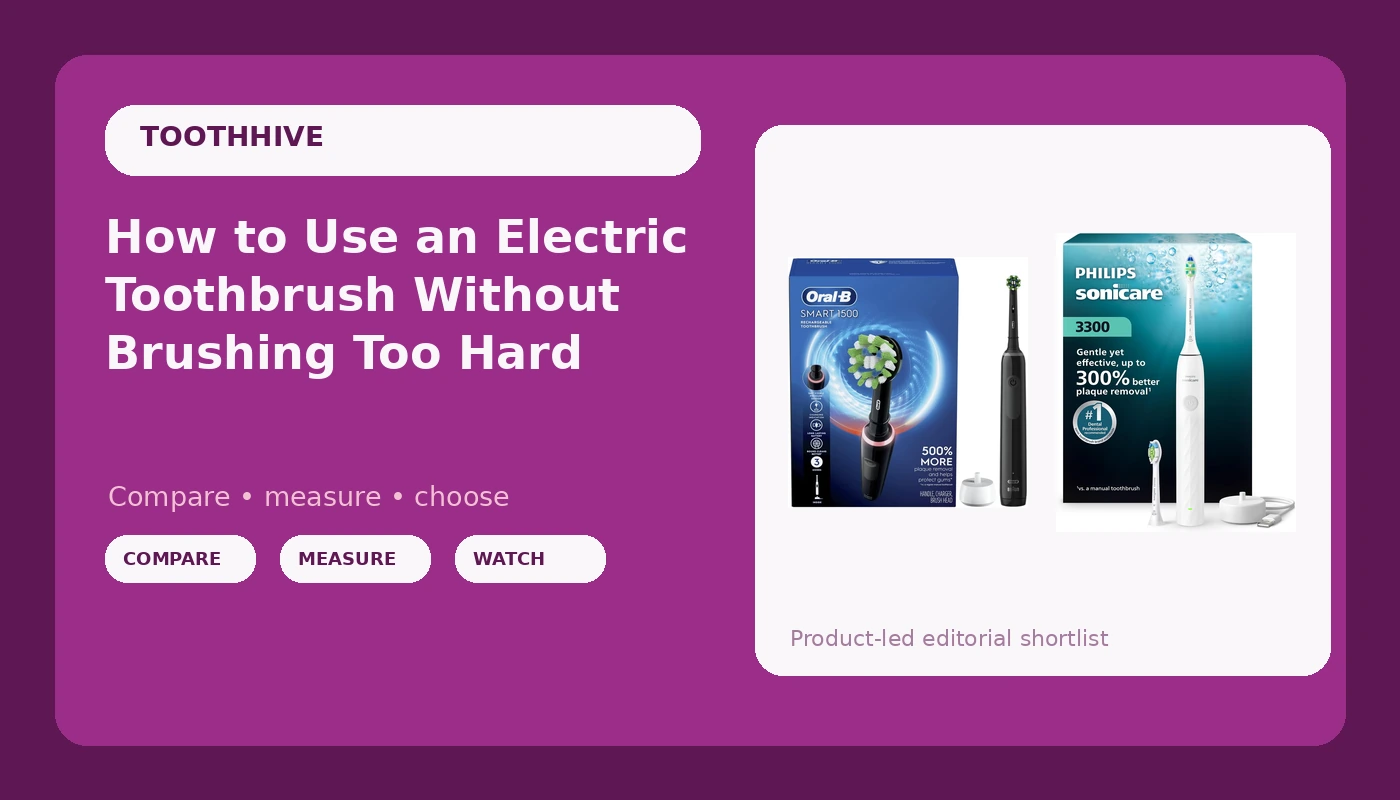
Most people who buy an electric toothbrush never learn electric toothbrush technique. They trade a manual brush for a powered one, keep the same scrubbing motion they have used since childhood, and then wonder why their gums still bleed at the six-month cleaning. I have been a dental hygienist for 14 years in Madison, Wisconsin, and I have looked inside thousands of mouths. The pattern never changes. The healthiest gums in my chair do not belong to the people with the most expensive brush. They belong to the people who let the brush do the work and keep the pressure light.
That is the whole secret, and it is genuinely boring. It is also the difference between a brush that protects your gums for a decade and a brush that helps you scrub a notch into your own enamel.
This is not a buying guide dressed up as advice. It is the routine I walk patients through at the chair, plus the two brushes I keep pointing people toward when they ask what to buy so the routine is easier to keep.
Why you should trust me
I have been cleaning teeth since 2012. I have seen mouths that were cared for with a $30 drugstore brush and mouths that were destroyed with a $400 flagship that came with an app. I have watched a patient use a top-tier brush for two years with the wrong angle and too much pressure and do more damage than the person who skipped brushing on weekends.
My biases are on the table. I care about the two-minute quadrant timer more than any other feature on the box. I care about a real pressure sensor, because brushing too hard is the reason gums recede and receded gums do not grow back. I care about what replacement heads cost over a year, because a brush you cannot afford to keep in fresh heads is not a bargain.
I do not care about motor marketing. Oscillating brushes, the round heads that spin and oscillate, and sonic brushes, the ones that vibrate side to side at high frequency, both remove plaque when the technique is right. The research has gone back and forth on the margins for years. What it has never shown is that either design rescues a person who presses down and scrubs.
How I judge a toothbrush
Four questions, in this order.
Does it have a quadrant timer? Two minutes total, with a 30-second nudge for each quarter of your mouth. If a "premium" brush skips this, it is not serious. The timer is the feature that makes brushing actually take two minutes instead of the 45 seconds most people spend.
Is there a real pressure sensor? Not a light that blinks after the damage is done, but a warning you feel or hear the moment you press too hard. This is the single most protective thing on a modern brush.
What do heads cost over a year? A brush is a subscription with a handle attached. Heads need replacing roughly every three months, and a cheap handle with reasonable heads beats a pricey handle with luxury heads every time.
Will this person actually keep using it? Compliance beats capability. A brush that lives on the counter and gets used twice a day outperforms a better brush that stays in a drawer because the charging stand is inconvenient.
Notice what is not on the list: app connectivity, brushing scores, Bluetooth, or the number of cleaning modes. Those are the things people ask about and the things that change nothing about plaque.
The two brushes that make the routine easier
You can do everything below with almost any powered brush, and you can do it with a manual brush if you are patient and honest about your timing. That said, these two do the routine for you in ways that matter, and both sit in the range I am comfortable recommending to patients who ask.
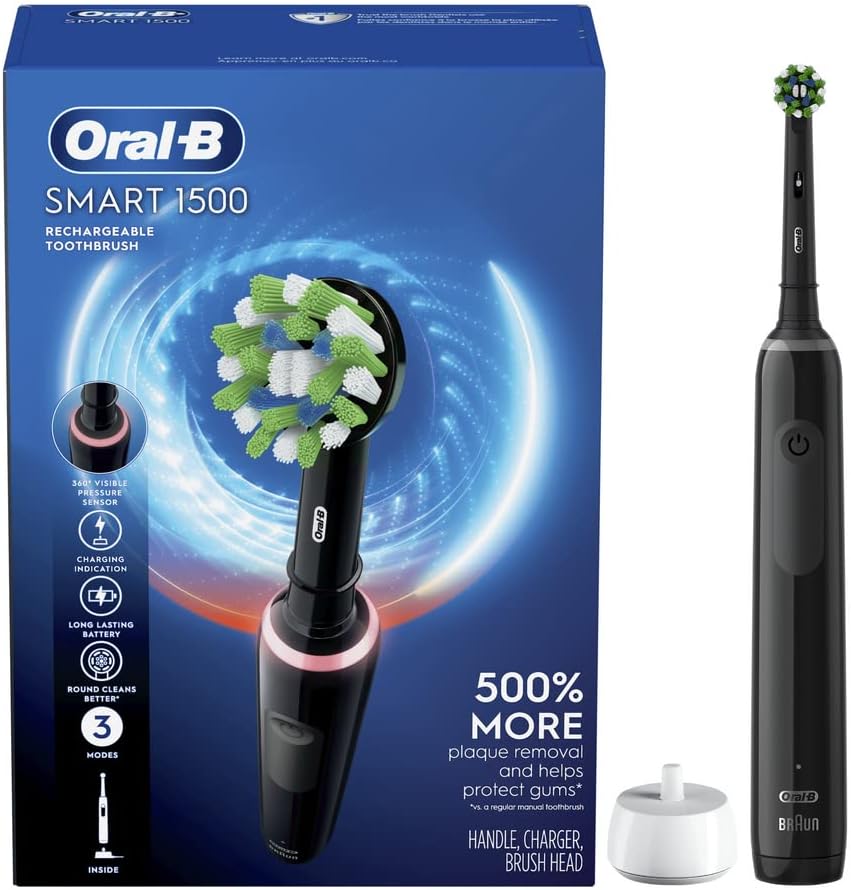
Oscillating pick: Oral-B Smart 1500 Electric Power Rechargeable Battery Toothbrush, Black
 Visit on Amazon →
This is the brush I suggest to patients who press too hard and know it. The round head is small enough to sit on one tooth at a time, which forces a slower pass around the mouth than a long brush head does, and the handle carries the pressure feedback that tells you when you are leaning on your gums. If your dentist has ever said the word "recession" to you, that feedback is the reason to pick this style over a brush without it.
The oscillating motion also suits people who like to feel something happening. Sonic brushes feel like a faint buzz, and some patients never quite trust that anything is being cleaned. The round head moving tooth to tooth gives you tactile confirmation without asking you to scrub.
The tradeoff is the head cost. Round heads are proprietary and they are the ongoing expense of owning this brush, so price them before you commit rather than after. If the head math works for you, this is a workhorse that does exactly what a toothbrush should do and nothing you did not ask for.
Flaws but not dealbreakers: The handle is not the slimmest, and the black finish shows dried toothpaste more than a white one does. Neither changes how it cleans.
Anyone whose main problem is heavy-handed brushing should start here.
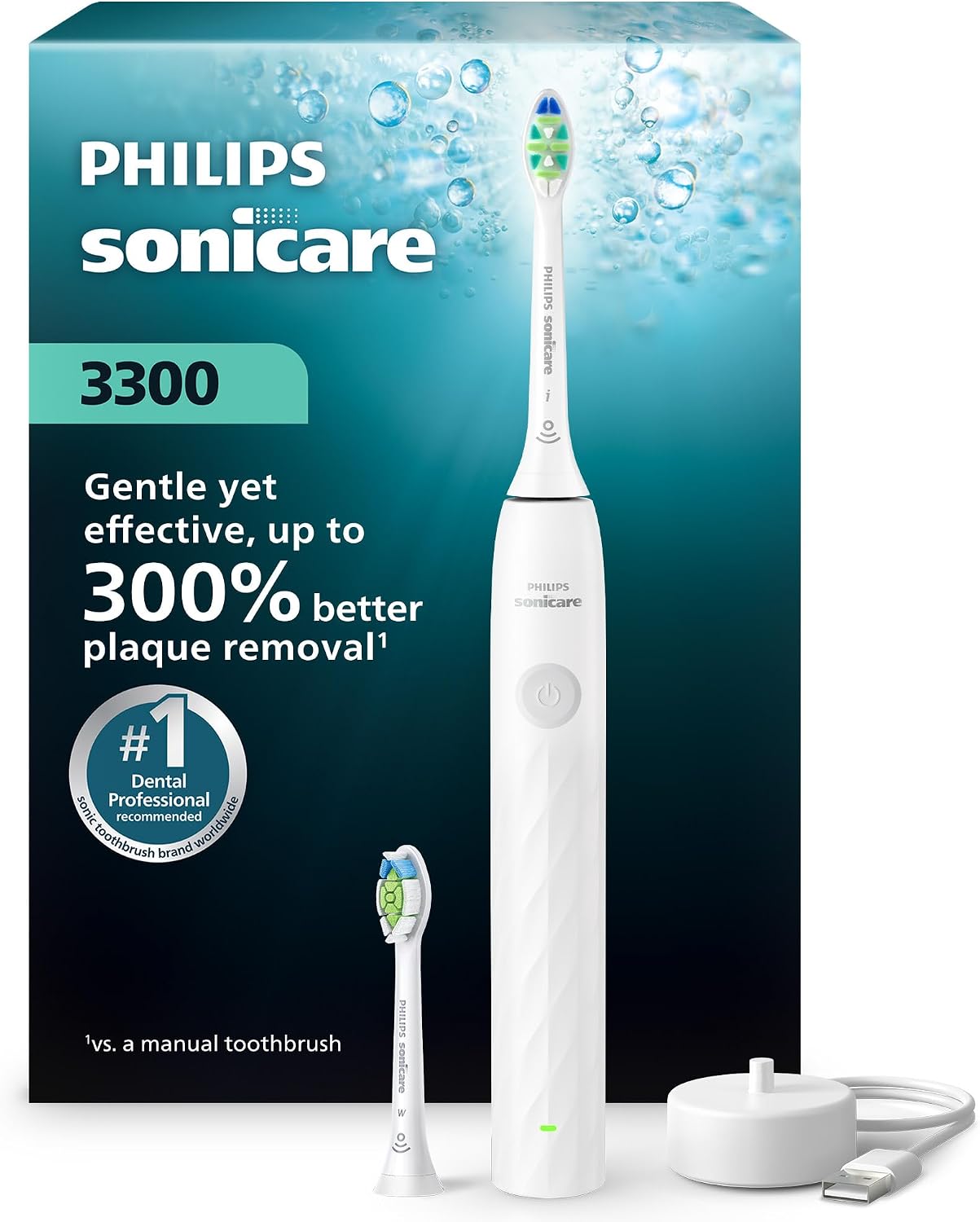
Sonic pick: Philips Sonicare 3300 Rechargeable Electric Toothbrush, 2 Brush Head, White
 Visit on Amazon →
This is the one I hand to patients with sensitive gums, thin enamel, or a history of clenching. The sonic vibration is gentler in the hand than the oscillating style, and the long, soft head covers more surface per pass, so you spend less time hovering over any single spot. People who find the round head fussy tend to get along with this shape immediately.
It comes with two heads in the box, which is a small thing that matters more than it sounds. You get roughly six months of brushing before you have to think about a reorder, and that first reorder is the moment most people decide whether a powered brush is worth keeping.
The sonic design is also the easier transition for someone coming off a manual brush, because the motion feels like a softer version of what they already do. That matters for compliance. The best technique in the world does nothing if the brush feels harsh and ends up in a drawer.
Flaws but not dealbreakers: Sonic brushes ask you to glide rather than scrub, and people who ignore that end up pressing the head into the gumline anyway. Watch the pressure feedback and trust it.
Anyone with sensitive gums or a light touch who wants a brush that feels calm in the hand should look here first.
The routine, step by step
This takes two minutes. It works with either brush above, or with anything else that has a timer.
Step one: Set up before you start. Wet the head, add a pea-sized amount of fluoride toothpaste, and turn the brush on before it goes in your mouth. Starting the motor against your teeth sprays paste across the mirror. Starting it in the air does not.
Step two: Aim at the gumline, not the crown. Hold the bristles at roughly 45 degrees so they meet the tooth and the gum at the same time. This is the angle that cleans the sulcus, the shallow groove where the gum meets the tooth, and it is where most plaque actually lives. People who brush the flat tops of their teeth and call it done are missing the whole point.
Step three: Let the brush do the work. Move the head slowly from tooth to tooth and hold it in place for a beat before moving on. Do not scrub back and forth. The motor is already doing thousands of strokes a minute. Your only job is to guide the head to the right spot and let it sit there.
Step four: Follow the quadrant timer. Thirty seconds per quarter. Upper right, upper left, lower left, lower right, or whatever order your brush uses. When the timer pulses, move to the next quarter without stopping. This is the feature that turns a 45-second brush into a real two-minute one, and it is the reason I will not recommend a brush without it.
Step five: Stay light. Rest the head against the tooth, do not press. If your brush warns you, believe it and back off. A clean tooth is a matter of contact and time, not force, and force is what wears away enamel at the neck of the tooth and pushes gums down the root.
Step six: Cover the surfaces you forget. The chewing surfaces of your back molars, the inside of your lower front teeth, and the very back edge of your last molar on each side. Those four spots are where I find the most plaque on almost every patient, every time.
Step seven: Spit, do not rinse. After you finish, spit the excess paste out and skip the rinse with water. Rinsing washes away the fluoride that is still working on your enamel. If you want to rinse, wait half an hour.
Step eight: Care for the brush. Rinse the head, shake it out, and let it air dry upright with the head not touching anything. A wet head sealed in a travel case grows things you do not want in your mouth. Replace the head every three months, or sooner if the bristles are splayed.
The mistakes I see in the chair
Scrubbing is number one. It feels productive and it is the fastest way to wear a groove into a tooth. If you can hear your brushing from the next room, you are pressing too hard.
Rushing is number two. Almost everyone who tells me they brush for two minutes is brushing for about 50 seconds. Use the timer and let it correct you.
Skipping the gumline is number three. People polish the crowns of their teeth beautifully and leave a ring of plaque at the base of every one.
Brushing right after something acidic is number four. Coffee, citrus, wine, and soda soften enamel for a while. Give it 30 minutes, or rinse with water first and brush later.
Keeping a head too long is number five. A splayed head cleans less and feels scratchy, and it is the most common place people try to save money. Do not.
What this actually costs you
A powered brush is a handle plus a habit of buying heads, and the heads are the real number. Before you buy anything, look up what a year of replacement heads costs for that specific handle. If a year of heads approaches the price of the brush itself, you are buying into a subscription, not a tool.
Check current Amazon price on the handle, then price the heads separately before you decide.
That math is the only reason I ever tell a patient to walk away from a brush they liked. Everything else, the modes, the case, the app that tracks your brushing, is optional. The timer, the pressure feedback, and a fresh head are not.
The honest summary
Technique beats technology. Two minutes, twice a day, light pressure, bristles at the gumline, and a head that is not three months past its prime. That is the entire job, and it costs nothing beyond the brush you already own.
If you want a brush that helps you do it, the Oral-B Smart 1500 gives you the round head and the pressure feedback that keep heavy hands honest, and the Philips Sonicare 3300 gives you a gentler sonic glide that sensitive gums tolerate better. Either one, used correctly, will keep you out of my chair for reasons you would rather avoid.
Pick one, learn the angle, and let the motor do the scrubbing. Your gums will thank you in about a decade, which is when it will matter most.