Related: Pressure Sensors and Receding Gums: What Brushing Too Hard Actually Costs You
I have spent fourteen years looking into other people's mouths, most of them in and around Madison, Wisconsin, where I work as a dental hygienist. I see roughly thirty patients a week, and I have watched the same story play out hundreds of times. Someone buys the most expensive electric toothbrush on the shelf, uses it at full pressure for forty seconds, and comes back in six months with the same plaque and the same bleeding gums. That is why I write this electric toothbrush comparison the way I do. Not by price, not by motor type, and not by how many modes the box claims. By whether the thing gets used properly, twice a day, for two minutes, by a real person who is tired at 10:45 at night.
Show me the plaque score, not the unboxing video. Your gums do not care about the app.
So these are the four brushes I end up talking about most often with patients and with friends. Three of them are for people. One is for the dog, and I will explain why that one earned its spot here too.
The Brush I Reach For First: Oral-B iO5 Limited Deep Clean & Whiten
If your gums are the reason you are shopping, this is the one I point to. The feature list reads like the checklist I use in the chair: a visual pressure sensor to protect your gums, five cleaning modes, a travel case, and three brush heads in the box. That first item is the one that matters. Recession, the thing that makes teeth look long and sensitive in your forties, is usually not caused by skipping brushing. It is caused by pressing too hard with a brush that never tells you to stop. A sensor that lights up when you cross the line is worth more than any whitening mode ever printed on a box.
The iO line is the round, oscillating style, and the round head does the work for you if you let it. My honest advice with any oscillating brush is to stop scrubbing. Guide it along the gumline, let the head do the cleaning, and let the sensor be your coach. If you want the full picture on why the pressure sensor matters more than the motor, I wrote about that separately.
The travel case is a nice touch for people who are on the road, and three heads in the box means you are covered for a while before you have to think about replacements. The one thing I tell every patient before they buy a premium brush: price the replacement heads in the same sitting. A great brush with expensive heads that you buy twice a year is a worse deal than a good brush you keep in heads.
The Gentle Sonic Option: Philips Sonicare 5950
Some people do better with sonic. Sonicare brushes vibrate at high frequency rather than spinning a round head, and the sensation is different in a way that matters to patients with tender gums, active recession, or a strong gag reflex. If you have ever handed back an oscillating brush because it felt like a power tool against your teeth, sonic is the style to try next.
This 5950 comes with two brush heads and a pink colorway, which sounds like a small thing until you remember that the brush sitting on your counter has to be a brush you want to look at every morning. A brush in a drawer cleans nothing. The two heads also get you through the first stretch without an immediate reorder, which is how I like a starter setup to work.
Sonic and oscillating both work. I have said this to patients for years and I will keep saying it: the head quality and your habits matter more than the motor type. What I check on any sonic brush is whether it has a real quadrant timer, because sonic brushes are quiet and gentle, and quiet and gentle is exactly how people end up brushing for forty seconds and calling it done.
The Budget Standard: Oral-B Pro 1000 CrossAction
This is the brush I hand to patients who tell me they cannot spend much and want to know if a cheap electric brush is even worth it. It is. This one has been the clinical standard at the entry level for a decade, and it still cleans properly. The round CrossAction head does the work, and the whole thing is simple enough that nobody needs a manual to use it.
Here is the argument I make in the chair. A brush you can afford to keep in fresh heads beats a flagship you cannot. The patients who get the best results over years are not the ones with the fanciest handles. They are the ones who change the head when the bristles splay, which is every three months or so, and who show up for their cleanings. A budget brush that gets replaced on schedule beats a premium brush running a frayed head for eight months.
If you are new to electric brushing entirely, start here and put the difference toward a water flosser or a couple of extra heads. The jump from manual to any decent electric brush is the big one. The jump from this to a flagship is a much smaller step in terms of what your gums actually notice.
The Fourth Brush: C.E.T. Oral Hygiene Kit for Dogs
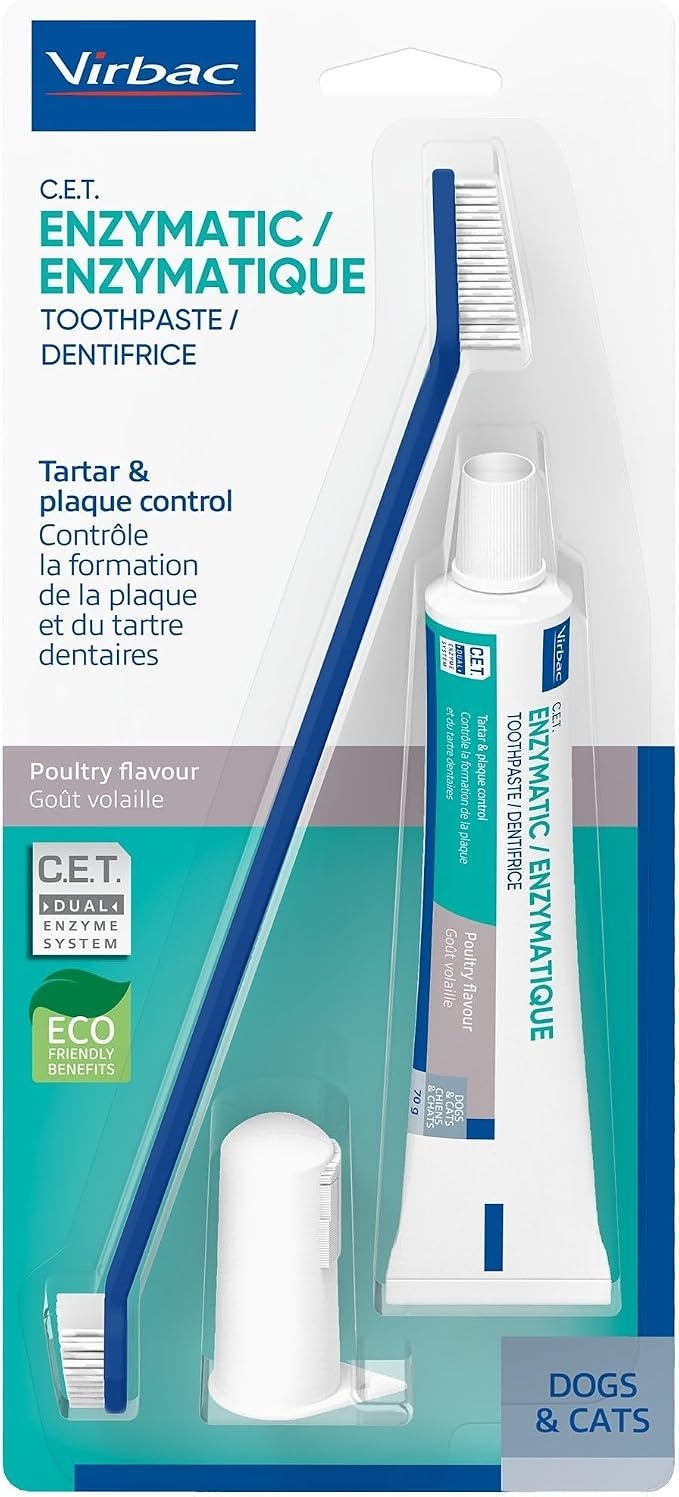
I include this one because at least once a week a patient asks me what to do about their dog's breath, and because dental disease is one of the most common problems dogs develop. This kit is a poultry flavored toothpaste with a toothbrush, and it is not for you. Human toothpaste is not safe for dogs, and a human brush is too big for most mouths.
If you have a dog who will tolerate it, a few seconds of brushing on the outer surfaces of the teeth, a couple of times a week, is genuinely useful. Start slow, use the poultry flavor as the reward, and do not expect a full two minute routine. Compliance looks different for a dog. It still decides the outcome.
How I Evaluate an Electric Toothbrush
When a new brush lands in front of me, I run the same four questions. This is the test, and it has not changed in years.
First, does it have a quadrant timer, meaning a two minute timer that pulses every thirty seconds so you spend equal time on each section of your mouth? If it does not, it is not a serious toothbrush, no matter what it costs.
Second, is there a real pressure sensor? Not a vibration that pretends to be one, and not a setting buried three menus deep. A warning when you press too hard is the single most protective feature on any brush.
Third, what do the replacement heads cost over a year? Multiply the cost of a head by four and be honest about whether you will actually pay it. A brush whose heads you skip is a manual brush with extra steps.
Fourth, would my patients keep using it? I have watched people abandon beautiful, expensive brushes because the charger was awkward, the head was too big, or the thing beeped at them in a way they hated. A brush that gets used for two minutes, twice a day, beats a better brush that sits in a drawer.
What Actually Matters, and What Does Not
Technique beats technology. That is the whole thing in four words. The best brush in the world used for forty seconds at full force does less for your gums than a modest brush used gently for the full two minutes.
Oscillation versus sonic is a preference question, not a results question. Oral-B spins a round head. Sonicare vibrates. Both remove plaque when they are used properly, and I have seen beautiful mouths maintained with each. Choose the sensation you can tolerate twice a day.
The app is not the product. I have made fun of smart brushes for years, and I will admit the compliance data changed my mind a little, because seeing your own streak is genuinely motivating. But a brush that needs a phone to change modes has its priorities backward. The timer is the feature. The app is the upsell.
Replacement heads that cost more than the brush are a design flaw, not a premium signal. When you are comparing two handles, compare the cost of a year of heads, not the sticker on the handle. That is the number that decides whether you stay in fresh bristles.
Compliance is the outcome. Every recommendation I make comes down to whether a real person will keep doing it. That is why the brush I suggest most often is not always the one I would pick for myself.
The Electric Toothbrush Comparison Table
This is the chart I keep in my head when a patient asks me which one to buy. One row per brush, and the notes column is where the honest answers live.
| Brush | Best for | What stands out | Notes |
|---|---|---|---|
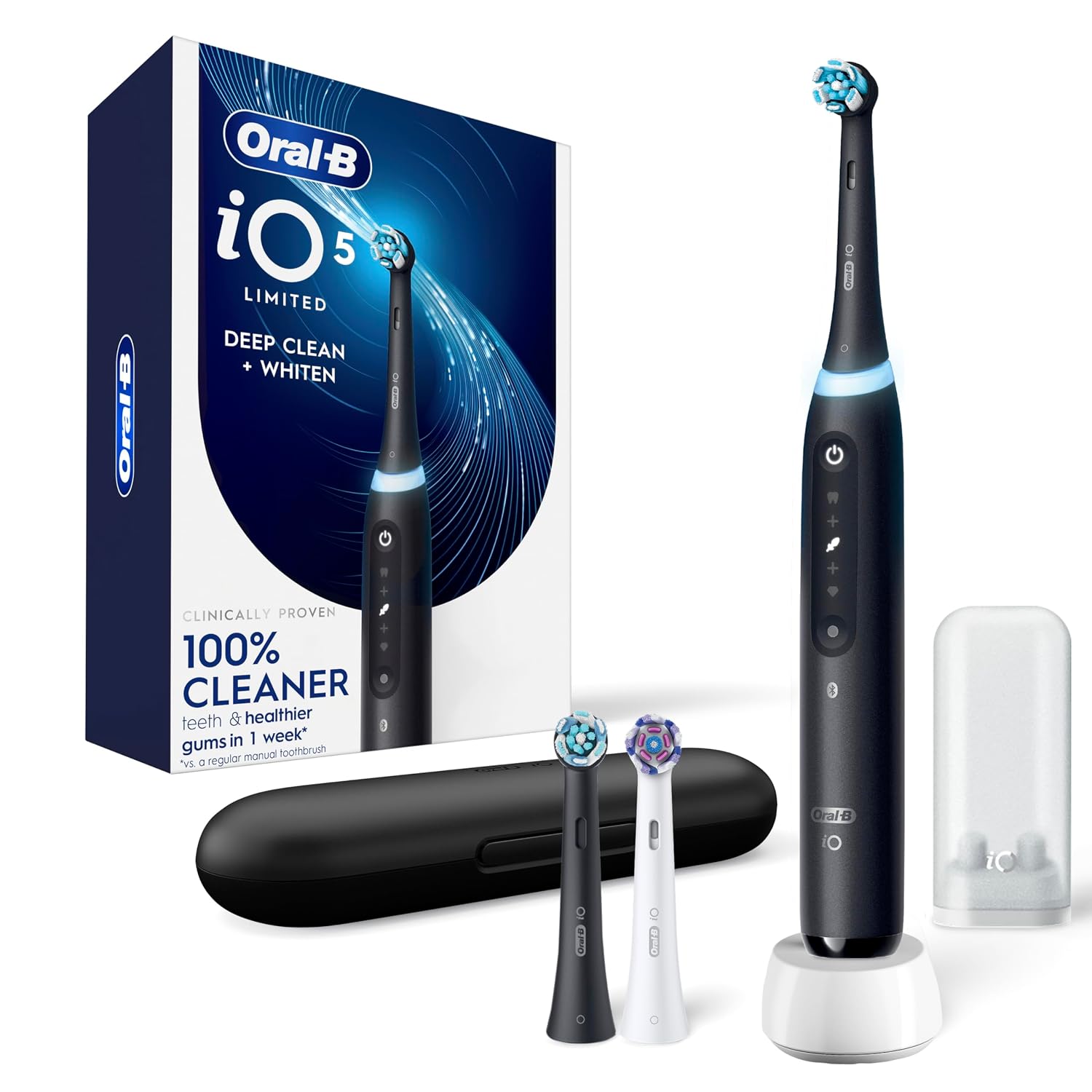 Visit on Amazon → Visit on Amazon →Oral-B iO5 Limited Deep Clean & Whiten |
Gum health and pressure awareness | Visual pressure sensor, five cleaning modes, travel case, three brush heads included | Price the replacement heads at the same time. $149.99 |
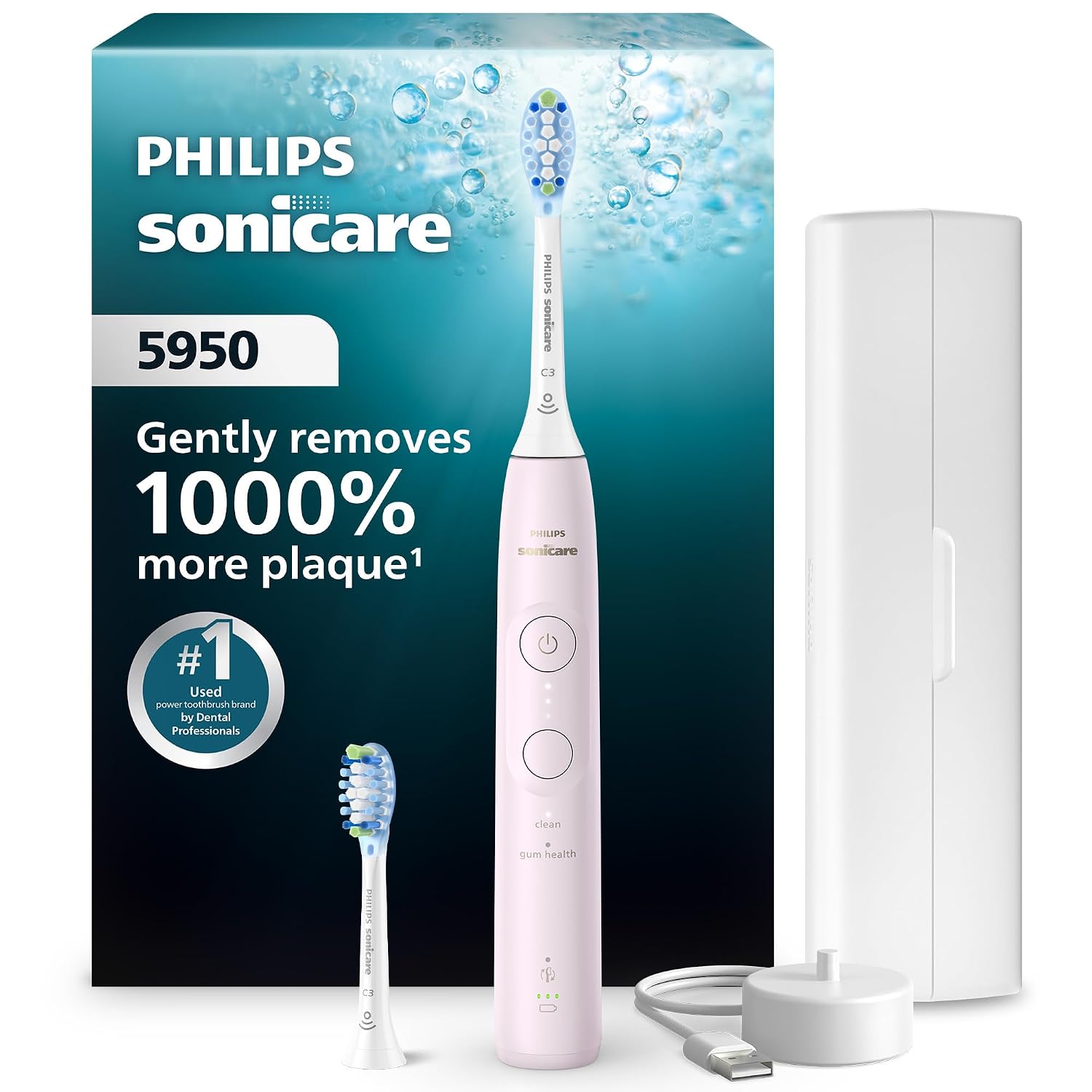 Visit on Amazon → Visit on Amazon →Philips Sonicare 5950 |
Tender gums and sonic fans | Sonic vibration, two brush heads included, pink colorway | Gentle enough that you have to watch the clock. $109.99 |
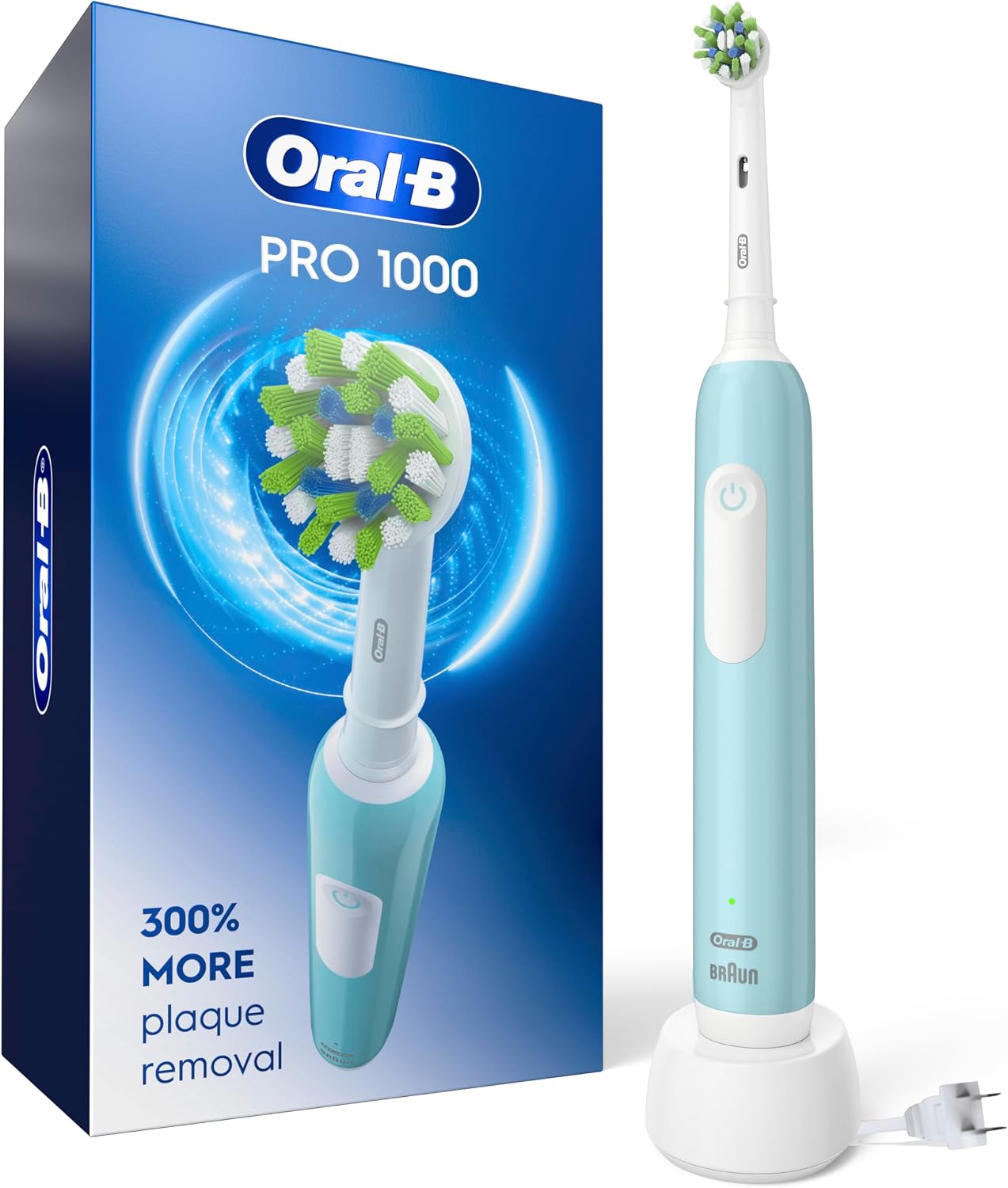 Visit on Amazon → Visit on Amazon →Oral-B Pro 1000 CrossAction |
First electric brush, tight budgets | Round CrossAction head, the long running entry level standard | The safest first electric brush you can buy. $49.99 |
 Visit on Amazon → Visit on Amazon →C.E.T. Oral Hygiene Kit for Dogs |
Dogs, not people | Poultry flavored toothpaste with a toothbrush | Human toothpaste is not safe for dogs. $15.29 |
Read that table the way I do. The notes column is where the decision actually gets made, because the differences between two decent brushes are small and the differences between two upkeep plans are enormous.
Should You Buy the Oral-B iO5?
Yes, if your gums are the reason you are shopping. The visual pressure sensor is the feature that protects you from the damage hard brushing does, and five cleaning modes plus a travel case and three heads make it the most complete package of the four. It is the brush I would pick for anyone with recession, sensitivity, or a history of brushing too hard.
What I would not do is buy it and then skip the head replacements because they feel expensive. Set a reminder for every three months, and treat the heads as part of the cost of the brush from day one. If that math works for you, this is the one.
Should You Buy the Oral-B Pro 1000?
Yes, if you want a serious brush for the least money. It has been the budget standard for a decade, it still cleans properly, and it is simple enough that you will use it correctly without thinking about it. If you are buying your first electric brush, or buying one for a teenager who will leave it on the counter, this is the safe answer.
If your gums are already receding, stretch to the iO5 instead, because the pressure sensor is worth paying for once your gumline is the problem. And if the sensation of a spinning round head never felt right to you, the Sonicare 5950 is the gentle alternative in this group.
Whichever you pick, the rules are the same. Two minutes, twice a day, light pressure, and a fresh head every three months. Your gums do not care what you spent. They care what you do.