Related: Best Electric Toothbrush for Sensitive Gums: What I Tell Patients at the Chair
I have looked inside thousands of mouths in 14 years as a dental hygienist in Madison, Wisconsin, and here is the uncomfortable version of this electric toothbrush comparison: the gap between brushes matters far less than the gap between patients. I have watched people scrub for two years with a flagship handle and still show visible plaque along the gumline, and I have watched people with a mid-range brush and a boring routine come in with almost nothing to scrape.
So when someone asks me what to buy, I do not start with the motor. I start with four questions. Does it have a quadrant timer? Is there a real pressure sensor? What will replacement heads cost over a year? And would this person still be reaching for it in three months? That last question eliminates more brushes than the first three combined.
What follows is the same conversation I have at the chair, with the four brushes I would actually put in someone's hand in 2026.
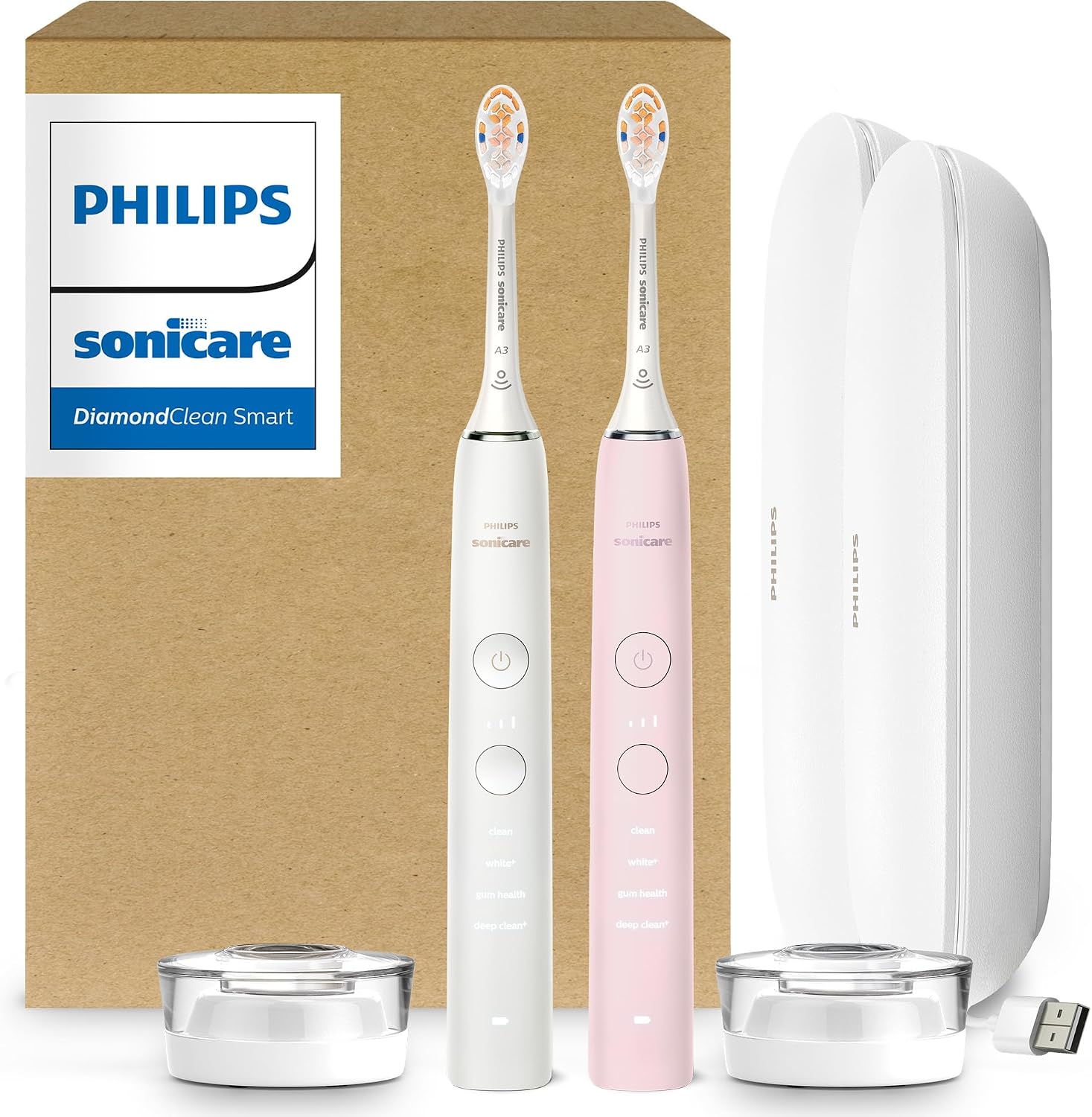
Best Overall: Philips Sonicare DiamondClean 9000
This is the brush I name when a patient says they want the best one and they are tired of guessing. It is a sonic brush, so the head vibrates at high frequency instead of spinning, and the cleaning action is gentle in a way that matters for anyone whose gums have already started to pull back. The pressure sensor is the reason I keep recommending it. Brushing too hard does more long-term damage than skipping a night, and a handle that tells you to back off is doing more for your gum health than any app feature ever will.
The mode selection is broad enough that people with sensitive gums and people fighting staining both find something usable, and the handle feels like an object you would not mind leaving on the counter. The bundle version is the one to get if you travel often. The plain kit is fine if you do not.
Two honest caveats. First, this is a premium purchase, and premium here buys refinement and a protective sensor, not a clinically different clean from the mid-range Sonicare below. Second, I do not own one. I use a cheaper Sonicare at home and I sleep fine at night, because the brush was never the limiting factor in my own mouth. If the money is not a real stretch for you, this is the one I would buy. If it is, keep reading.
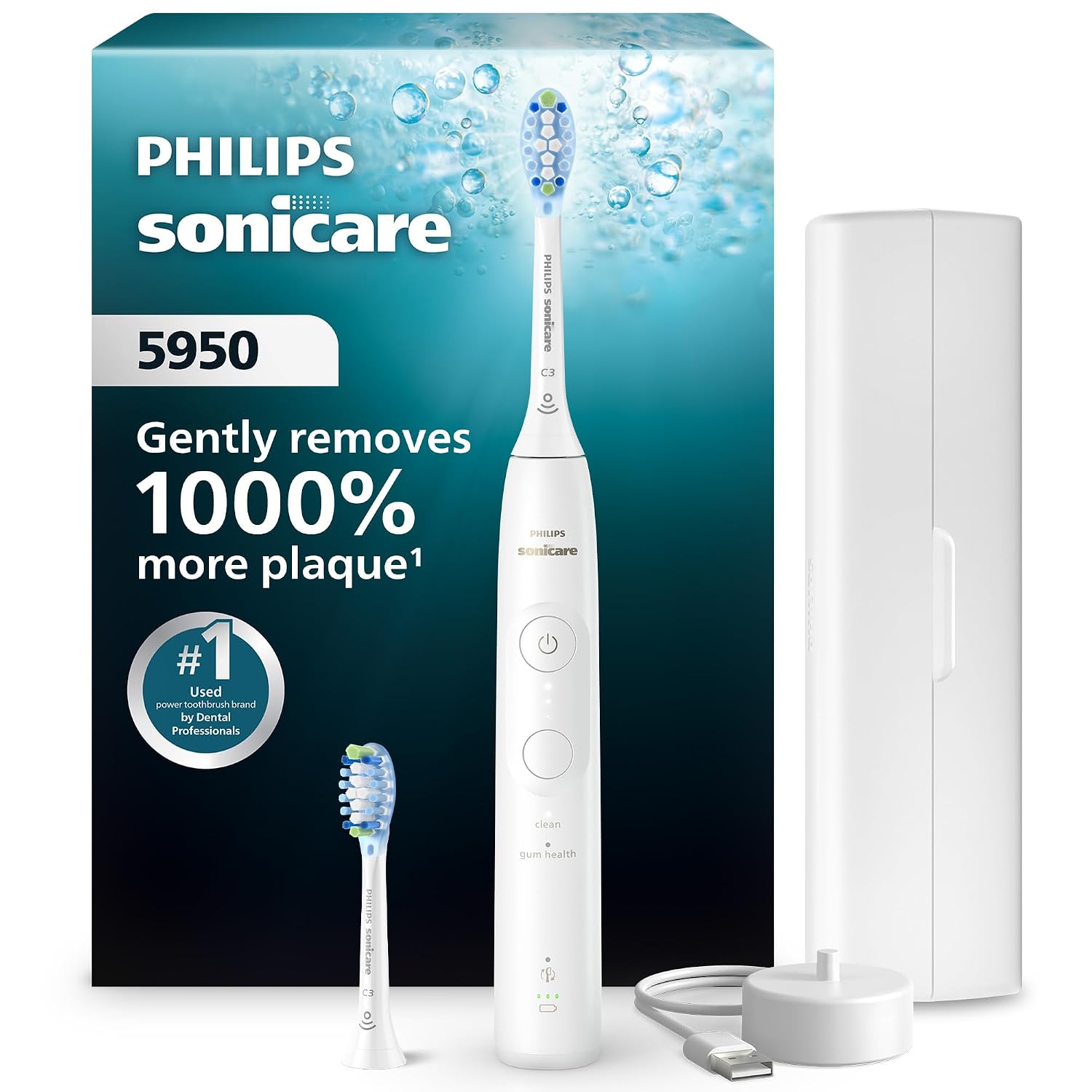
Best Value: Philips Sonicare 5950
If you want the actual answer to what most people should buy, it is this one. The Sonicare 5950 gives you the two features I refuse to compromise on, a quadrant timer that paces you through a full two minutes and a pressure sensor that warns you when you lean on your gums, without the flagship extras you will stop noticing after a week.
It ships with two brush heads, which matters more than people think. The head is the part that touches your teeth. The handle just moves it. A mid-range handle with a fresh head every three months cleans better than a flagship with a frayed head that has been on there since last winter.
It is sonic vibration, same family as the DiamondClean, so the transition is nothing if you are already a Sonicare user. The white finish is plain, and the handle is lighter in the hand than the flagship. That is the trade, and it is a fair one. This is the brush I recommend most often, because it is the one people actually buy when I tell them the truth about the price of the flagship.
Best Budget and Best for Round Heads: Oral-B Smart 1500
Some people cannot get along with a sonic brush, and that is not a technique failure. The Oral-B Smart 1500 uses the oscillating-rotating design, a small round head that cups each tooth and spins, and that mechanical action has been the backbone of clinical dentistry for decades. If you have ever had a hygienist polish your teeth with a rubber cup, you already know the motion.
The round head is the advantage. It is small enough to sit on one tooth at a time, which means you can actually reach the lingual surfaces of your lower molars, the spot where I find the most plaque in adult mouths. Sonic heads are larger and lean harder on your hand position.
You get the two-minute timer with 30-second intervals and pressure feedback, which is the whole checklist. You do not get a screen, you do not get a subscription, and you do not get an app that wants to talk to you about your brushing streak. For a lot of people that is the point. This is the brush I recommend for anyone who wants a serious clean at the lowest sensible cost, and for anyone who tried a sonic handle and did not like the tickle.
Best for the Simplest Routine: Quip Smart Sonic
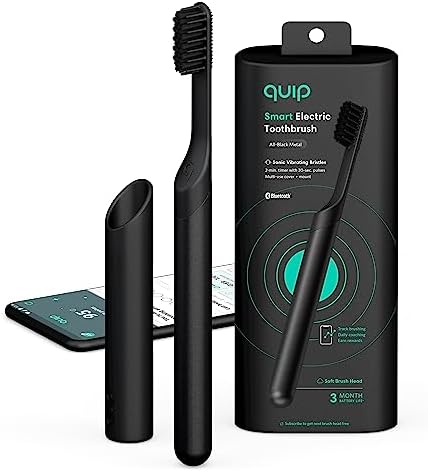
I will be blunt about this one, because I am blunt about it in the chair. The Quip is a manual brush with a motor. It vibrates, it has a two-minute timer with 30-second intervals, it runs on a battery that lasts about three months, and it comes with a metal handle that looks better on a shelf than most of the competition. It has no pressure sensor, so if you are a hard brusher, this brush will not stop you.
And I still recommend it to a specific group of people: the ones who will not maintain anything complicated. The head subscription shows up in the mail, the handle is simple, and the Bluetooth rewards app gamifies the habit. The app is a gimmick, but a gimmick that gets a 24-year-old to brush for two full minutes is not nothing. Compliance is the only variable that changes outcomes, and I have watched a rewards streak do more for a patient's plaque score than any mode I could have sold them.
Buy it if simple and consistent beats powerful and abandoned. Skip it if your gums already bleed or you know you grind.
How I judge an electric toothbrush
Every brush I recommend gets the same four-question screen, in this order.
Quadrant timer. Two minutes, four 30-second intervals. A brush without one is not a serious toothbrush, no matter what it costs. Most adults brush for 45 seconds and believe they did two minutes.
Pressure sensor. Brushing hard does not clean better. It wears away gum tissue and enamel at the gumline. This is the feature that prevents the damage I see most often, and it is why I will always trade a mode for a sensor.
Replacement heads over a year. The handle is a one-time cost. The heads are a subscription to your own mouth. If the heads are expensive or annoying to reorder, the brush dies in a drawer inside a year.
Compliance. Would this person still be using it in three months? I run a 90-day patient trial on brushes for exactly this reason, and the pattern holds: the brush that survives month three is rarely the most expensive one. It is the one that is easy to keep charged, easy to replace heads on, and pleasant enough to pick up.
I do not rank brushes on how they feel in the first week. I rank them on what a mouth looks like at the three-month recall.
Analysis: what actually matters
Oscillation versus sonic is a preference, not a verdict. Oral-B spins, Sonicare vibrates, and both remove plaque when the head is on the tooth for long enough. I have seen beautiful results from both. What changes outcomes is head design and habit, in that order.
The app is not the brush. There is a whole category of expensive handles whose selling point is an app, and the app mostly exists to sell you heads. A toothbrush that needs a phone to change modes has its priorities backwards. The timer and the sensor are the features. Everything else is marketing with a login screen.
Gum recession is a habit problem. Almost every patient I see with receding gums is brushing hard with a soft brush and no pressure feedback. A pressure sensor is the cheapest gum treatment you can buy.
Heads cost more than handles over time. Four heads a year for the life of the brush. If a handle is cheap but the heads are priced like printer ink, it is not a cheap brush.
Nobody needs a mode they cannot name. If you cannot describe what a setting does for your mouth, you will use the default for two weeks and forget the rest. That is fine. Just do not pay extra for it.
Electric toothbrush comparison table
| Brush | Best for | Movement | Timer | Pressure sensor | Price |
|---|---|---|---|---|---|
 Visit on Amazon → Visit on Amazon →Philips Sonicare DiamondClean 9000 |
Best overall, gentle on gums | Sonic | 2 min, 30 sec intervals | Yes | $399.99 |
 Visit on Amazon → Visit on Amazon →Philips Sonicare 5950 |
Best value | Sonic | 2 min, 30 sec intervals | Yes | $109.99 |
 Visit on Amazon → Visit on Amazon →Oral-B Smart 1500 |
Best budget, round head | Oscillating-rotating | 2 min, 30 sec intervals | Yes | Check current Amazon price |
 Visit on Amazon → Visit on Amazon →Quip Smart Sonic |
Simplest routine | Sonic vibration | 2 min, 30 sec intervals | No | Check current Amazon price |
Should you buy the Philips Sonicare DiamondClean 9000?
Yes, if the money is not a real stretch. It is the best overall brush in this group: gentle sonic action, a pressure sensor that is genuinely protective, and enough modes that almost anyone finds a comfortable one. It is the brush I hand to patients who want to stop thinking about toothbrushes.
What you are paying for is refinement and gum protection, not a different class of clean. If you are choosing between this and paying a bill, pay the bill and buy the 5950. Your gums will not know the difference. Your bank account will.
Should you buy the Philips Sonicare 5950?
Yes, and this is the one I recommend most often. Quadrant timer, pressure sensor, two heads in the box, and a handle that is easy to live with. It covers the entire checklist that actually changes a mouth at the three-month recall.
The honest trade is that it feels less special than the flagship. It is lighter, plainer, and it does not come with the premium presentation. None of that shows up in a plaque score. If you want one brush that does the job without a premium decision attached, this is it.
Should you buy the Oral-B Smart 1500?
Yes, if you prefer a round head or you want the lowest sensible cost. The oscillating head cups each tooth, the small size reaches the back lingual surfaces where plaque hides, and you still get the timer and pressure feedback. It is the classic clinical design, and it has stayed the standard because it works.
You give up the app, the screen, and the subscription ecosystem. Good. Nothing in that list removes plaque.
Should you buy the Quip Smart Sonic?
Buy it if simple and consistent beats powerful and abandoned. The timer is real, the three-month battery means it is always ready, and the head subscription removes the excuse that you forgot to reorder. For people who have never managed to keep a brush routine going, that convenience is worth more than a mode they will never press.
Skip it if your gums bleed, if you know you brush hard, or if you want pressure feedback. There is no sensor here, and for those mouths the sensor is the whole point.
Whatever you pick, put a fresh head on it every three months and let the timer finish. That is 90 percent of this article, and it is free.