Most people shopping for an electric toothbrush for adults are solving the wrong problem. They assume the brush is the variable. It is not. The variable is whether the thing sits on the counter for two full minutes, twice a day, with the bristles actually touching the gumline instead of skating across the flat tops of the teeth.
I have looked in thousands of mouths. The patients with the best checkups are not the ones holding the most expensive handles. They are the ones whose brush has a two-minute timer, who let the motor do the work instead of scrubbing, and who replace the head before the bristles look like a worn-out broom.
That is the whole game. Below is the routine I walk patients through, the four questions I use to judge any brush, and the two brushes I would put in an adult's hand today.
Why you should trust me
I am a dental hygienist in Madison, Wisconsin. Fourteen years, thousands of mouths, and a front-row seat to the difference between patients who brush properly and everyone else.
I started paying close attention to electric toothbrushes when I noticed the same pattern over and over. A patient would buy the most expensive brush on the shelf, use it wrong for two years, and show up with the same plaque and the same receding gums. The brush was never the problem. The technique was.
Since then I have worked through everything from cheap sonic knockoffs to the several-hundred-dollar connected flagships, and I judge them the way I judge anything else in the chair: does it remove plaque, does it protect the gums, and will the person actually keep using it past the novelty phase?
I do not take money from brush brands. What follows is the same advice I give a patient leaning back in my chair with a mirror in their hand.
How I picked and how I tested
Every brush I recommend has to survive four questions before it earns a spot on this page.
Does it have a two-minute timer with 30-second intervals? This is non-negotiable. A quadrant timer is the feature that turns brushing from a guess into a routine. Without it, the average person brushes for well under a minute and misses the same spots every single day.
Is there a real pressure sensor? Brushing hard does more damage than skipping a session. It wears enamel at the gumline and it is the main reason gums recede. A pressure sensor tells you when you are pushing too hard, and over a decade that feedback is what saves your gums.
What do the replacement heads cost over a year? A cheap handle with expensive heads is a subscription you did not agree to. Do that math before you buy, not after.
Will a real person keep using it? This is the one I care about most. A brush that lives in a drawer cleans nothing. If the charging routine is annoying, if the head is uncomfortable, if the thing beeps at you in a way that makes you avoid it, it fails, no matter how good the spec sheet looks.
Notice what is not on that list: motor type, app connectivity, and how many cleaning modes the box claims. Oscillating and sonic both clean well. The head design and your habits matter far more than whether the bristles spin or vibrate.
The two brushes I would hand an adult
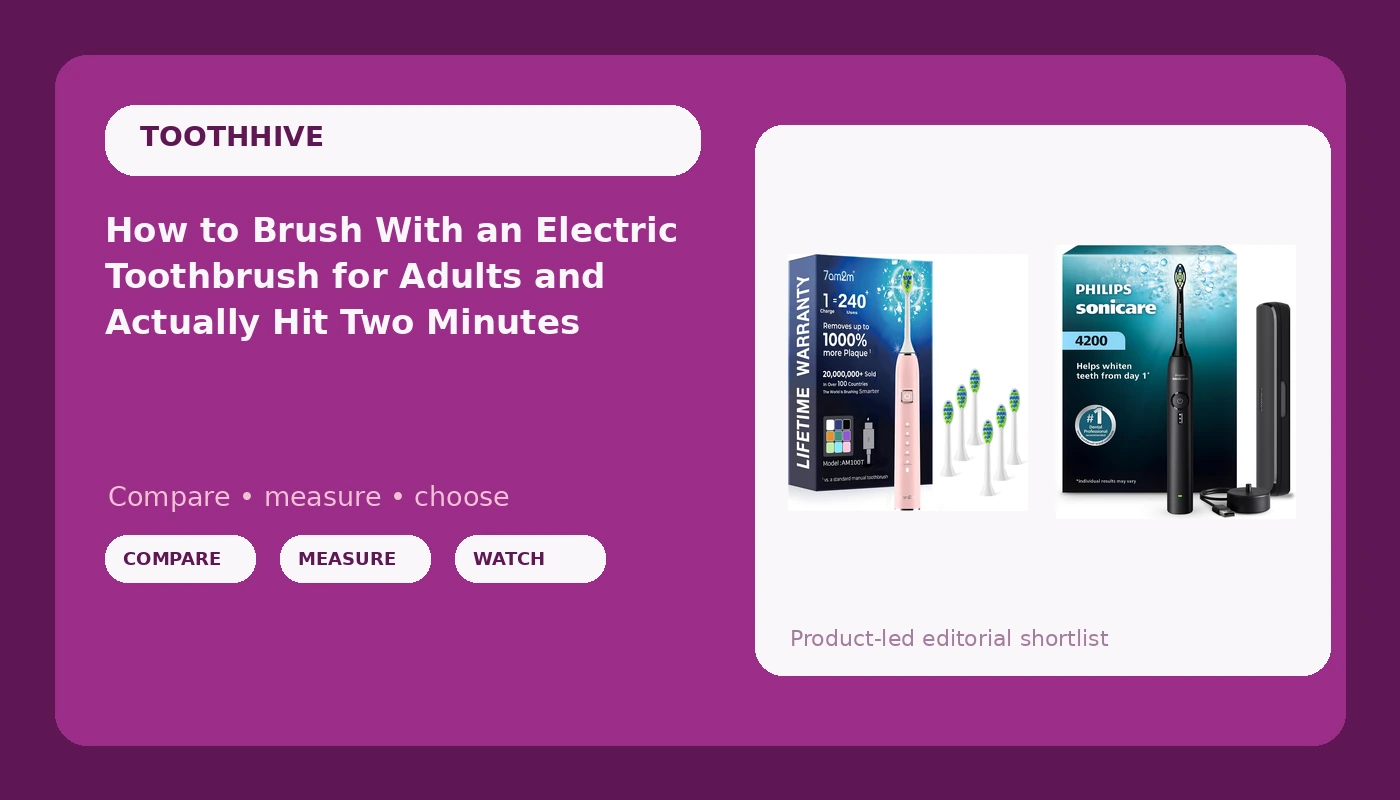
One is cheap enough to buy without thinking about it. The other is the value end of the brand most of my patients end up with. Both are simple handles with no app to babysit.
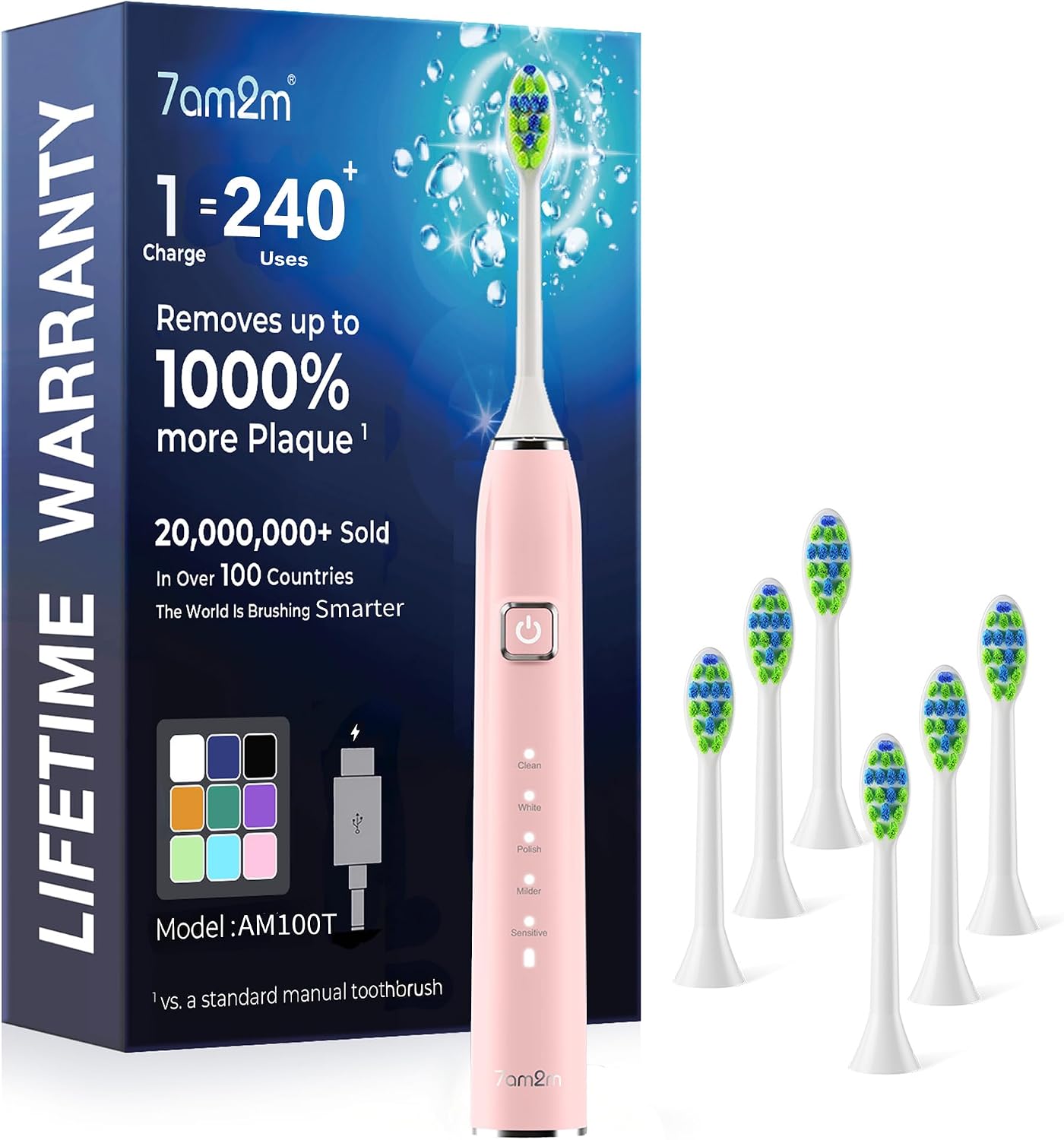
Budget pick: 7AM2M Sonic Electric Toothbrush for Adults, Type-C Charging Run for 120 Days
 Visit on Amazon →
This is the brush I point at when someone wants to try electric without committing real money. It is a sonic brush, it charges over USB-C, and the maker claims a charge that runs for 120 days. USB-C matters more than people think: no proprietary charging puck to lose, and one cable for the brush and your phone when you travel.
Here is the honest framing. At this price you are buying a motor, a timer if the listing confirms one, and a handle that is easy to live with. You are not buying the refined pressure feedback of a premium handle. That is the trade, and for a lot of adults it is the right one, because a brush you actually use beats a brush you admire.
Where it fits: a first electric brush, a travel brush, a second brush for the guest bathroom, or a brush for a teenager who is not ready to be trusted with a flagship handle.
Before you buy, open the listing and confirm two things: the two-minute timer with 30-second intervals, and what a multi-pack of replacement heads costs. Those two details decide whether this is a bargain or a trap.
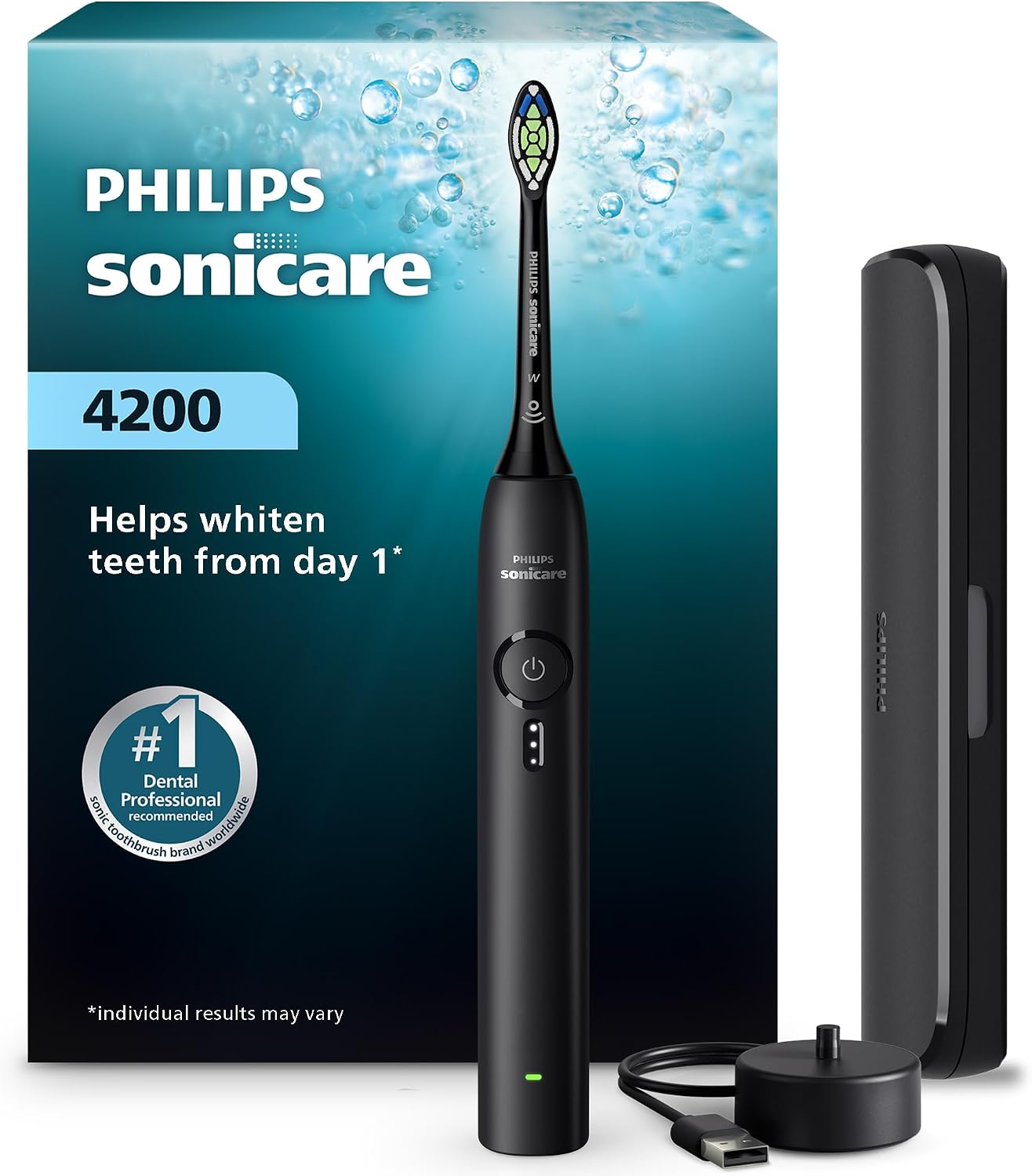
The one most adults should buy: Philips Sonicare 4200 Rechargeable Electric Toothbrush, 1 Brush Head, Black
 Visit on Amazon →
This is the brush I recommend to the patient who brushes too hard. It is a rechargeable Sonicare handle, it comes with one brush head in the box, which is enough to find out whether you like the feel before you buy a pack, and it is black, which sounds trivial until you have watched a white handle turn gray in a humid bathroom.
Two things to verify on the listing, because they are the reason to choose a Sonicare over a generic sonic handle: the pressure sensor and the quadrant timer. If both are there, this is the brush I would buy for myself. The pressure feedback is what keeps a hard brusher from grinding their gums down over the next ten years, and that is worth more than any app feature on a flagship.
It takes the standard Sonicare head, which means replacement heads are easy to find in stores and online. Availability sounds boring. It is not. A brush you cannot easily buy heads for becomes a paperweight in three months.
Where it fits: adults who want one brush to keep for years, patients with receding gums or sensitive teeth, and anyone who has been told by a dentist to stop scrubbing.
The two-minute routine, step by step
Now the part that actually changes your checkups. This works with either brush above, and it works with any brush that has a timer.
Step one: pea-sized fluoride toothpaste, nothing fancy. Wet the head, add a pea-sized amount. More foam does not mean more clean, and a mouth full of foam makes people quit early.
Step two: angle the bristles at 45 degrees toward the gumline. This is the step almost everyone skips. Bristles pointed straight at the teeth polish the crowns and leave the plaque that lives right at the gum edge, which is exactly where gum disease starts. Tilt the head so the bristles sit half on the tooth and half on the gum.
Step three: let the brush do the work. Light pressure, slow movement, one tooth at a time. If you are pressing hard enough to see the bristles splay, you are scrubbing, not brushing. Hold the handle with two or three fingers if you need a reminder. This is where a pressure sensor earns its keep.
Step four: four quadrants, 30 seconds each. Upper right, upper left, lower left, lower right. Spend the full 30 seconds in each one, covering the outside surfaces, the inside surfaces, and the chewing tops. The timer's job is to stop you from spending 90 seconds on the front teeth you can see in the mirror and 10 seconds on the molars you cannot.
Step five: finish with the gumline and the back of the last molars. The two places people miss most are the outside of the upper molars, right where the cheek pulls away, and the inside of the lower front teeth. Give each a few extra passes.
Step six: spit, do not rinse. Rinsing with water washes away the fluoride you just spent two minutes putting on your teeth. Spit out the excess and walk away. If you must rinse, wait 30 minutes.
Step seven: rinse the head, shake it, store it upright in open air. A wet head in a closed drawer or a travel cap is a petri dish. Stand it up where air can move around it.
Step eight: replace the head every three months, or sooner if the bristles splay. Frayed bristles do not clean and they can irritate gums. Set a reminder in your phone the day you open a new head. This is the step that quietly costs people their checkups.
The habits that undo a good brush
Brushing hard to compensate for rushing. Pressure does not remove plaque faster. It just removes gum tissue. If you have two minutes, use two minutes; do not compress them into 40 seconds with force.
Brushing right after breakfast, then not again until bedtime. Acidic food softens enamel for about 30 minutes. Brushing immediately after orange juice or coffee abrades that softened surface. Wait half an hour, or brush before you eat.
Skipping the night brush because you are tired. Saliva production drops while you sleep, which is why bacteria get eight uninterrupted hours to work. The morning brush is the optional one. The night brush is not.
The competition and why it lost
The several-hundred-dollar connected flagships from the big two brands clean beautifully. They also ask you to pay for a phone app, and at that point the app is the product, not the brush. When a year of heads costs more than the handle did, the math stops making sense for most adults.
The classic round-head budget brushes have been the clinical standard for years and still clean properly. They are a fine choice. I left them off because the two brushes above cover the same ground with less fuss, and because the round head is a harder adjustment for someone switching from a manual brush for the first time.
The simple subscription brushes are pleasant, cheap, and convenient. They are also, honestly, a manual brush with a small motor. If the subscription model keeps you brushing, that is a win. If you want the motor to do the work, look elsewhere.
The mid-tier brushes from the major brands are all fine. The reason I did not list five of them is that choosing between them is a coin flip, and a coin flip is not a recommendation.
What this all costs
The handle is the cheap part. The heads are the real cost, and they never stop.
So before you buy anything, price out a year of replacement heads, not just the handle in front of you. A modest handle with cheap, widely available heads will cost you less over three years than a premium handle with proprietary heads. That math has flipped a lot of buying decisions in my chair.
Then there is the cost of getting it wrong. Brushing hard with no pressure sensor is how people end up with receding gums, sensitivity, and a gum graft consultation. That is a four-figure conversation. A pressure sensor is not a luxury feature. It is the cheapest insurance in the bathroom.
Check current Amazon price on both brushes above before you decide, and check what a year of heads will run you for each. The brush that fits your budget and your habits is the right one. The brush that stays in the drawer is the expensive one, no matter what it cost.
Two minutes, twice a day, timer on, light pressure, new head every three months. That is the whole secret. The rest is marketing.