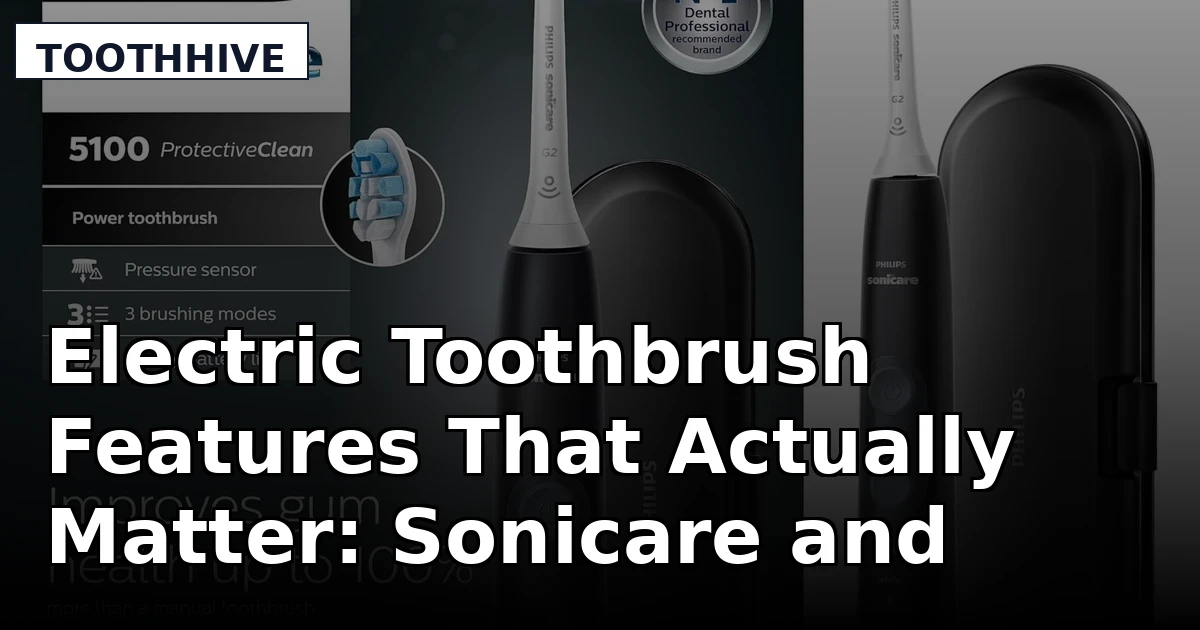
If you are shopping for a rechargeable electric toothbrush, the marketing works hard to make a simple decision feel complicated. You will see app dashboards, brushing scores, whitening claims, and price tags that stretch from about the cost of a pizza to the cost of a monthly car payment. What actually determines whether your teeth and gums end up cleaner is much narrower: a brush head you can replace without wincing, a two-minute timer, and a pressure sensor that tells you when you are pushing too hard.
This explainer covers the four options on this page, from a basic rechargeable brush to two Philips Sonicare models and one battery-powered Oral-B. It also walks through the features worth paying for, the ones that are mostly packaging, and how to decide in a few minutes instead of a few evenings. None of it requires an app, a subscription, or a dental degree to evaluate.
Related: How to Replace and Care for Electric Toothbrush Heads →
Quick answer
For most people, a rechargeable brush with a two-minute timer, a 30-second quadrant pacer, and a pressure sensor covers everything that matters clinically. The Philips Sonicare ProtectiveClean 4100 sits in that zone, and the Philips Sonicare 5100 is the step-up version of the same idea. If you want to spend as little as possible and still get a powered brush, the battery-powered Oral-B Pro 100 and the generically named Rechargeable Electric Toothbrush are the entry points here. Verify the exact feature list on each listing before you buy, because timer and sensor details are not always reflected in the product name.
Four useful options
| Model | Best fit | What stands out |
|---|---|---|
| Philips Sonicare ProtectiveClean 4100 Rechargeable Electric Power Toothbrush, Black, HX6810/50 | Shoppers who want a full-featured rechargeable in the middle of the range | ProtectiveClean series, rechargeable, identified by model number HX6810/50 |
| Philips Sonicare 5100 Rechargeable Electric Toothbrush, 1 Brush Head, Black | Sonicare buyers who want a step up from the entry models | Rechargeable, ships with one brush head, black finish |
| Oral-B Pro 100 3D White, Battery Toothbrush, White | Anyone who wants a simple brush without a charging routine | Battery powered rather than rechargeable, Oral-B 3D White naming |
| Rechargeable Electric Toothbrush | A low-commitment first powered brush | Rechargeable, sold under a generic listing name |
The value pick: Philips Sonicare ProtectiveClean 4100 Rechargeable Electric Power Toothbrush, Black, HX6810/50
The reason this one leads the list is not that it cleans better than a brush twice its price. It is that the features that change outcomes, namely a timer and pressure feedback, are the features this series is built around. A pressure sensor is the single most underrated part of an electric toothbrush. Brushing hard does not remove more plaque; it wears enamel at the gum line and pushes gums back over time. A brush that buzzes or pauses when you lean on it is doing more for your long-term gum health than any app score.
The trade-off is simplicity. You give up the connected features, the multiple cleaning modes, and the travel case of the flagship models. For most adults brushing twice a day at a bathroom sink, those are nice-to-haves rather than the reason teeth get cleaner. Confirm the included accessories and the exact feature set on the listing, since bundles change.
The step-up: Philips Sonicare 5100 Rechargeable Electric Toothbrush, 1 Brush Head, Black
Choosing between this and the ProtectiveClean 4100 comes down to how much you value the extras rather than how well either one removes plaque. Sonicare brushes all use the same basic approach: a vibrating brush head that moves side to side at high frequency, which is why the head design and the timer matter more than the motor spec sheet. If you like the feel of sonic vibration, you are already in the right family.
One practical note applies to every rechargeable brush: the included head is a starter, not a supply. Heads are supposed to be replaced roughly every three months, so the real cost of ownership is the brush plus three or four heads a year. Before you buy any model, price the replacement heads for that specific handle. A cheap handle with expensive, hard-to-find heads is a worse deal than a slightly pricier handle with widely available heads.
The battery-powered option: Oral-B Pro 100 3D White, Battery Toothbrush, White
Oscillating brushes, which is what Oral-B makes, spin a small round head back and forth against each tooth. Sonic brushes vibrate. Both approaches remove plaque well when they are used for two minutes, and the research has not produced a clear winner between them. So the question is not which technology is superior, it is which one you will actually keep using.
The battery-versus-rechargeable choice is where this model earns its place. A battery brush is lighter, has no base to wipe down, and does not die mid-brush because you forgot to dock it. The trade-off is that batteries are a recurring cost and a recurring errand, and a brush running low on power can feel weaker in the hand. If you travel a lot or hate charging cables, that trade can be worth it. Check the listing for how the batteries are supplied and whether the brush includes a timer, because entry-level models vary.
The entry point: Rechargeable Electric Toothbrush
This is the wildcard of the group, and it deserves an honest framing. A generically named listing can be a perfectly good powered brush, and the price of entry is low. It can also arrive without the two features this entire article is about. When the product name does not tell you whether there is a two-minute timer, a quadrant pacer, or a pressure sensor, the burden falls on you to read the bullet points and the questions section carefully.
If the listing confirms a timer and a pressure sensor, this is a reasonable first powered brush and a fine second brush for a guest bathroom. If it does not confirm them, you are buying a vibrating handle that makes brushing feel more thorough without enforcing the habits that make it thorough. That is the whole test. Buy the timer and the sensor; everything else is decoration.
Prices and availability may change. Product images, names, and retailer links must be matched by verified ASIN. Do not state a current price, rating, stock status, or measured result without current evidence.
Why the timer and pressure sensor matter more than the motor
Two minutes is not a marketing number. It is the brushing duration that most studies of plaque removal and gingival health are built around, and most people who brush without a timer stop somewhere between 45 and 70 seconds. They also tend to brush the same easy-to-reach areas first and quit before the back molars and the lingual surfaces get any attention. A two-minute timer with 30-second intervals does not clean your teeth for you, but it stops you from finishing early and it moves you around the mouth in a pattern instead of a random scrub.
Pressure is the second half of the story. Plaque is soft and comes off with light contact. Hard brushing does not accelerate that; it abrades the tooth surface at the gum line and traumatizes the gingival tissue, which is one of the ways gums recede. Recession is permanent. A pressure sensor is therefore not a comfort feature, it is a damage-prevention feature, and it is the one specification worth prioritizing over brush modes, app connectivity, and travel cases.
If you want a way to sanity-check a brush without clinical training, use the same four questions a hygienist would: does it have a quadrant timer, is there a real pressure sensor, what do replacement heads cost over a year, and will the person using it actually keep it charged and in use after the novelty wears off.
Sonic versus oscillating, and what the difference means in practice
Sonic brushes, which is what both Philips Sonicare models here use, vibrate the bristles side to side at high frequency. Oscillating brushes, which is what the Oral-B model uses, rotate a small round head back and forth. Both are legitimate. Reviews that declare one technology the winner are usually comparing brush heads and user technique rather than motors.
The practical differences are these. Round oscillating heads are small, which makes them easy to place around the curve of each tooth. Sonic heads are longer and softer in feel, and the vibration can help sweep between teeth and along the gum line. Some people find the vibration of a sonic brush more comfortable; others find a round head easier to control. Neither is a compromise.
What genuinely varies across price tiers is the brush head itself: bristle quality, the shape of the head, and whether the replacement heads are easy to find and affordable. A premium handle with a worn, splayed brush head cleans worse than a basic handle with a fresh head. If you only optimize one thing after reading this, optimize head replacement.
- Check for a two-minute timer with 30-second quadrant intervals. If the listing does not mention it, treat it as absent.
- Check for a pressure sensor. This is the feature that protects gums from recession and enamel from abrasion.
- Price the replacement heads for the specific handle before you buy. Multiply by three or four per year and compare that total, not just the handle price.
- Decide between rechargeable and battery powered based on your routine, not the spec sheet. A dead brush cleans nothing.
- Confirm the actual feature list on the current listing, since bundles, modes, and included accessories change without the model name changing.
Practical guidance before you buy
- Replace the brush head roughly every three months, and sooner if the bristles look splayed or discolored. A fresh head matters more than a fancier handle.
- Do not share brush heads between people. Two people should have two handles, or at minimum two clearly marked heads.
- Rinse the head and let it air dry upright. A damp head sitting in a closed travel case grows things you do not want in your mouth.
- Let the pressure sensor do its job. When it signals, ease off rather than pressing harder to "get it clean."
- Buy one extra head with the brush so you are never using a worn head while waiting on a replacement order.
Which option should you choose?
Choose the Philips Sonicare ProtectiveClean 4100 Rechargeable Electric Power Toothbrush, Black, HX6810/50 when you want the protective features that matter in a rechargeable Sonicare without paying flagship prices. Choose the Philips Sonicare 5100 Rechargeable Electric Toothbrush, 1 Brush Head, Black when you like the sonic feel and want a step up in the range with a charging base and a black finish. Choose the Oral-B Pro 100 3D White, Battery Toothbrush, White when you want the round oscillating head Oral-B is known for and you would rather swap batteries than manage a charger. Choose the Rechargeable Electric Toothbrush when you want the lowest-commitment way to try a powered brush and you are willing to read the listing carefully to confirm it has a timer.
One caveat applies to all four: none of them will outperform a manual brush used correctly for two minutes twice a day unless you actually use them for two minutes twice a day. The feature list is there to enforce the habit, not replace it.
The bottom line
The electric toothbrush market rewards confusion, and the fix is to buy on three specifications: a two-minute timer with quadrant intervals, a pressure sensor, and replacement heads that are cheap and easy to find. Everything above that line, including apps, brushing scores, and multiple cleaning modes, is optional. The ProtectiveClean 4100 is the sensible center of this group, the Sonicare 5100 is the step-up for people who prefer the sonic feel, the Oral-B Pro 100 is the pick for anyone who wants batteries instead of a charger, and the generically named rechargeable brush is the entry point if you verify its features first. Pick the one you will keep using, and replace the head on schedule.