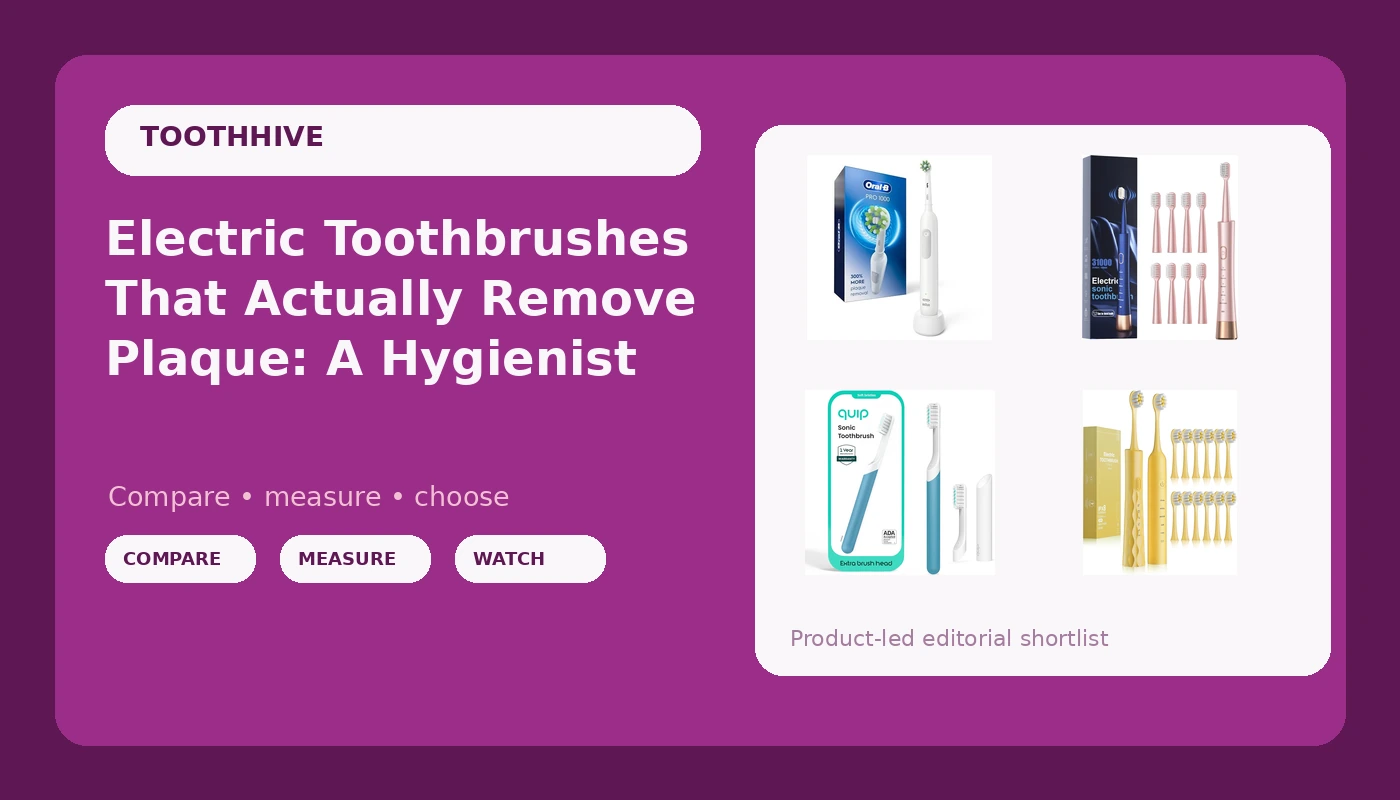
Related: How to Stop Brushing Too Hard With an Electric Toothbrush
In fourteen years of cleaning teeth, I have never once had a patient ask me which electric toothbrush has the best app. They ask which one to buy. The honest answer is that an electric toothbrush for adults only works if it clears three bars: it has to run a two-minute timer with 30-second intervals, the replacement heads have to be cheap enough that you actually replace them, and it has to be pleasant enough that you keep picking it up in month three.
Everything else, the modes, the colors, the charging cable, is decoration. I have watched a patient use a flagship brush wrong for two years and end up with the same gum inflammation as someone using a manual brush. I have also watched people get real results from handles that cost less than a takeout dinner. Plaque does not read price tags.
So this is the shortlist I actually hand out, built the way I think about every brush that comes across my chair: timer first, head cost second, compliance third, marketing never. Four brushes, four different jobs, and not one of them needs an app to change a mode.
Best Overall: Oral-B Pro 1000 Rechargeable Electric Toothbrush
This is the brush I have recommended to patients for years, and it is still the one I name when someone wants a single answer and does not want to think about it again. It has been the clinical standard in this price range for a decade.
It is a rechargeable oscillating brush with a round head. That means the bristles rotate and oscillate against the tooth surface rather than buzzing side to side, and it changes how you brush. A round head lets you walk the brush from tooth to tooth and let the head do the work. You are not scrubbing. You park it on each tooth for a few seconds and move on. That is exactly the technique that keeps gums healthy and enamel intact, and it is the technique most people abandon at 7 a.m. when they are half asleep.
The Pro 1000 is also the brush I point to when a patient tells me they brush too hard. There is nothing to prove with this handle. You are not chasing a score, a light ring, or a celebration animation. You hold it, you move it, you stop. That restraint is a feature, not a missing feature.
What I tell patients: buy it, keep it on the charger where you can see it, and order heads before you run out. The brush is the easy part. The heads are the discipline. 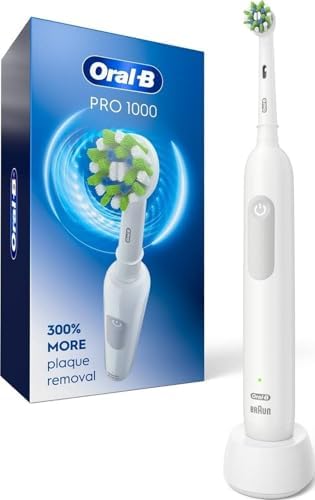 Visit on Amazon →
Best for Simplicity: Quip Sonic Electric Toothbrush for Adults
This is the brush for the person who has already failed at electric toothbrushes. Quip keeps it simple: a slim handle in marine blue, a brush head you swap every three months, and an extra brush head in the box. That extra head matters more than it sounds, because the number one reason people quit an electric brush is running out of heads and never reordering.
My honest read as a hygienist: Quip behaves closer to a manual brush with a motor than to a high-output sonic handle. The vibration is gentle, the head is small, and if your technique is good, it cleans fine. If your technique is bad, it will not rescue you. That is true of every brush, but it is more true here, and I would rather say so than sell you a miracle.
Where Quip wins is the habit. It is quiet, it is light, it does not beep at you or light up like a cockpit, and it looks acceptable sitting on the counter. For someone who wants a decent brush and nothing else, that low friction is the whole point. The best toothbrush is the one you will actually use for two minutes, twice a day, and this one is easy to keep using. 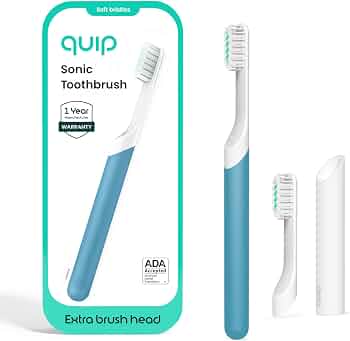 Visit on Amazon →
Best Budget Bundle: AJELU Sonic Electric Toothbrush for Adults
Here is where the math gets interesting. The AJELU is a USB-rechargeable sonic brush that ships with eight brush heads, a smart timer, five modes, and a listing that claims a two-hour charge lasting about 30 days. Eight heads is roughly two years of replacements at the three-month cadence I give patients. That single number changes the decision for a lot of people.
Think about why brushes die in drawers. It is almost never the motor. It is that a head costs more than the person expected, so they keep using a splayed one, then they stop caring, then the handle goes in a cabinet. The AJELU removes that failure point. You buy it once and you are covered for a long stretch, which is exactly the kind of boring reliability that actually protects gums.
What you give up: sonic vibration with a slim head, five modes you will probably stop touching after week one, and the fit and finish of a premium handle. It is a plastic brush and it feels like one. But plaque does not care about hand-feel, and a brush with fresh heads beats a nicer brush with worn ones every single time. 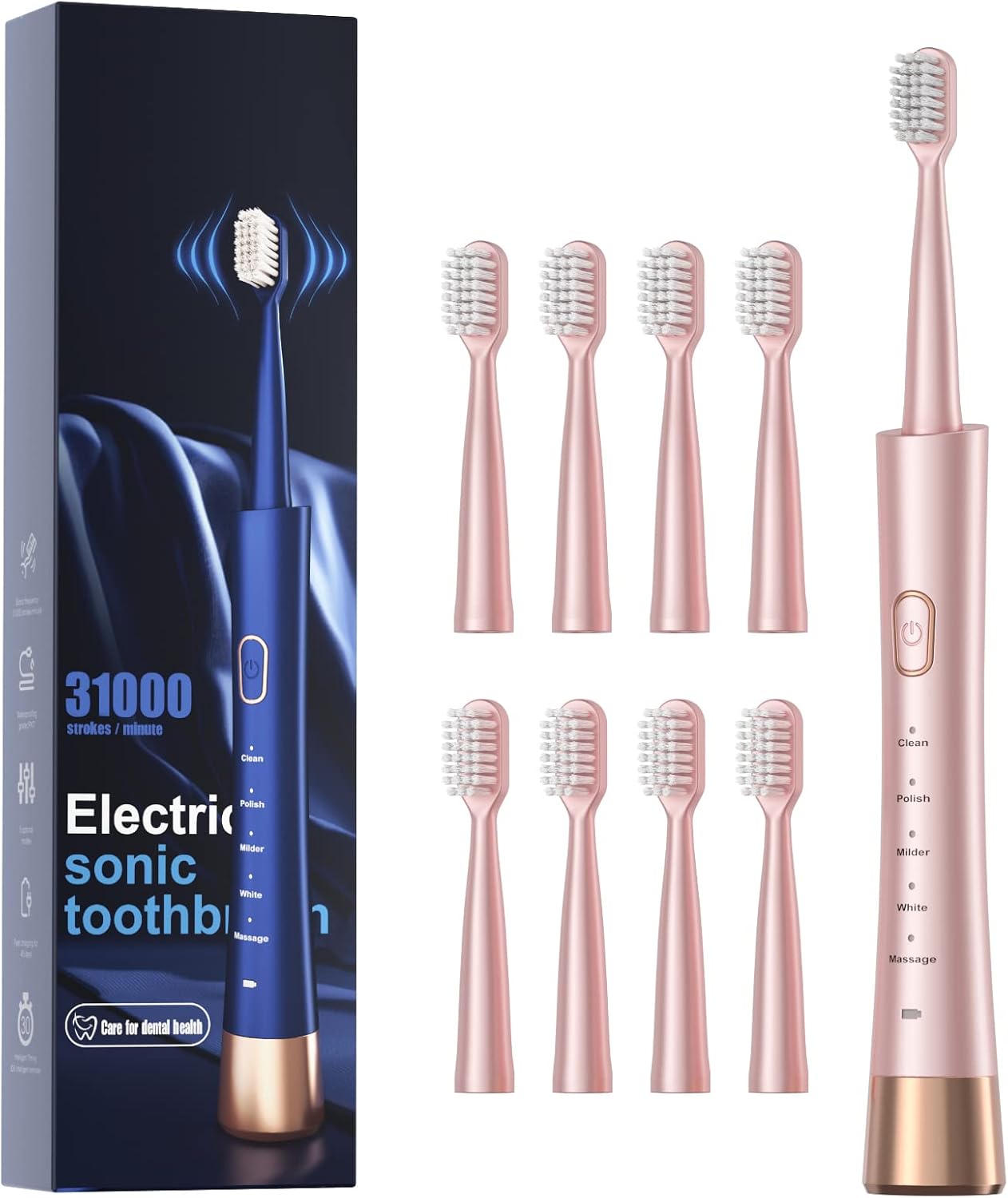 Visit on Amazon →
Best for Two People: Aneebart 2 Pack Electric Toothbrush for Adults
Two handles, twelve brush heads, six modes, a smart timer, USB charging, and the same two-hour charge and 30-day claim as the AJELU. If you share a bathroom, have a kid heading to college, or keep a guest sink stocked, this is the cheapest way to put a powered brush in two hands at once.
Twelve heads split between two people is six each, which at the three-month cadence is about 18 months per person. That is the part of a two-pack worth paying for. The second handle is convenient; the head supply is what keeps both brushes alive.
The usual catch with two-packs is that the second handle becomes a paperweight if the first one annoys somebody. Cheap sonic handles feel light, the modes are mostly marketing, and the heads are the only part you genuinely replace. Set expectations accordingly. But if you are outfitting two people who currently brush with whatever is on sale, this bundle does more for two sets of gums than one fancy handle ever would. 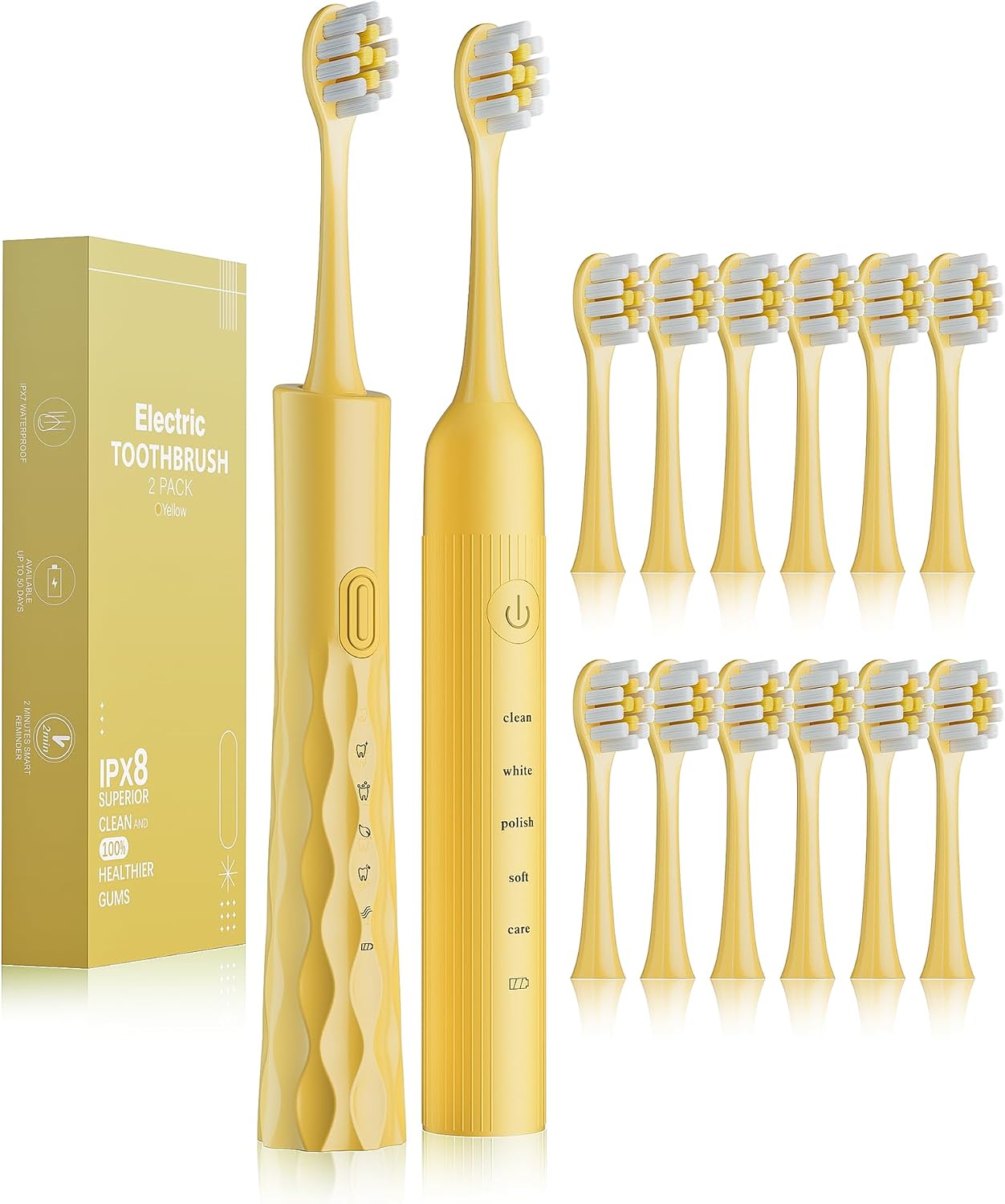 Visit on Amazon →
How I judge an electric toothbrush
I do not start with the motor, the brand, or the box. I start with four questions, in this order.
Does it have a quadrant timer? A two-minute timer with 30-second intervals is the feature that turns a distracted 45-second scrub into an actual two-minute clean. If a brush does not have that, it is not a serious toothbrush, no matter what it costs.
Is there a real pressure sensor? Brushing too hard is why gums recede, and recession does not grow back. A pressure warning is the one smart feature I will defend in front of a patient.
What do the replacement heads cost over a year? Four heads a year, every year, forever. A cheap handle with expensive heads is an expensive brush.
Will this person actually keep using it? Compliance beats specification. A brush in a drawer has a plaque score of zero.
Everything else, modes, apps, travel cases, colors, I treat as packaging. It is not that those things are bad. It is that none of them has ever removed plaque from a molar.
The comparison table
This is the table I keep in my head when a patient texts me from a store aisle. The "stated" columns mean exactly that: what the product listing actually says, not what I assume the handle can do. Read the listing before you buy, especially on the timer.
| Product | What the listing includes | Timer stated | Modes stated | Best for |
|---|---|---|---|---|
| Visit on Amazon → Oral-B Pro 1000 |
Rechargeable oscillating handle, white | Not stated | Not stated | One answer, no research |
| Visit on Amazon → Quip Sonic |
Handle plus one extra brush head, marine blue | Not stated | Not stated | Low-friction daily habit |
| Visit on Amazon → AJELU Sonic |
Handle, 8 brush heads, USB charging, pink | Yes, smart timer | 5 modes | Never reordering heads |
| Visit on Amazon → Aneebart 2 Pack |
Two handles, 12 brush heads, USB charging | Yes, smart timer | 6 modes | Two people, one purchase |
What the table tells you
Two of these listings state a smart timer by name. Two do not. A missing timer in a product title is not proof of a missing timer in the handle, but it is a reason to read the full listing before you spend money, and it is exactly the kind of detail that gets buried under mode counts and color options.
Notice what is absent from all four: not one of these listings advertises a pressure sensor. That is the honest trade-off at this end of the market. The brushes that warn you when you are pressing too hard cost more, and if your gums are already receding, that warning is worth more than six modes and a two-year head supply combined. If recession is your problem, this shortlist is not the answer to your problem. Buy the sensor, then buy heads.
Now think about the head math across the group. The AJELU and the Aneebart arrive with eight and twelve heads respectively, which is the equivalent of years of replacements. The Pro 1000 and the Quip arrive with one head or fewer in the box, so the cost of owning them is the cost of the brush plus four heads a year, forever. Neither approach is wrong. They answer different questions. One asks "what is the best handle I can buy," and the other asks "what is the cheapest way to never think about this again."
Oscillation versus sonic is the last thing people ask me about, and it is the least important. The Oral-B spins. The other three vibrate. Both approaches remove plaque when the head is fresh and the timer runs out. Head design and habits beat motor type, every time, in every mouth I have looked at.
If you want my tiebreaker: buy the Pro 1000 if you will actually reorder heads. Buy the AJELU or the Aneebart if you know you will not. Buy the Quip if the alternative is a manual brush and a bad attitude. Skip anything that needs an app to change a mode.
Should you buy the Oral-B Pro 1000?
Yes, if you want one answer and no more research. It has been the clinical standard in this price range for a decade, the round oscillating head rewards good technique, and it does not distract you with gimmicks. It is the brush I recommend to patients who tell me they brush too hard.
The catch is on you, not the handle. Buy heads on a schedule, not when the bristles splay. The brush is the easy part. The heads are the discipline.
Should you buy the AJELU Sonic Electric Toothbrush?
Yes, if you know you will never reorder heads. Eight heads in the box is roughly two years of replacements, the listing states a smart timer and five modes, and the two-hour charge claim of about 30 days means it lives on the counter instead of the charger.
You are trading polish for supply. It is a plastic brush with modes you will ignore by February. It is also the cheapest way to make sure the head on your brush is fresh, and a fresh cheap head beats a worn expensive one.
Should you buy the Quip or the Aneebart 2 Pack?
Buy the Quip if you want the simplest possible thing that is not a manual brush, and you value quiet and light over power. Buy the Aneebart 2 Pack if two people in your house need a brush and you would rather buy heads once than every quarter.
Neither is the most capable handle here. Both solve the problem that actually kills electric toothbrushes in real bathrooms, which is running out of heads or running out of patience.