Most people who buy an electric toothbrush get about three good weeks out of it. Then the novelty wears off, the charger migrates behind the mirror, and the brush becomes an expensive timer you ignore. I have watched that exact slide happen in my chair for fourteen years, and it is almost never the brush's fault. It is the routine's fault.
A working electric toothbrush routine is not complicated. It is two minutes, twice a day, with the bristles angled at the gumline, light pressure, and a quadrant timer you actually obey. The handle matters less than the marketing suggests. The habits around the handle matter more than any spec sheet.
This is the setup I hand to patients: how to choose the handle, how to keep it fed with replacement heads without overspending, and the exact sequence I want run every morning and every night.
Why you should trust me
I am a dental hygienist in Madison, Wisconsin, and I have been cleaning teeth for fourteen years. In that time I have looked inside thousands of mouths, and the pattern is brutally consistent. The patients with the healthiest gums are not the ones with the fanciest brushes. They are the ones who brush for the full two minutes, twice a day, with gentle pressure, and who change the head when the bristles splay.
I started paying close attention to electric toothbrushes when I realized my patients kept buying the most expensive model on the shelf and using it wrong. People would bring in a flagship brush, hold it like a scrub brush, bear down until the gums bled, and wonder why their checkups were not improving. The brush was fine. The technique was not.
I do not trust a brush without a quadrant timer, I do not trust a "gentle" claim without a pressure sensor, and I do not recommend anything I cannot picture a real patient using twice a day for a year. That last rule eliminates more brushes than you would think.
How I picked these two
My checklist is four questions, and it has not changed in years.
First, does it have a two-minute timer with 30-second quadrant intervals? Without that, it is not a serious toothbrush. Second, is there a real pressure sensor that warns you before you grind your gums into recession? Third, what do replacement heads cost over a year? The head is the subscription, and a cheap handle with expensive heads is a trap. Fourth, would a real person keep using it at the three-month mark, when the novelty is gone?
The two products below answer different halves of that list. One is a handle I would hand to an adult who wants the job done properly. The other is a refill pack for a completely different brush family, and the compatibility note on it is the single most important thing in this article.
The handle and the heads
You need two things to brush well: a handle that runs a proper timer, and a supply of heads you will actually swap on schedule. Here is what I would put in a patient's hands for each job.
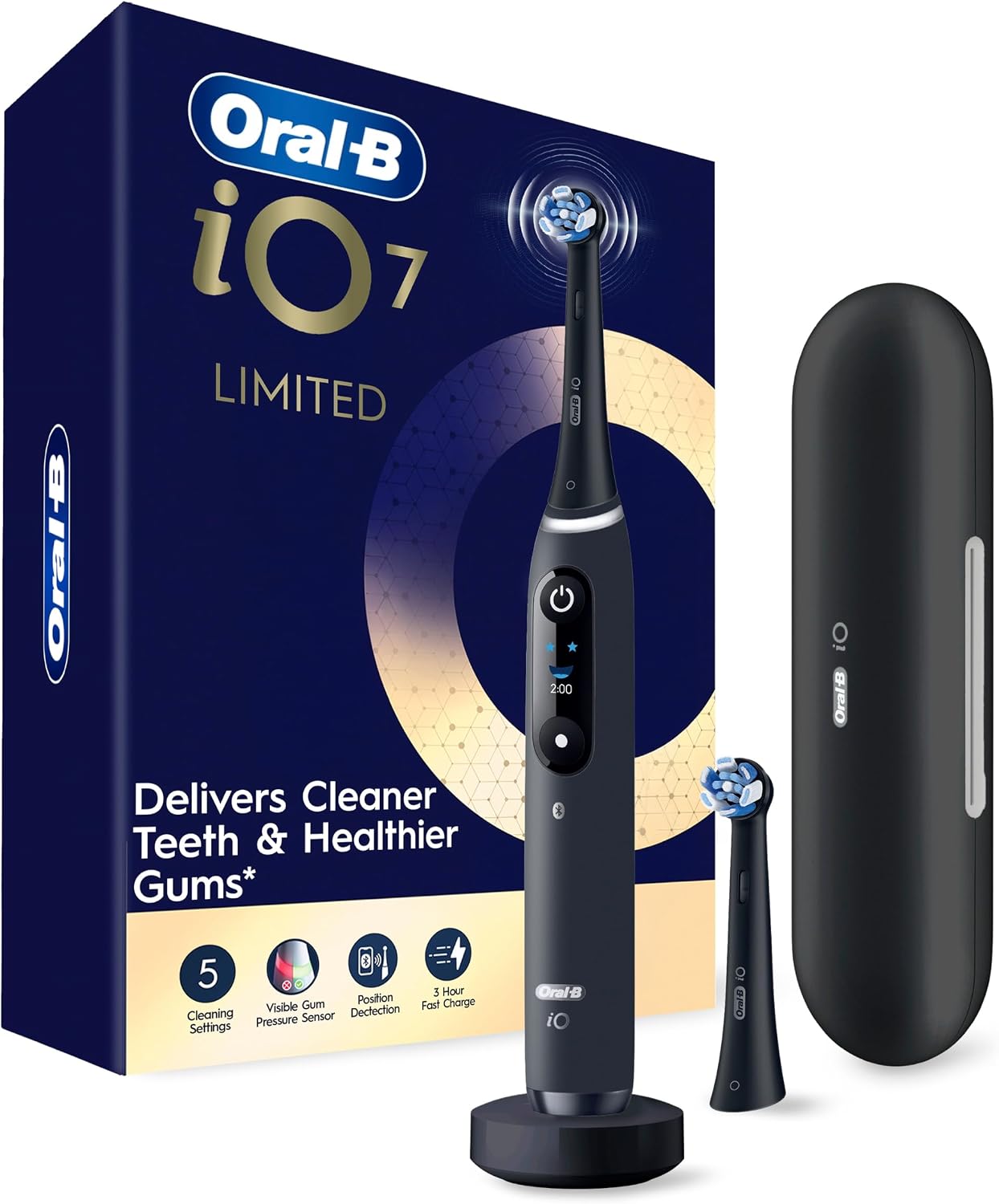
Our pick: Oral-B iO Deep Clean + Protect Rechargeable Electric Toothbrush, Black, iO Series 7, 2 Replacement Brush Heads, Charging Travel Case (package may vary)
 Visit on Amazon →
The iO line is what I point adults toward when they want the round-head oscillating style of cleaning and they want pressure feedback to be part of the deal. The head is small and round, which makes it easy to walk along the gumline one tooth at a time, and the magnetic drive in this series runs smooth rather than buzzy. Check current Amazon price.
The package includes two replacement heads and a charging travel case, and the listing notes the packaging may vary, which means you might get the retail box or a plain one. The brush is the same either way.
The app is the part people ask about. My honest answer: the app is optional and the timer is the feature. If a connected brush gets you to actually watch your two minutes, use it. If the app is just another login you will abandon by week three, ignore it and let the handle's own timer do the work.
Flaws but not dealbreakers: The heads for this family are not cheap, and that is the real cost of ownership. Budget for them before you buy the handle, not after.
Anyone who wants a round-head brush with a pressure sensor and a real quadrant timer, and who is willing to buy heads on a schedule, will do well here.
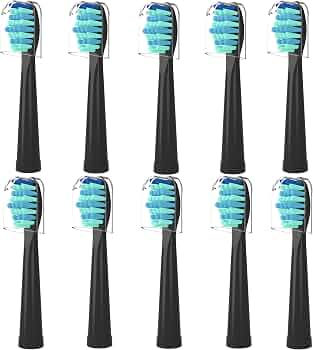
The value refill: Toothbrush Heads for FairyWill, Replacement Brush Heads for Fairy Will
 Visit on Amazon →
These are replacement heads for FairyWill handles, and that sentence is the whole review. They do not fit an Oral-B handle, they do not fit a Sonicare handle, and if you order them for the wrong brush you will be mailing them back. Check current Amazon price.
If you already own a FairyWill handle, this is the sensible way to keep it running. The head is where a brush either works or does not, and the refill market is exactly why a modest handle can be a smart buy: the brush costs little, the heads cost little, and you can afford to swap them on time instead of stretching a splayed head for five months because replacements hurt.
The trade-off with value refills is fit tolerance. Look at the collar and the click mechanism when the heads arrive, confirm the head seats fully with no wobble, and give it a test run before you trust it. A head that rattles is not cleaning the way it should.
Flaws but not dealbreakers: Bristle quality varies between batches on value refills, so buy a pack you can inspect and send back if the fit is off.
This is for the person who already has a FairyWill handle and wants to stay on a three-month replacement schedule without wincing at the checkout page.
The actual routine
Now the part that matters more than either product. This sequence works with any electric brush that has a quadrant timer. If yours does not, set a timer on your phone and run the same sequence.
Step one: Charge it and park it where you brush. A dead brush is a manual brush. Keep the charger on the counter, not in a drawer.
Step two: Pick the right head and wet it. A dry head on dry teeth is a scratchy start. Run it under warm water for a second.
Step three: Angle the bristles at 45 degrees to the gumline. This is the step everyone skips. The bristles should be half on the tooth and half on the gum, pointing at the spot where the two meet. That junction is where plaque does its damage.
Step four: Let the timer lead. Thirty seconds per quadrant: upper right, upper left, lower left, lower right. When the brush pulses, move. Do not freelance. The point of the interval is that you stop over-brushing the front teeth and under-brushing the molars you cannot see.
Step five: Use almost no pressure. This is the one I would tattoo on the mirror. If your brush has a pressure sensor, treat every warning as a correction, not an annoyance. The patients with receding gums are almost always the hard brushers. Hard brushing does more damage than skipping a session.
Step six: Cover every surface. Outer faces, inner faces, chewing surfaces. For the inner front teeth, tip the brush vertical and use the tip. Two minutes feels long only for the first week.
Step seven: Spit, do not rinse. Rinsing with water after brushing washes away the fluoride you just applied. Spit out the excess and leave the rest. If your dentist gave you a prescription paste, this step matters even more.
Step eight: Rinse the head, shake it, and let it air dry. A wet head closed inside a travel case grows things. Dry it upright, and save the case for travel.
Step nine: Replace the head every three months, or sooner if the bristles splay. A splayed head cleans less and irritates more. This is the cheapest upgrade in dentistry, and it is the one people postpone the longest.
How to check head compatibility before you buy
Since the two products here live in different ecosystems, this is the section to read twice.
Match the handle, not the brand vibe. A listing that says "for FairyWill" fits FairyWill handles. A listing that says "for Oral-B iO" fits the iO. The names are not interchangeable, and the photos on the listing are often generic stock shots.
Check the attachment style. Some heads click onto a stem, some twist onto a threaded collar. Look at the base of the head you are replacing and compare the shape to the photo in the listing.
Read the questions and answers on the listing for people naming your exact handle model. That is where fit problems surface first.
Buy one pack before you buy three. Fit tolerances change between batches, and a single pack tells you what you need to know for the price of a coffee.
What about the other kinds of brushes
Sonic handles vibrate side to side at high speed. Oscillating handles rotate and pulse. Both remove plaque when you use them correctly, and neither wins on motor type alone. What separates them is head design, head cost, and whether the handle has the timer and the pressure sensor.
Two categories I would skip. First, the subscription brush that exists mainly to sell you heads on a recurring plan. That is a manual brush with a motor and a billing department. Second, the app-first flagship where half the price is software you will open twice. If the app is the product, the brush is not.
What this all costs
The handle is a one-time cost and the heads are the ongoing one, which is the opposite of how most people budget. Check current Amazon price for the Oral-B iO handle, then price a year of its heads before you commit. Check current Amazon price for the FairyWill refill pack if you are keeping a FairyWill handle alive.
The daily math is the easy part. Even a premium handle plus a year of heads works out to a small daily cost, and it is cheaper than the filling or the crown that comes from brushing the gumline badly for a decade. The hard part is the discipline it takes to stand there for the full two minutes.
The bottom line
Your gums do not care about the app, the color, or the box. They care about a two-minute timer, a light hand, a head that fits, and a replacement every three months. Get those four things right and any decent electric toothbrush will do the job.
The best electric toothbrush routine is the one you will run tonight and again tomorrow morning. Start there.