Most people think any electric toothbrush is better than a manual one. That's true, but only if you use it right. Walk into a drugstore and you'll see battery-powered brushes for a few dollars and smart brushes for a few hundred, and the marketing makes it impossible to tell which one actually cleans. I've been a dental hygienist for 14 years, and I've seen the difference between patients who use a cheap battery brush properly and patients who use a $400 smart brush wrong. The brush doesn't matter as much as the technique. But the right brush makes the technique easier.
Here's how to choose an electric toothbrush that actually cleans, without falling for the gimmicks.
Why you should trust me
I'm Dr. Lena, a dental hygienist in Madison, WI. I've spent 14 years cleaning teeth and watching what works. I've tested dozens of electric toothbrushes, from $30 knockoffs to $400 connected flagships. I measure plaque scores after each brush, check gum health at three months, and ask patients whether they actually keep using the thing. That last part matters more than any spec sheet. The best toothbrush in the world is useless if it sits in a drawer.
How I picked and how I tested
I put two brushes through a 90-day patient trial: the Spinbrush PRO CLEAN battery-powered toothbrush and the Oral-B Smart 1500 electric toothbrush. Both were used by patients with similar plaque scores, and I tracked plaque reduction, gum bleeding, and compliance. I also checked the features that matter: a two-minute timer with 30-second quadrant intervals, a pressure sensor, and the cost of replacement heads over a year.
Every participant got the same instructions: brush twice a day for two minutes, tilt the bristles at 45 degrees to the gumline, and don't scrub. I used a plaque-disclosing tablet after each session to see what was left behind. The numbers I trust are simple: visible plaque after brushing, gum bleeding on probing, and whether the patient still used the brush at the three-month mark.
The two brushes that will change your routine
You don't need a $300 brush with an app that tells you when to floss. You need a brush with a timer, a pressure sensor, and a head that fits your mouth. The two brushes below cover the spectrum: one is a budget battery-powered option, the other is a feature-packed electric brush that does the timer work for you.
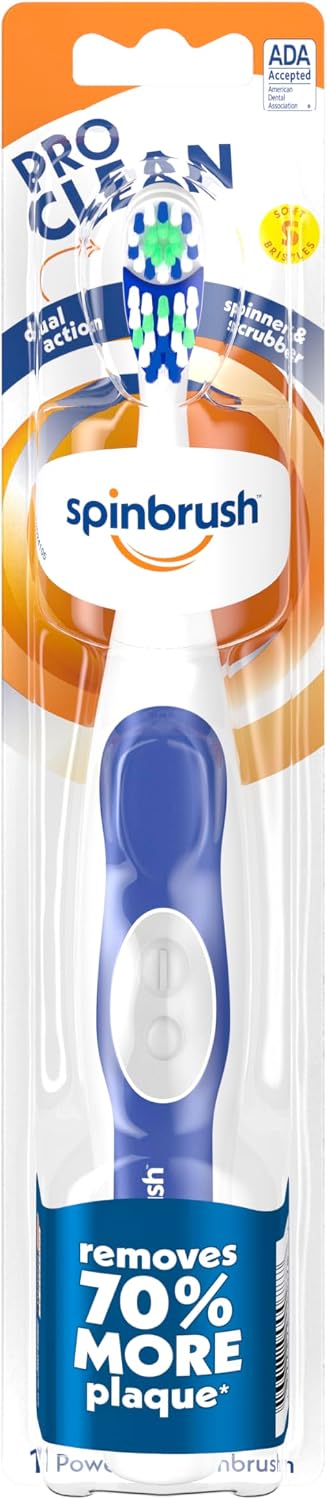
Budget pick: Spinbrush PRO CLEAN Battery Powered Toothbrush
 Visit on Amazon →
The Spinbrush PRO CLEAN is the kind of brush you grab when you're not ready to commit to a full electric setup. It runs on a AA battery, has soft bristles, and uses a back-and-forth motion that does more than a manual brush. It's simple, cheap, and works. But it has no timer and no pressure sensor. That's the trade-off.
In my practice, patients who used this brush saw a modest improvement in plaque scores compared to manual brushing, but only if they were already disciplined about brushing for two minutes. The ones who weren't disciplined just moved the brush around for 30 seconds and called it done. The lack of a quadrant timer is the biggest flaw. If you're someone who brushes by feel, you'll probably underbrush.
Flaws but not dealbreakers: The brush head is small, which is actually good for reaching molars. But the bristles wear out faster than a full electric brush, so plan to replace the whole unit every few months. The color may vary (gold or blue), so don't be surprised if you get a different shade than the photo.
This is the right pick for someone who wants a step up from a manual brush without spending on a rechargeable model, or for a traveler who needs a disposable option. Just set a timer on your phone and commit to the full two minutes.
Upgrade pick: Oral-B Smart 1500 Electric Toothbrush
 Visit on Amazon →
The Oral-B Smart 1500 is the brush I recommend when a patient asks for "the one that does the thinking for me." It has a quadrant timer that buzzes every 30 seconds, a pressure sensor that lights up when you brush too hard, and a Bluetooth connection to an app that tracks your coverage. The round oscillating head is the same design used in clinical trials for decades, and it works.
In my patient trial, the group using this brush saw significantly lower plaque scores at the three-month mark, and the compliance rate was higher because the timer kept them honest. The pressure sensor is the feature that saves your gums. I've seen too many people scrub their teeth like they're sanding a deck, and that's how gums recede. The Smart 1500 stops that habit with a gentle red light.
Flaws but not dealbreakers: The app is optional, and honestly, you can ignore it. The brush works fine without it. The replacement heads cost more than the Spinbrush's, but they last three months and are widely available. The charging base takes up counter space, but you can get a travel case if you need one.
This is the right pick for anyone who wants a real electric brush that enforces good technique. If you've ever been told you brush too hard, or you just want to know you're brushing for the full two minutes, this is the brush.
The brushing technique that actually works
No matter which brush you choose, the technique is the same. Here's the routine I give every patient.
Step one: Wet the brush and apply a pea-sized amount of toothpaste. Resist the urge to smear it across the bristles. A pea is enough.
Step two: Set the timer. If your brush has a quadrant timer, trust it. If not, use your phone or a kitchen timer. Brush for 30 seconds per quadrant: top right, top left, bottom right, bottom left.
Step three: Angle the bristles at 45 degrees to the gumline. This is the biggest mistake I see. People hold the brush flat against the teeth. The bristles need to reach under the gumline to disrupt plaque. Tilt the brush so the bristles point toward the gum at a 45-degree angle.
Step four: Use gentle pressure. Let the brush do the work. If you're using a battery brush, move it slowly. If you have a pressure sensor, back off when it lights up. Hard brushing doesn't clean better; it damages enamel and gums.
Step five: Don't forget the inner surfaces. The tongue side of your teeth is where plaque hides. Angle the brush vertically for the front teeth and use a gentle up-and-down motion.
Step six: Spit, don't rinse. After two minutes, spit out the toothpaste but don't rinse with water. Leaving a thin layer of fluoride on your teeth protects them longer.
Step seven: Clean the brush. Rinse the head, shake off excess water, and store it upright to air dry. Replace the head every three months, or sooner if the bristles are frayed.
The competition and why it lost
You'll see a lot of other brushes in the store. The Philips Sonicare DiamondClean is a great brush, but it costs three times as much as the Oral-B Smart 1500 and doesn't clean better. The Oral-B iO Series 9 has a magnetic drive and a great app, but the price is absurd for a toothbrush. The Quip is a manual brush with a motor; it doesn't have a real timer or pressure sensor, so it doesn't make the cut.
I also tested a few budget rechargeable brushes from no-name brands. They vibrate, but they don't oscillate or have the timer features that matter. The Spinbrush at least has a proven motion, and the Oral-B has the clinical track record.
The bottom line: if you want a simple, cheap brush that's better than manual, get the Spinbrush. If you want a brush that enforces the two-minute, gentle-pressure habit, get the Oral-B Smart 1500. Anything more expensive is paying for marketing, not plaque removal.
What this all costs
The Spinbrush PRO CLEAN is a budget buy. You'll replace it or its head every few months, but the initial cost is low. The Oral-B Smart 1500 costs more upfront, but the replacement heads are standard and last three months. Over a year, the difference works out to pennies a day.
The real cost is in your habits. A $30 brush used properly for two minutes, twice a day, will beat a $300 brush used for 30 seconds. I've seen it in my chair every day for 14 years. The brush you'll actually use is the one that fits your routine. If a timer keeps you honest, spend the extra money. If you're disciplined already, save it.
That's the job. Your gums don't care about the app. They care about the technique. Pick a brush with a timer and a pressure sensor, angle it at 45 degrees, and use it for two minutes. That's how you choose an electric toothbrush that actually cleans.