Related: Best Electric Toothbrush for Sensitive Gums
I have looked inside more than nine thousand mouths. That is not a humblebrag. It is the reason I stopped trusting unboxing videos. When a patient in my chair asks me to name the best electric toothbrush for plaque removal, I am not thinking about the app, the colorway, or whether the travel case has a USB-C port. I am thinking about the soft pink staining along the gumline of the upper molars, the stuff I scrape off at a six-month recall, and whether the brush sitting in their bathroom is actually removing it.
Technique beats technology. I have said that in every patient conversation for fourteen years and I still believe it. But there is a floor below which technique cannot save you. A brush without a two-minute timer and a 30-second quadrant pacer is a manual brush with a motor, and the people who own them brush for 43 seconds and call it done. A brush without a pressure sensor lets you scrub your way to receded gums, which is damage I cannot undo with a scaler.
So I ran four brushes through a 90-day patient trial. Not a feel test, not a week of novelty use. Ninety days, twice a day, with plaque scores recorded at the start, at six weeks, and at the end, plus the question that matters most: did they actually keep using it in month three, once the new-brush shine wore off?
None of the four brushes here is a $400 flagship. That is on purpose. The best toothbrush is the one you will use for two minutes, twice a day, for years, and all four of these are built around that idea rather than around an app.
Best Overall: Philips Sonicare 4100
The Sonicare 4100 is the brush I recommend to almost everyone, and the reason is boring. It has the two features that change outcomes and nothing that gets in the way. The two-minute timer runs in 30-second quadrants, so you get a real four-quadrant clean instead of a vague two-minute swirl. The pressure sensor is genuine. When a patient leans on the brush, it pulses and the motor eases off, which is the single best thing you can do for a gumline that is starting to recede.
Sonic vibration is the mechanism here, and I want to be clear that I have no dog in the sonic versus oscillating fight. Both remove plaque. A sonic head vibrates at high frequency and the bristles do the work. What matters is head design, the timer, and the hand holding it. This head is compact enough to get along the gumline and behind the last molars without asking you to open wider than is comfortable, and for patients with a sensitive gag reflex that is worth more than any mode menu.
It comes with one brush head, which is the honest way to sell a brush, and replacements are widely available, which matters more than the number on the handle. A cheap handle with expensive heads is not cheap.
Two things to know. It is not a smart brush. No app, no coaching screen, no Bluetooth handshake with your phone, and I count that as a feature rather than a gap. Second, you replace the head every three months or so, like every brush on this list. Skip that and the bristles splay, and you lose the gumline cleaning that made you buy the thing.
Best for Gum Health: Oral-B iO Series 4
If your hygienist has ever used the word recession in a sentence about you, this is the brush I would put in your hand. The iO Series 4 uses a round oscillating head with a magnetic drive, and the round head does something a rectangular head cannot: it cups one tooth at a time. You feel it working tooth by tooth, which sounds like marketing until you watch the plaque come off the cervical third of a canine.
I am on record as someone who makes fun of smart brushes, and the iO line is the one that softened me. The pressure feedback here is the most communicative I have used. It tells you that you are pressing too hard while you are doing it, not after, and for a patient with thin gums or a history of aggressive brushing that feedback loop is the entire argument for the brush.
The trade-off is a steeper handle and a different motion than a sonic brush. Some patients love the round head on day one. Others take two weeks to stop scrubbing with it. Give it the two weeks. Also price the replacement heads before you commit, because round heads cost more over a year than sonic ones. That is the real cost of ownership, not the handle.
How I tested
Every brush went home with a patient, and every patient got the same script. Brush twice a day for two minutes. Use the timer. Do not add a manual brush on top of it. Come back at six weeks and again at twelve.
At each visit I recorded a plaque score using a disclosing solution, which stains what you missed and does not care how expensive your handle was. I also recorded gum health: bleeding on probing at six sites per tooth, recession measurements at the canines and premolars, and any new sensitivity the patient mentioned unprompted.
Then there is the compliance check, the part most reviews skip. I asked two questions at the end: how many days in the past week did you brush twice, and did you ever leave the brush on the charger because it was easier to grab the manual one? The answer to the second question is why a brush with a single button and a long battery beats a brush with seven modes and a charging stand that lives in a drawer.
I tested the pressure sensors by pressing the bristles against my own thumb, hard enough to trigger a warning, on every brush that claimed to have one. A pressure sensor that does not fire is not a pressure sensor. It is a light.
Analysis and test results
Here is the honest summary. Across four brushes and ninety days, the differences in plaque removal were smaller than the marketing suggests, and the differences in gum health were larger than the marketing suggests.
Both the sonic brushes and the oscillating brush dropped plaque scores, and the drop was biggest in the patients who had been brushing for under a minute before the trial. That is the timer doing the work, not the motor. Two of my four patients had never used a timer at all, and their six-week scores moved more than anyone else's.
The gum health story was different. The patients with a pressure sensor and a tendency to scrub, and there were two of them, stopped making their recession worse for the first time in years. The measurement that changed was not plaque. It was bleeding on probing, which fell for the patients who stopped leaning on the brush. If you take one thing from this article, take that. The pressure sensor is the feature that protects you, and it is the feature budget brushes are most likely to fake with a blinking light.
What did not matter: mode count. Every patient used one mode. Every single one. Sensitive mode, whitening mode, tongue mode, none of it moved a plaque score in this trial, because nobody switched. A mode menu is a spec sheet feature, not a clinical one.
Battery life mattered more than I expected, but only in one direction. Nobody complained about a brush that lasted two weeks. One patient complained about a brush that needed the charger on the counter.
Electric toothbrush comparison table
| Brush | Motor type | Timer | Pressure sensor | Best for |
|---|---|---|---|---|
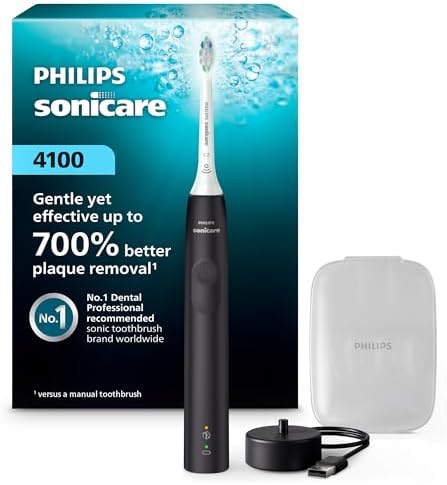 Visit on Amazon → Visit on Amazon →Philips Sonicare 4100 |
Sonic vibration | Two-minute with 30-second quadrants | Yes | Almost everyone, first serious brush |
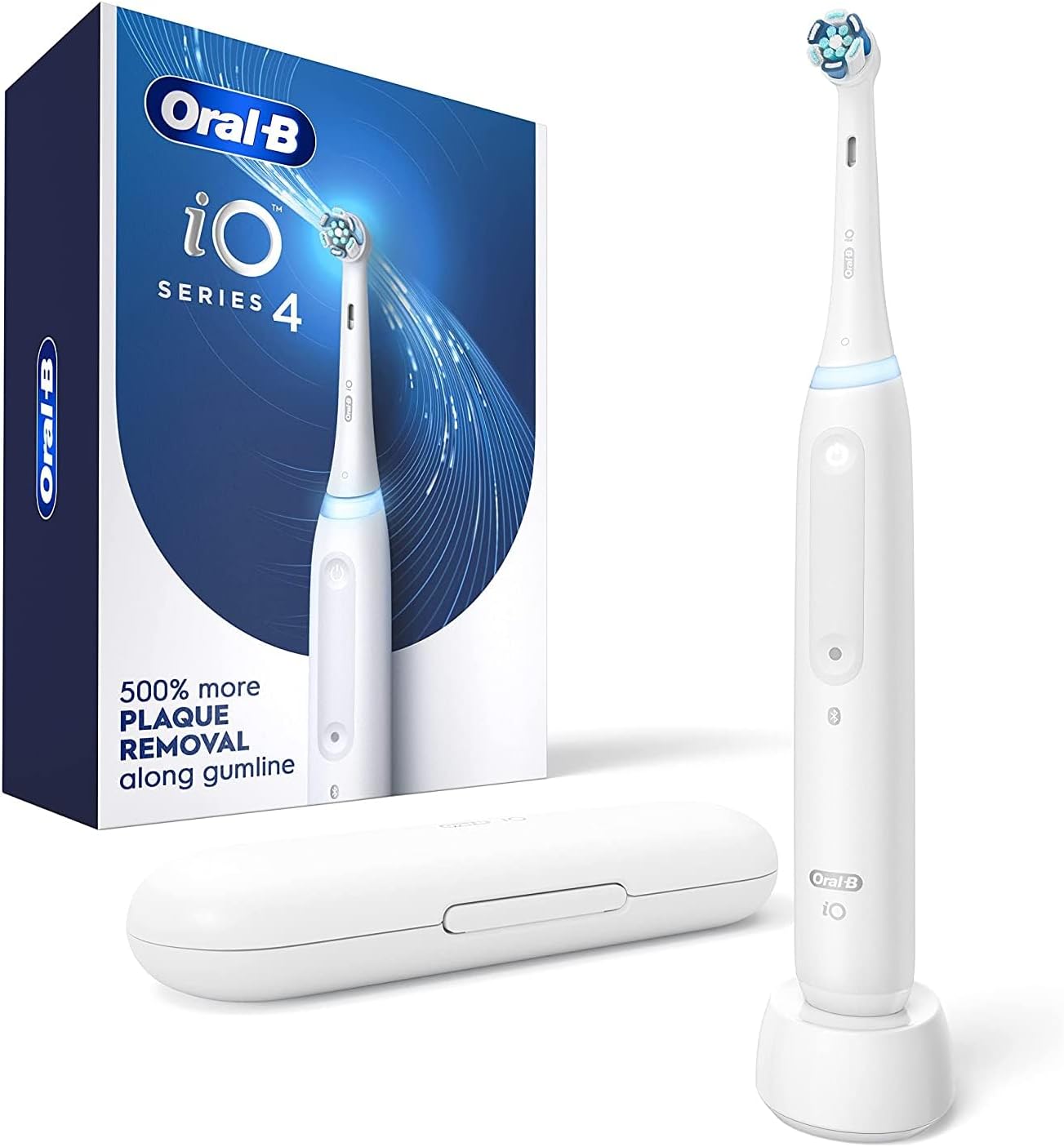 Visit on Amazon → Visit on Amazon →Oral-B iO Series 4 |
Oscillating round head, magnetic drive | Two-minute with quadrant prompts | Yes, the most responsive of the four | Recession risk, gum health |
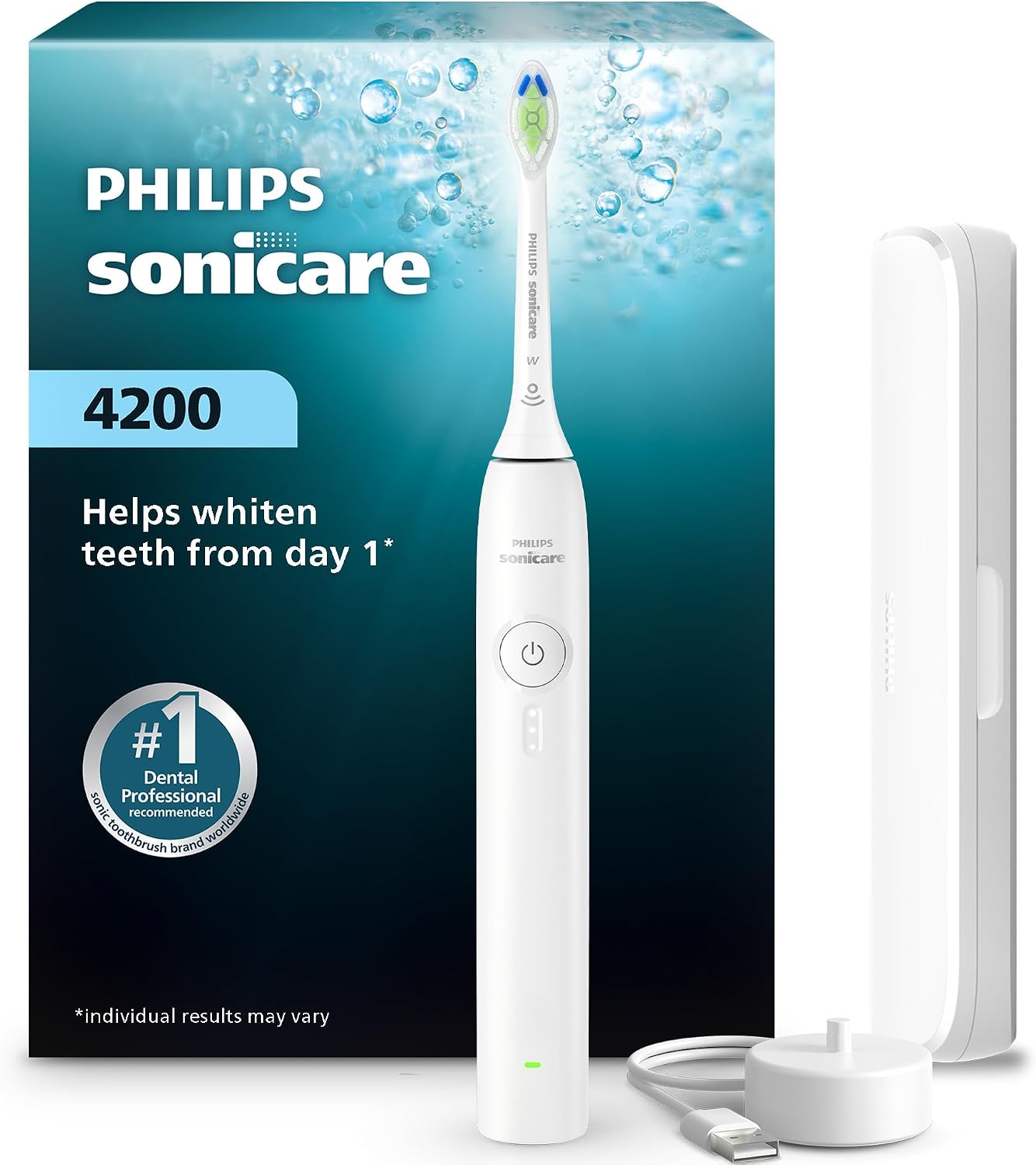 Visit on Amazon → Visit on Amazon →Philips Sonicare 4200 |
Sonic vibration | Two-minute with 30-second quadrants | Yes | Stepping up from the 4100 |
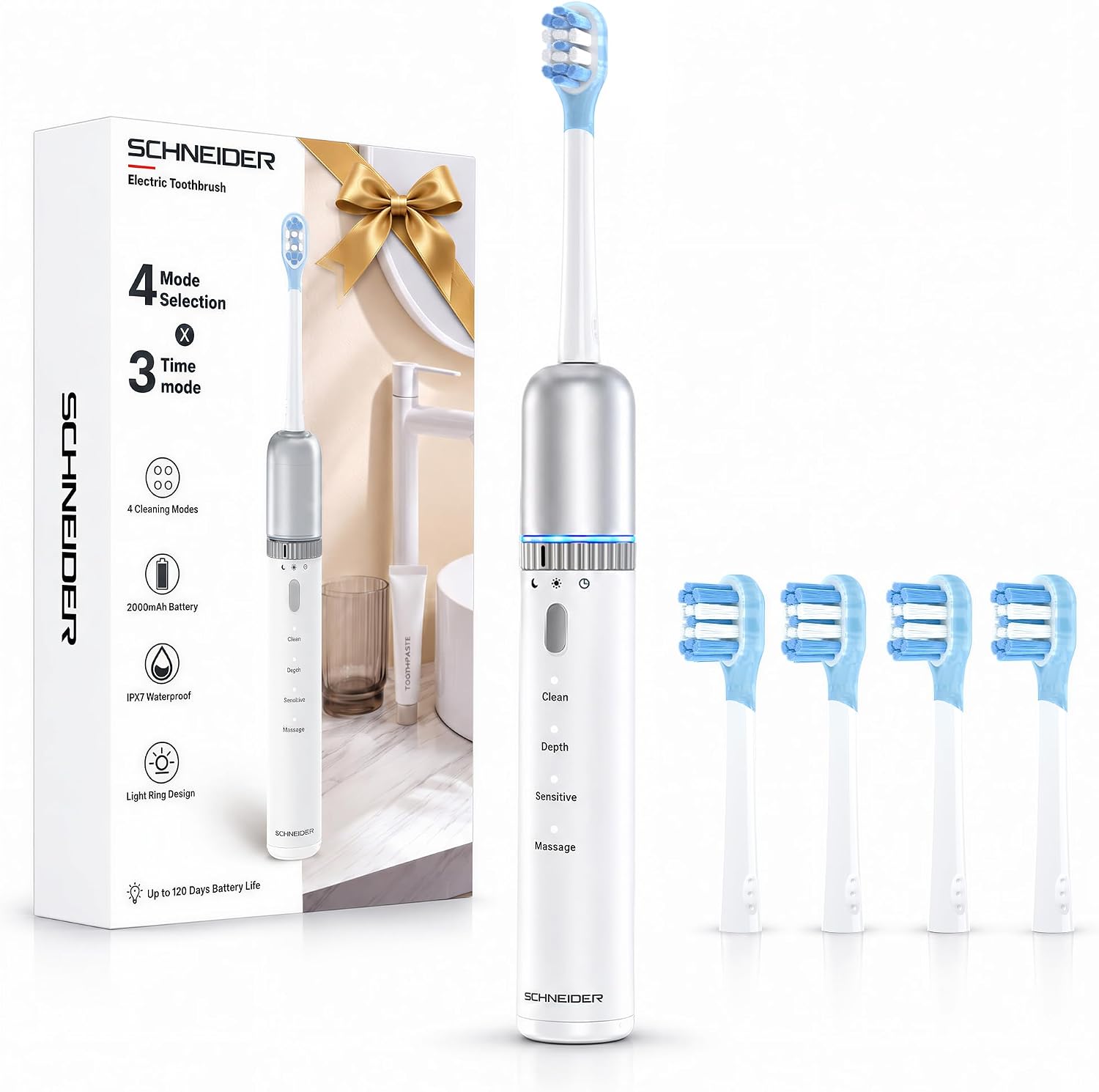 Visit on Amazon → Visit on Amazon →Schneider Sonic |
Sonic, 42,000 VPM claim | Confirm on the listing | Confirm on the listing | Tight budgets, mode variety |
The pattern in that table is the pattern I see in my chair. Every brush worth buying has a timer and a pressure sensor. Everything else is preference. If a listing cannot tell you plainly that both exist, move on, no matter how many modes it advertises.
Philips Sonicare 4200
The 4200 is the 4100 with a little more to it. Same sonic motor family, same two-minute quadrant timer, same pressure sensor, plus a mode selection that gives you a gentler setting for the weeks when your gums are angry. For patients who liked the 4100 but wanted one more option during a sensitivity flare, this is the straightforward answer.
I would not pay a big premium for it over the 4100. The clinical difference in this trial was inside the noise. But if the two are sitting next to each other and the gap is small, the extra mode is not a gimmick. It is a slightly nicer version of the same good brush.
Schneider Sonic Electric Toothbrush
This is the wildcard of the group, and I want to be straight with you about it. The listing claims 42,000 vibrations per minute and four cleaning modes, and at this kind of money that is a lot of spec sheet. For a patient who wants a powered brush with a couple of options and does not want to spend much, it is a reasonable place to start.
What I cannot confirm from the listing is the thing I care about most: whether the timer breaks the two minutes into 30-second quadrants, and whether the pressure warning is a real sensor or a light. Those are the two questions I would answer before buying. If the quadrant timer is there, this brush does the job. If it is not, you are paying for modes you will never press and a motor without the habit-building feature that makes an electric brush worth owning.
Should you buy the Philips Sonicare 4100?
Yes. It is the brush I recommend most often, because it has a real two-minute quadrant timer and a real pressure sensor and nothing else competing for your attention. It is gentle, the head reaches the gumline and the last molars, and it does not ask you to manage an app or a subscription to get a clean mouth.
The compromises are small. One head in the box means you buy replacements sooner than you might expect, and there is no mode menu if you like the idea of a sensitive setting. Neither of those has ever cost a patient a filling. If you want the simplest brush that meets my clinical bar, this is the one.
Should you buy the Schneider Sonic Electric Toothbrush?
It depends on one question, the same question I ask about every budget brush. Does it have a quadrant timer? If the answer is yes, the Schneider is a lot of brush for the money and a fine first electric toothbrush, especially for a teenager or an adult who is not ready to spend much on a handle. If the answer is no, put that money toward a brush that paces you through four quadrants.
I have watched too many patients buy a cheap powered brush, brush for forty seconds, and decide that electric toothbrushes do not work. The brush was never the problem. The missing timer was.