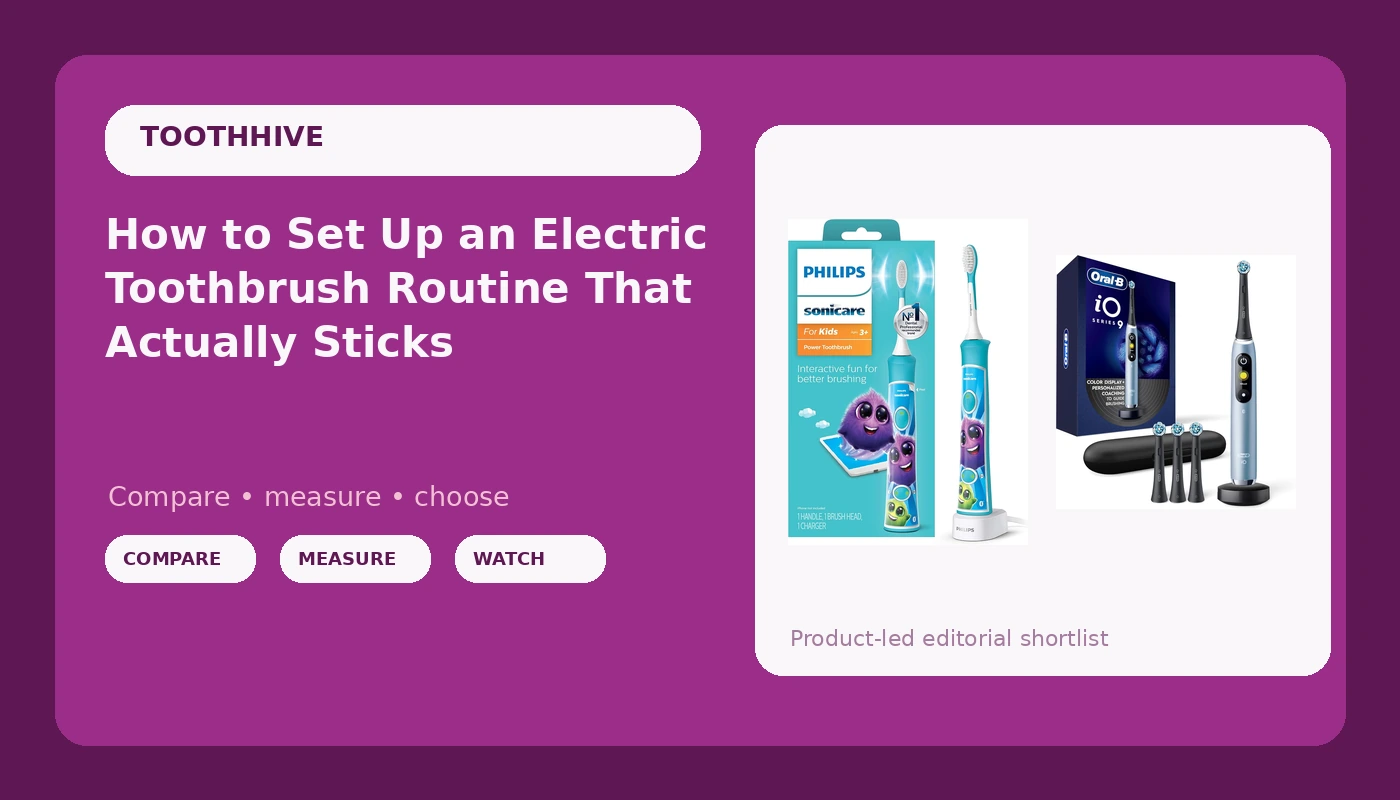
Most people buy an electric toothbrush, use it with real enthusiasm for about nine days, and then settle into something that looks nothing like the routine on the box. I have watched that happen from the other side of a dental chair for 14 years. The brush was almost never the problem. The electric toothbrush routine was.
That is the argument of this guide. A $30 brush used properly beats a $300 brush used badly, and I can usually guess which one you own before you finish saying hello. What follows is the setup I walk patients through: how to choose between an oscillating brush and a sonic one, which two brushes I would hand to an adult and to a child, and the exact sequence for the first two weeks so the habit outlives the novelty.
If you remember one thing from this article, remember this: a serious toothbrush has a two-minute timer with 30-second intervals. If it does not have that, it is not a serious toothbrush.
Why you should trust me
I am a dental hygienist in Madison, Wisconsin. Fourteen years in, I have looked into thousands of mouths, and I have seen every version of this story: the patient with the $400 flagship who had been brushing too hard for two years, and the patient with a cheap drugstore brush whose gums looked better than mine.
I do not sell toothbrushes and I do not take money from the companies that make them. I clean teeth, I measure what is left on them, and then I tell people what I saw. My bias is easy to state: technique beats technology. The best toothbrush is the one you will actually use for two minutes, twice a day.
How I chose the two brushes here
Two brushes get recommended below, and they sit at opposite ends of the market on purpose. One is a flagship for an adult who wants a pressure sensor and data. One is a kids' brush that has the best chance of surviving a seven-year-old.
Both had to pass the same four tests, which are the tests I run on every brush I pick up:
- The timer test. Two minutes, split into four 30-second quadrants. Not a two-minute suggestion, not a smart timer that only starts when you hold your phone. A real quadrant timer.
- The pressure test. A real pressure sensor that warns you before you damage your gums. Brushing too hard is why gums recede, and recession does not grow back.
- The head cost test. What a year of replacement heads costs. This is the number that decides whether a brush is a good deal, and it is never printed on the box.
- The compliance test. Would a real patient keep using it at the three-month mark? A brush that lives in a drawer is a $0 brush.
One more thing before the picks. Oscillating (Oral-B, round head, spinning) and sonic (Philips, oblong head, vibrating) both clean well. The head design and your habits matter more than the motor type. Do not let anyone sell you on one mechanism as magic.
The two brushes worth building a routine around
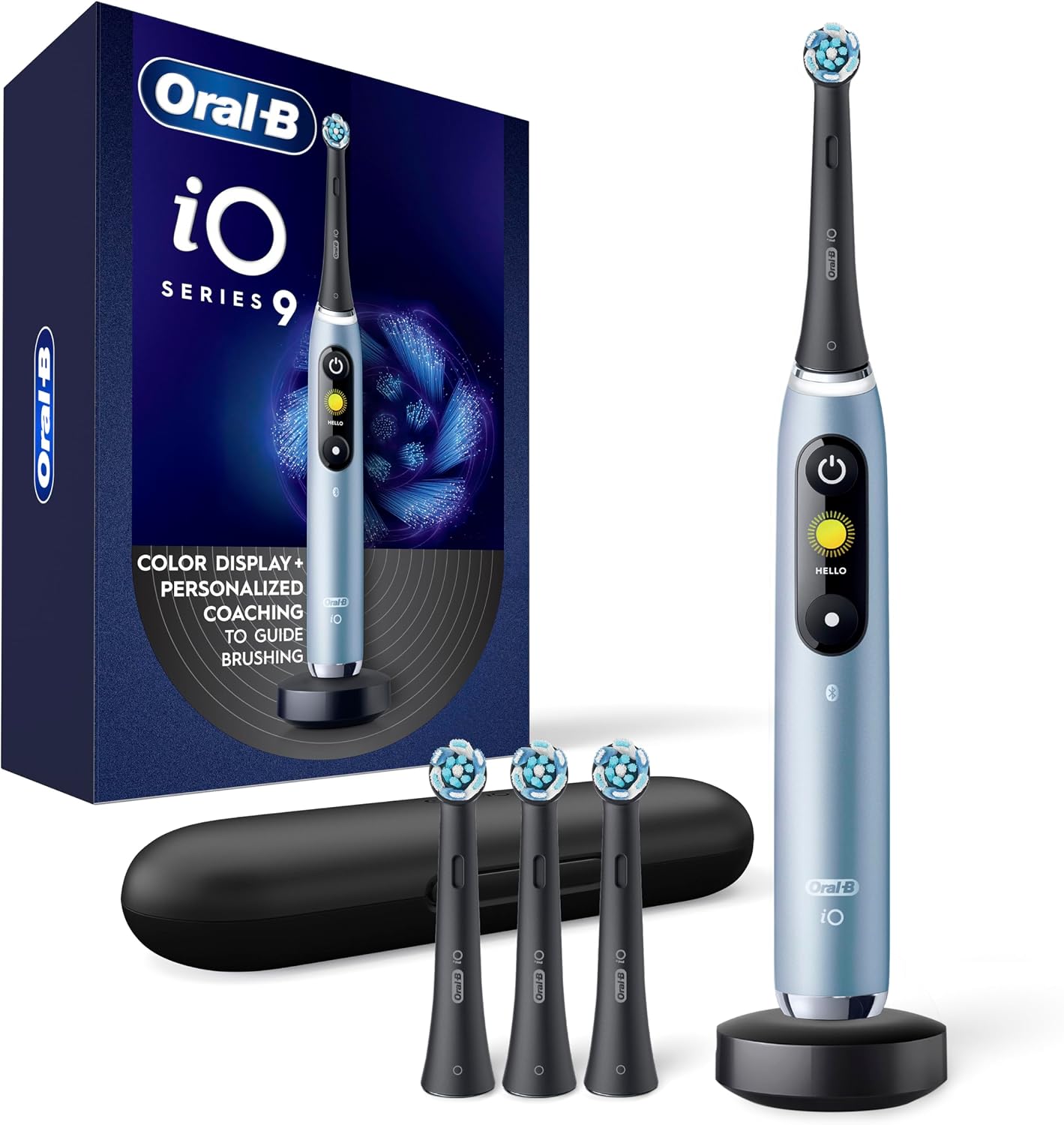
The do-everything pick: Oral-B iO Series 9 Electric Toothbrush with 4 Brush Heads, Aqua Alabaster
 Visit on Amazon →
This is the brush I recommend when someone asks for the best clean and does not mind paying for it. The magnetic drive is genuinely smooth, the round head gets into the curve of the gumline better than a flat head, and the pressure sensor is the best in the business: it lights a ring around the handle and slows the motor when you push, which is exactly the feedback people need and almost never get.
I make fun of smart brushes for a living, and I will admit the app here is better than the category deserves. It shows you which quadrants you actually covered, and for the first month that data is the difference between a routine and a guess. Then you stop opening it, which is fine. The brush does not need the app to work.
Flaws but not dealbreakers: The replacement heads are the real price of ownership, and the app nudges you toward buying them on a schedule. The iO is also more handle than most people need. If you will not use the pressure sensor and you will not open the app, buy a cheaper brush and put the savings into heads.
This is the pick for an adult who brushes too hard, has early recession, or wants a compliance record to bring to their next cleaning.
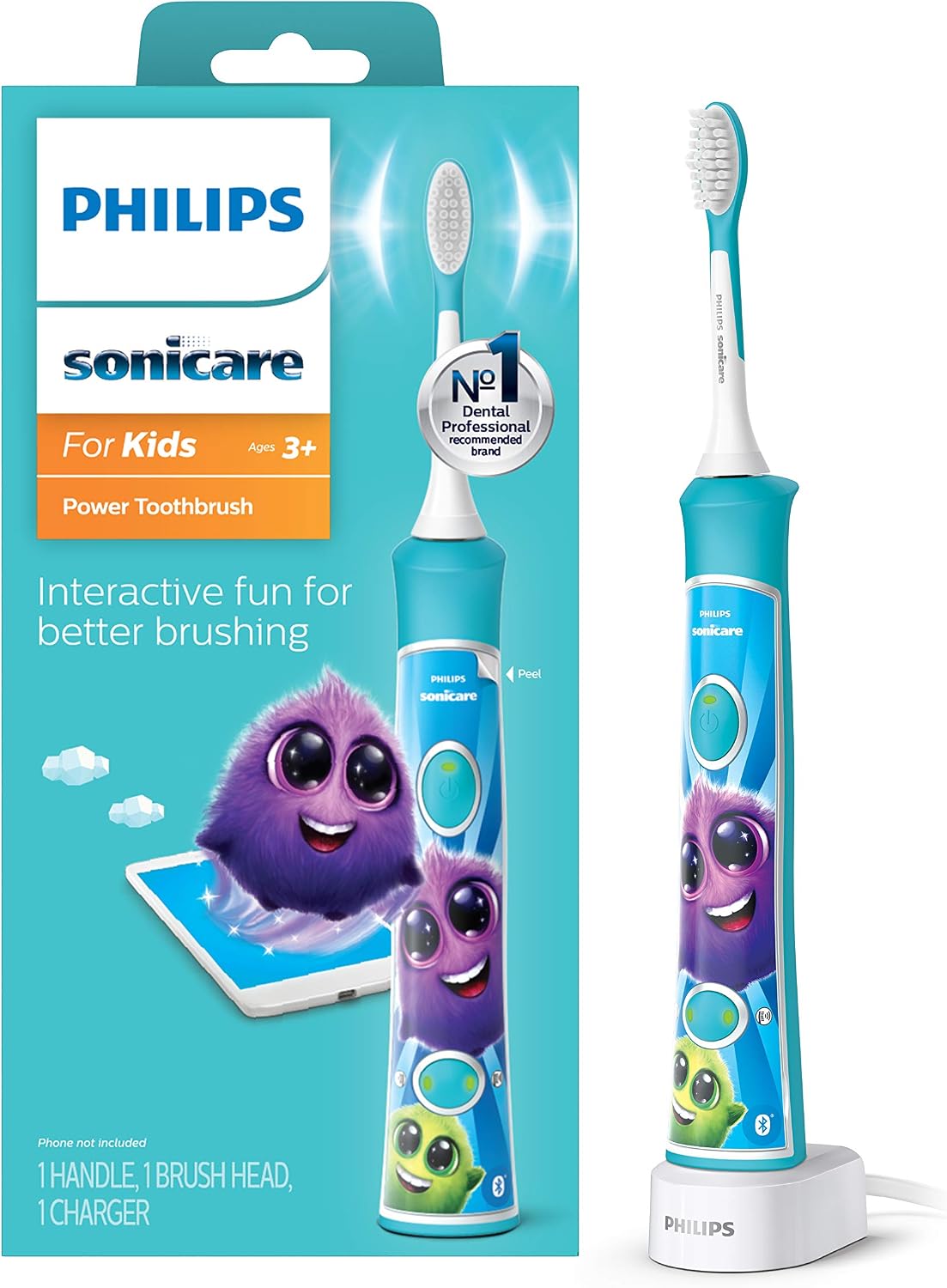
The kid pick: Philips Sonicare for Kids 3+ Bluetooth Connected Rechargeable Electric Power Toothbrush, Interactive for Better Brushing, Turquoise, HX6321/02
 Visit on Amazon →
Kids do not need a flagship. They need a small head, a light handle, and a reason to keep the brush in their mouth for two full minutes. This brush is built around that last part: the app pairs with a character that reacts while they brush, and the timer is generous with encouragement instead of scolding.
Under the cartoon there is a real sonic brush. The head is sized for a child's mouth, the handle is slim enough for small hands, and the two-minute timer with quadrant intervals is the same structure I want in an adult brush. That structure is the whole point. A child who learns four quadrants at six years old keeps that habit for life.
Flaws but not dealbreakers: It runs on the app, and a brush that needs a phone is a brush that stops working when the tablet is charging. The head is also small enough that an adult should not borrow it. Keep a spare manual brush in the bathroom drawer for the nights the app is not happening.
This is the pick for a child who fights the brush, or a parent who is tired of negotiating.
The routine: how to set it up in the first two weeks
The brush is the easy part. Here is the sequence I give patients, and it works with either brush above.
Step one: Charge it and leave it on the counter. Not in a drawer, not in a travel case. Visibility is compliance. The brush you see is the brush you use.
Step two: Learn the timer before you learn anything else. Two minutes, four quadrants, 30 seconds each. Do not add your own scrubbing on top of it. Let the brush tell you when to move, and move when it tells you.
Step three: Angle the head at 45 degrees toward the gumline. This is the step almost everyone skips. The bristles should be sitting where the tooth meets the gum, not flat on the crown. Then let the brush do the work and glide it tooth by tooth. You are not scrubbing a pan.
Step four: Watch the pressure sensor for the first week. If your brush has one, treat it as a coach. Every time it fires, you just learned something about your own hand. Most people are surprised how often it goes off.
Step five: Spit, do not rinse. Rinsing with water after brushing washes away the fluoride you just paid for. Spit into the sink and walk away.
Step six: Replace the head every three months, or sooner if the bristles splay. A worn head cleans like a worn head. Put the replacement on the same schedule as your calendar reminder, not on the schedule the app wants to sell you.
Step seven, for kids: brush in the same room for the first month. Standing next to a child for two minutes is worth more than any feature on the handle. Let them watch you do the quadrants, then let them do it back.
The mistakes that undo a good routine
Brushing too hard. This is the big one. Hard brushing does more damage than skipping a session, because it wears the gum tissue back and exposes the root. If your brush has a pressure sensor, use it. If it does not, hold the handle with two fingers instead of a fist.
Ignoring the timer. People who skip the timer brush for about 45 seconds and believe it was two minutes. The quadrant timer exists because humans are bad at this.
Treating the app as the product. An app that exists to sell you brush heads is a store, not a coach. Use the coverage data, ignore the upsells.
Buying a premium brush and then buying cheap heads. A great motor with a worn or generic head is a mediocre brush. The head is the part that touches your teeth.
Skipping the dentist because the brush has a score. No app replaces a cleaning and an exam.
What I did not recommend here
There are brushes I like that did not make this article, because this is a how-to about routine, not a full buying guide. The Sonicare DiamondClean is the brush I point adults to when they want gentle, effective cleaning and do not mind the premium price. The Sonicare ProtectiveClean is my value answer for someone who wants the timer and the pressure sensor without the flagship tag. The Oral-B Pro 1000 has been the budget standard for a decade and still cleans properly. Quip is fine for people who want simple and cheap.
None of them change anything below, because none of them change the routine. The routine is the article.
What this actually costs over a year
The brush is the small number. The heads are the big one. A flagship handle with a year of heads costs more than twice what the handle costs alone, which is why the head cost test matters more than the sticker. A kids' brush runs on the opposite math: a modest handle and inexpensive heads, replaced more often because children chew on them.
Before you buy either one, do the arithmetic out loud: handle plus four heads a year, times three years. That is the real price. If the total makes you wince, buy the cheaper brush and spend the difference on heads and a cleaning. Check current Amazon price on both before you decide, because the gap moves.
If neither brush fits, the short answer is still the same. A basic oscillating brush with a quadrant timer and a pressure sensor, from the value end of either brand, does 90% of what the flagship does. What I would not do is buy a brush over $300 that needs an app just to change modes. At that point the app is the product and the brush is the accessory.
The short version
Set the brush on the counter. Learn the two-minute timer with 30-second quadrants. Angle the head at the gumline, use light pressure, and let the motor do the work. Spit instead of rinsing. Change the head every three months. Do that for three weeks and the routine stops being a decision.
The Oral-B iO Series 9 is the brush I would hand an adult who wants the pressure sensor and the compliance data. The Philips Sonicare for Kids is the brush I would hand a child who needs a reason to stay for two minutes. Everything else is decoration.
Your gums do not care about the app. They care that you showed up for two minutes, twice a day. That is the job.